English
 Tiếng Việt
AI doesn't devalue universities; AI forces universities to prove their worth.



AI is developing very rapidly. Some businesses are starting to drop the mandatory degree requirements for certain positions. Short courses, professional certifications, and online learning platforms are becoming increasingly common. This raises a question: If businesses hire people based on competence rather than qualifications, is a four-year university degree still necessary?
This is a question worth considering for universities. But if we conclude from it that the role of universities is diminishing, perhaps we are only looking at part of the problem.
Because the sole purpose of a university education has never been to train someone to do just one job. The deeper value of a university education is to prepare an individual with the foundation to go a very long way in their career.
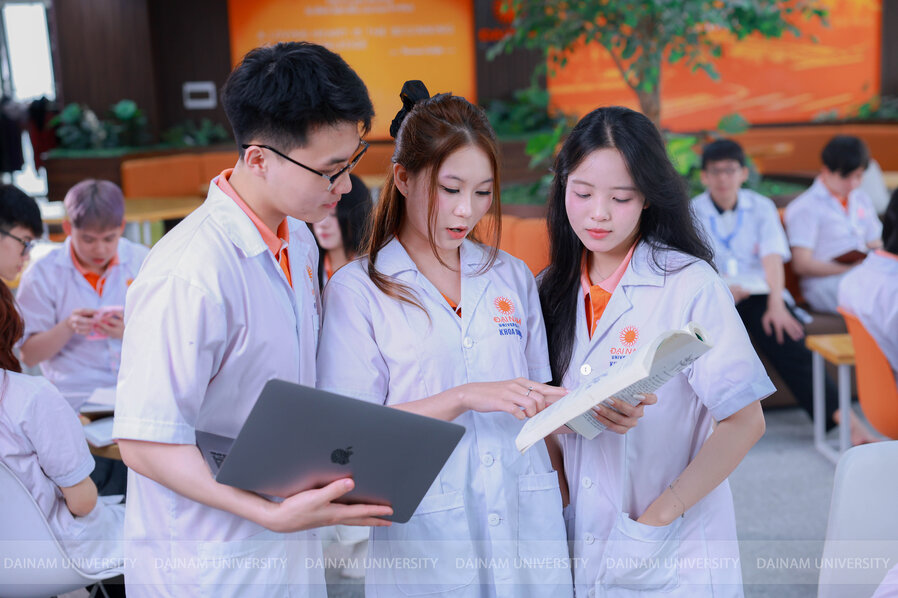
Skills can be learned quickly, but a foundational mindset requires a sufficiently long process to develop.
FOUR YEARS OF UNIVERSITY ARE NOT JUST FOR LEARNING A PROFESSION
A skill can be learned in a few weeks or months. A software program can be mastered after a course. Even with AI, much knowledge that previously took hours to search, process, and synthesize can now be answered in seconds. But thinking doesn't develop in a few weeks. The ability to ask the right questions, distinguish right from wrong, verify information, understand the essence of a problem, think logically, critically, solve problems, work with others, and take responsibility for one's decisions requires a sufficiently long process of accumulation and practice.
That's one of the fundamental values of the college years.
Those who learn a skill may know how to do something. Those who receive formal training also need to understand why they should do it, when they shouldn't, and, more importantly, how to devise new ways of doing things when circumstances change. That gap is the difference between knowing how to do something and having the critical thinking skills necessary for long-term development.
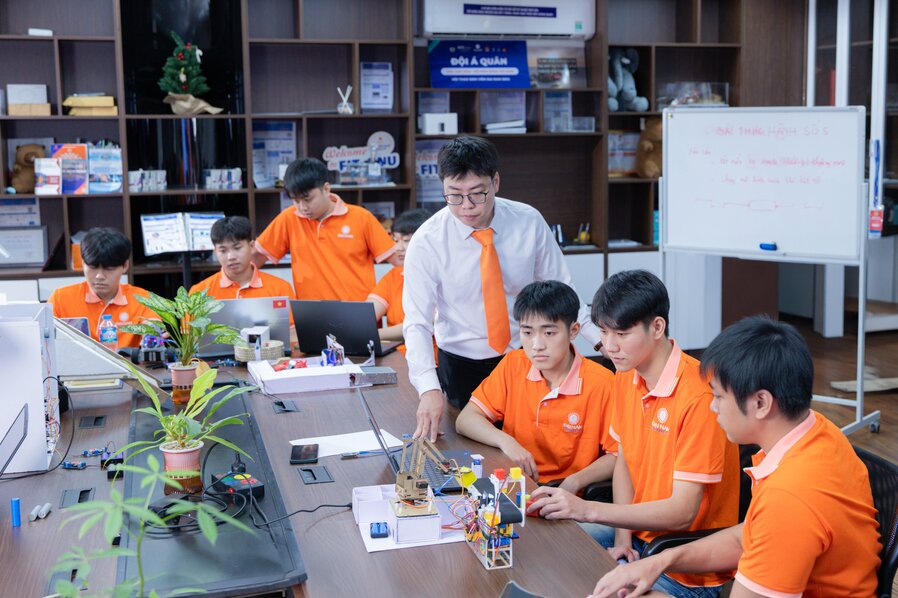
In the age of AI, the role of the teacher is not just to impart knowledge, but to open up thinking and help learners learn how to learn.
THE MORE SKILLED A PERSON IS, THE MORE THEY NEED TO THINK.
In the past, part of the value of an expert lay in their knowledge being greater than that of others.
AI is changing that. Machines can search, synthesize, write, calculate, program, analyze data, and are increasingly performing many tasks that previously required human intervention. Therefore, the concern isn't that AI knows more than we do. The concern is that humans may become accustomed to receiving answers without the ability to discern whether those answers are correct or incorrect.
AI can offer solutions. But humans must know how to choose. AI can analyze data. But humans must understand the context. AI can generate answers. But humans must know how to ask questions. And ultimately, humans are still responsible for their decisions.
Therefore, the age of AI does not make university education any less necessary. On the contrary, it places higher demands on the quality of that education.

UNIVERSITIES CANNOT JUST AWARD A DEGREE
That doesn't mean universities can be complacent with the old model.
If, after four years, students only gain a degree and knowledge that can quickly become outdated, then the university itself must ask what value it has created for its students.
The fact that businesses don't require degrees isn't a reason for universities to worry about protecting those degrees.
That should be the pressure on universities to make their degrees more genuinely valuable.
The program needs to remove what is no longer necessary.
Knowledge must be accompanied by practice.
The classroom must be connected to businesses.
Technology must become a tool for daily learning and work.
Students should be exposed to real problems, real projects, and real professional environments throughout their studies.
And the learning outcomes cannot simply answer the question "what subjects have students studied?", but must demonstrate: What do students know? What can students do? How do students think? And when what they have learned becomes outdated, do students have the ability to self-learn and start again?

Universities must move knowledge beyond the curriculum, enabling students to transform what they have learned into the ability to solve real-world problems.
SHORTENING THE TIME IS NOT ALWAYS INNOVATIVE
Whether it's three years or four years isn't the most important question.
If we can eliminate redundant subjects, formal content, and organize training more effectively, we can certainly consider faster learning paths for competent learners.
But shortening the time spent should not become the goal of higher education.
There are some things that can be learned quickly.
But there are also things that take time to read, experience, encounter, fail, correct mistakes, and grow.
A doctor, engineer, lawyer, administrator, or researcher cannot be made up of just a set of short-term skills.
And a person entering the job market in their twenties doesn't just need to prepare for their first job.
They need to be prepared for the next 30-40 years, during which technology may change many times, jobs may disappear, and entirely new jobs may emerge.
Universities must prepare for these very changes.

University is not just about preparing for a job. It's also an environment where young people learn cooperation, responsibility, discipline, and personal growth.

FROM "HAVING A DEGREE" TO "HAVING COMPETENCE"
Perhaps the debate in the age of AI shouldn't stop at this question:
Is a university degree still required?
A more important question is: After spending 3-4 years in university, what kind of person do they become?
If the answer is simply "get a degree," universities will find it increasingly difficult to convince students to enroll.
But if, after four years, a person has a stronger knowledge base, knows how to think independently, knows how to work, knows how to use AI but not become dependent on it, knows how to collaborate with others, knows how to learn independently, and is capable of adapting to unpredictable changes – then a university degree still has a value that short-term courses can hardly replace.


AI does not devalue universities.
AI simply makes it impossible for universities to survive on the default value of a degree.
Universities must demonstrate that value through the capabilities of their students when they graduate.
And perhaps the greatest value of college years is not in helping someone get a job today, but in providing them with a solid foundation of thinking to continue learning, adapt, and stand firm in a world whose future is still uncertain.
That is also the deeper meaning of those two words:
REAL ABILITY – A SOLID LIFE.
HTC