English
 Tiếng Việt
Psychology students at Dai Nam University are undertaking practical training at Lomonosov West Hanoi School and the Japan International School.



As part of the School Psychology course, students from the 18th cohort of the Psychology program, Faculty of Psychology and Educational Sciences – Dai Nam University, had a day of practical learning at Lomonosov West Hanoi Primary and Secondary School and the Japan International School (JIS). This activity helped students consolidate their professional knowledge, broaden their career perspectives, and gain direct access to the practical aspects of school psychology at educational institutions.
Bringing School Psychology out of the textbook.
School psychology is a crucial area within psychology education, linked to school counseling, student support, collaboration with teachers and parents, and building a safe, positive, and humane educational environment. While classroom lectures help students grasp the concepts, principles, roles, and processes of school psychology, practical learning activities allow students to observe how that knowledge is applied in a specific educational environment.
With a training orientation that connects theory with practice, the Faculty of Psychology and Educational Sciences – Dai Nam University organized a field trip for K18 students, class TLH 18-01, to two educational institutions that support students: Lomonosov West Hanoi Primary and Secondary School and the Japan International School – JIS.
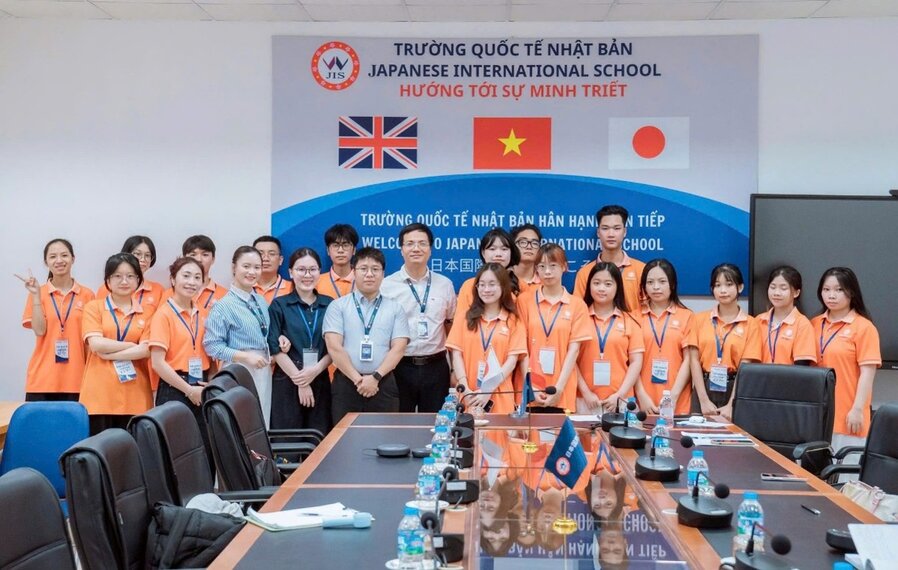
The activity, led by Ms. Hoang Thi Nhu Quynh, M.Sc. – lecturer teaching the School Psychology course, aims to help students increase their ability to connect professional knowledge with practical experience in the field of school psychology.
Practical learning experience at Lomonosov West Hanoi Primary and Secondary School.
At Lomonosov West Hanoi Primary and Secondary School, psychology students from Dai Nam University had the opportunity to meet and listen to insights from Mr. Tran Quoc Anh, the school's principal. From the perspective of an educational administrator, he helped students understand that school psychology is not an isolated activity, but rather needs to be integrated into the overall school culture; caring for, supporting, and accompanying students should be linked to how the school builds a safe, positive, and humane learning environment.
In addition, students also had the opportunity to exchange ideas with Ms. Nguyen Thuy Nham – Head of the School Psychology Team – to gain a more specific understanding of the activities of the school's psychology department. Through this sharing session, students were introduced to topics such as listening, counseling, supporting students, coordinating with teachers and parents, organizing preventive activities, educating skills, and improving students' mental health. These practical experiences helped to make concepts such as school counseling, psychological support, preventing psychological difficulties, and building a safe school environment more relatable to the students.
Experience the student support model at the Japan International School – JIS
On the same day of practical training, students continued their visit to the Japan International School (JIS) to learn more about the model of student support activities in an international educational environment. There, students met Mr. Nguyen Manh Cuong – Director of the Joint Education Program, along with two specialists directly involved in student support: Mr. Nguyen Huu Son – Head of Safety, Psychology and Career Guidance Specialist, and Ms. Tran Thi Phuong – Psychology and Skills Education Specialist.
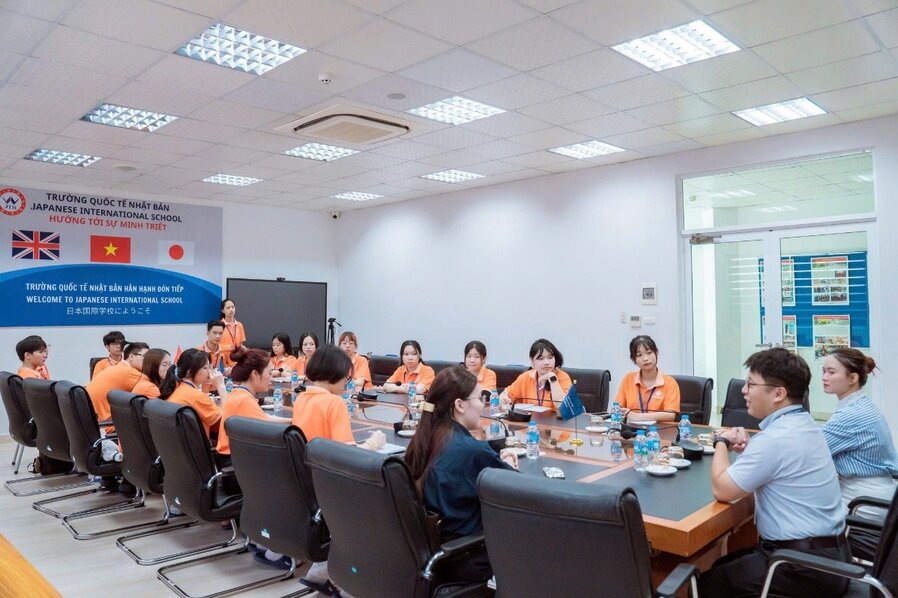
Through the presentations from the teachers, students had the opportunity to better understand how a high school organizes school psychological support activities; how the psychology department operates in practice; and the role of psychology professionals in listening, accompanying, advising, guiding, and contributing to building a safe and healthy school environment for students.
Beyond just visiting, students also have the opportunity to observe, take notes, ask questions, and connect what they have learned to real-world professional practice. This is a chance for students to hone important skills for psychology majors such as observation, listening, problem-solving, situation analysis, and understanding students within the educational context in which they live, study, and develop.
Bridging the gap between theory and professional practice.
Sharing her thoughts on the significance of the activity, Ms. Hoang Thi Nhu Quynh, lecturer in School Psychology, said: “There is knowledge that students can understand if they only learn from textbooks, but to truly feel the profession, they need to step into a real-world environment. Visiting educational institutions with psychological counseling rooms helps students bridge the gap between theory and practice, broaden their perspective on the profession, and better understand what qualities, abilities, and attitudes they need to prepare to be able to work alongside students in the future.”

Field trips are not just extracurricular activities, but also "career networking stations" that help students better understand the field of school psychology. There, psychology is no longer a concept detached from reality, but is present in every conversation with students, every support process, every career guidance activity, every effort to prevent risks and care for mental well-being within the school.
Psychology training is linked to practical experience.
For psychology students, each field trip is a step closer to the profession. Students not only acquire specialized knowledge but also learn to observe people in real-world contexts, listen to professional stories, and gain a clearer understanding of the role of a psychologist in an educational environment.
Practical learning activities at Lomonosov West Hanoi Primary and Secondary School and Japan International School (JIS) further demonstrate the training orientation of the Faculty of Psychology and Educational Sciences - Dai Nam University: enhancing practical experience, connecting with educational institutions, and helping students develop professional competence and professional attitudes right from the learning process.
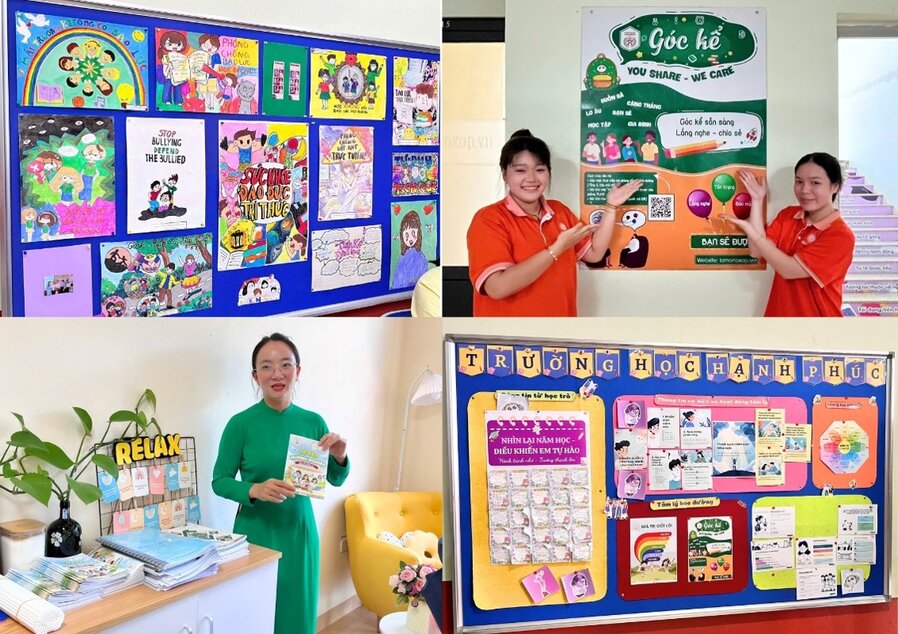
The Faculty of Psychology and Educational Sciences – Dai Nam University would like to express its sincere gratitude to Lomonosov West Hanoi Primary and Secondary School and the Japan International School (JIS) for taking the time to welcome, share, and create conditions for students to have a safe, beneficial, and professionally meaningful practical learning day. The Faculty also acknowledges the serious, proactive, eager-to-learn, and responsible spirit of the K18 students, class TLH 18-01, throughout the activity.
School psychology is not just found in books. School psychology is present in how a school listens to its students, in the collaboration between teachers, parents, and psychologists, and in every effort to create safer, more humane, and happier school environments.