English
 Tiếng Việt
Lecturers from Dai Nam University participate in the International Psychology Forum “Child in a Digital World” 2026.



On June 1-2, 2026, lecturers from the Faculty of Psychology and Educational Sciences – Dai Nam University participated in the VI International Psychological Forum “Child in a Digital World” 2026 as presenters, contributing research on children, adolescents, and mental health in the context of digital transformation.
In the context of children and adolescents growing up with social media, artificial intelligence, and digital platforms, issues of mental health, digital device usage behavior, the role of the family, and young people's self-regulation abilities are increasingly becoming common concerns of modern education.
Based on that foundation, lecturers from the Faculty of Psychology and Educational Sciences – Dai Nam University participated in the VI International Psychological Forum “Child in a Digital World” 2026 as presenters, bringing research from the practical experiences of Vietnamese students in the context of digital transformation.
The forum, held over two days from June 1-2, 2026, coinciding with International Children's Day on June 1st, brought together international scientists, lecturers, and experts in the fields of psychology, education, child development, and mental health. The program included several thematic sessions revolving around artificial intelligence, social media, digital safety, children's digital experiences, the role of the family, and mental health in the digital age.
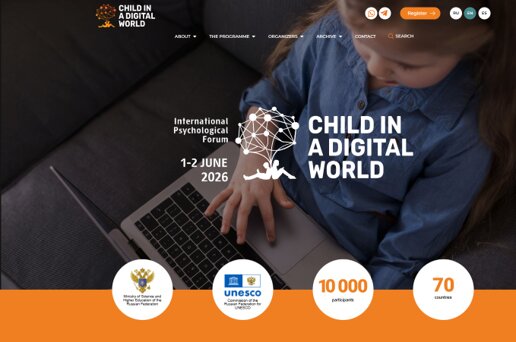
The International Psychology Forum “Child in a Digital World” 2026 – an academic space about children, adolescents, and development in the digital world.
Contributing academic voices from Vietnamese practice.
At the forum, lecturers from the Faculty of Psychology and Educational Sciences – Dai Nam University contributed research reports relevant to Vietnamese practice, focusing on topics closely related to current school life such as: social media use, social media addiction, fear of being left out, the supportive role of parents, self-regulation abilities and mental health of students in the digital environment.
The two reports were presented by lecturers and staff from the Faculty of Psychology and Educational Sciences, including: Dr. Nguyen Thi Hai, Dr. Pham Thi Thuc Oanh, Dr. Pham Thi Hong Phuong, Ms. Hoang Thi Nhu Quynh, Ms. Nguyen Lam Phuong, Ms. Vu Xuan Anh, and Mr. Tran Viet Hoang.
Beyond simply presenting scientific reports, the participation of Dai Nam University's faculty at the forum also demonstrates the university's professional development orientation in the fields of applied psychology, educational science, and mental health care for children and adolescents.
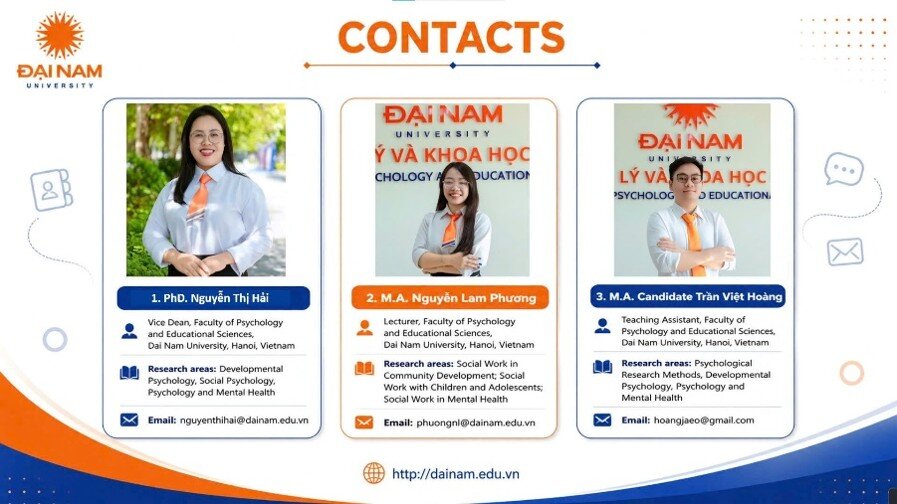
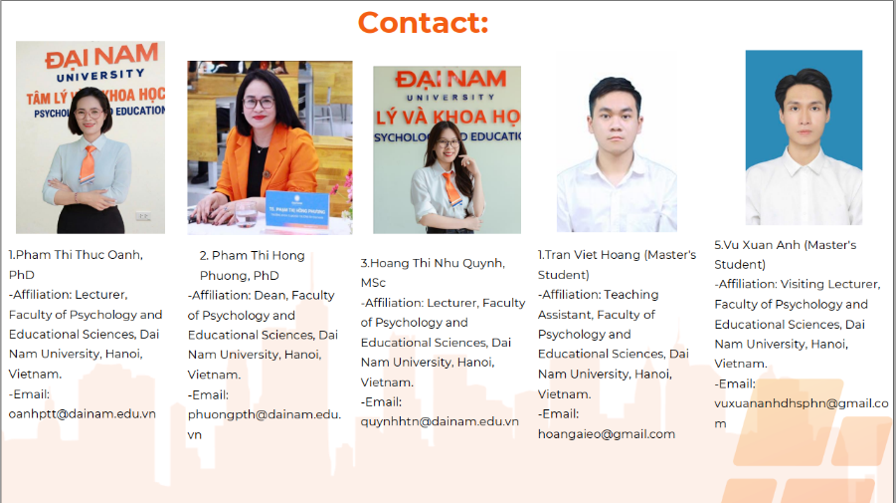
The group of lecturers and staff participating in the forum included: Dr. Nguyen Thi Hai, Dr. Pham Thi Thuc Oanh, Dr. Pham Thi Hong Phuong, Ms. Hoang Thi Nhu Quynh, Ms. Nguyen Lam Phuong, Vu Xuan Anh, and Tran Viet Hoang.
Research on social media, FoMO, and mental health of high school students.
In the thematic session "Social Media and Well-being" on June 1, 2026, Dr. Pham Thi Thuc Oanh, representing the group of authors, presented the report:
“The Mediating Role of Social Media Addiction and Fear of Missing Out (FoMO) in the Relationship Between Digital Technology Use and Mental Health Among Vietnamese High School Students”.
This report focuses on analyzing the relationship between digital technology use, social media addiction, fear of missing out, and mental health among Vietnamese high school students. This is a topic of practical significance given that social media is increasingly becoming a familiar part of learning, communication, and the mental well-being of young people.
According to the presentation, the study approaches students' mental health from two perspectives: psychological distress manifestations such as anxiety, depression, and stress, and positive factors such as happiness, healthy development, and a positive mental state. The presentation also emphasizes the role of FoMO and social media addiction as mediating mechanisms that can affect students' mental health in the context of digital technology use.
Research on the role of parents in their children's digital experiences.
Continuing the program, on June 2nd, 2026, at the thematic session “Family Environment and Child Digital Experience”, Dr. Nguyen Thi Hai, representing the group of authors, presented the report: “Digital Parenting, Self-Regulation, and Psychological Well-Being Among Vietnamese Adolescents in the Context of Social Media Use”.
The report offers insights into the role of parents in guiding their children through the digital environment, adolescents' self-regulation abilities, and the link between social media use and mental health.
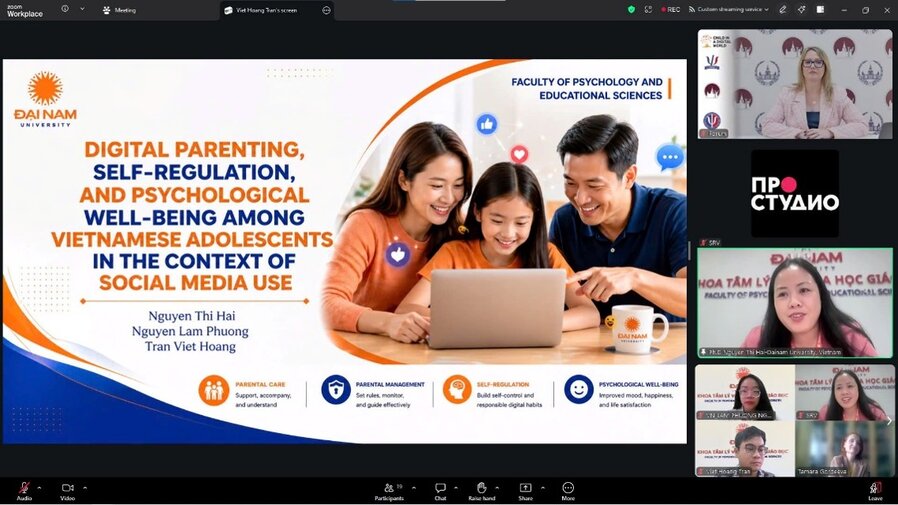
In the digital environment, social media has become a familiar part of teenagers' lives. They learn, connect with friends, express themselves, and receive information every day. Therefore, the role of the family is not only limited to managing screen time, but also includes accompanying, listening to, guiding, and helping children develop the ability to self-manage their behavior when participating in online spaces.
Enhancing research capacity, international integration, and serving learners.
The participation of Dai Nam University lecturers at the VI International Psychological Forum “Child in a Digital World” 2026 contributes to affirming the research capacity, international integration spirit, and professional development orientation of the University in the fields of applied psychology, educational science, and mental health of children and adolescents.
In addition to contributing academic perspectives from Vietnamese practice, the reports at the forum also opened opportunities for lecturers from the Faculty of Psychology and Educational Sciences to exchange expertise with international scientists, lecturers, and experts on new issues facing children in the digital age.
The research findings and discussions at the forum are important resources for lecturers to update their lectures, design practical learning activities, and develop student support programs in the context of digital education. Through this, students at Dai Nam University have the opportunity to access new knowledge, gain a deeper understanding of contemporary psychological and educational issues, and develop the capacity to adapt to the digital environment.
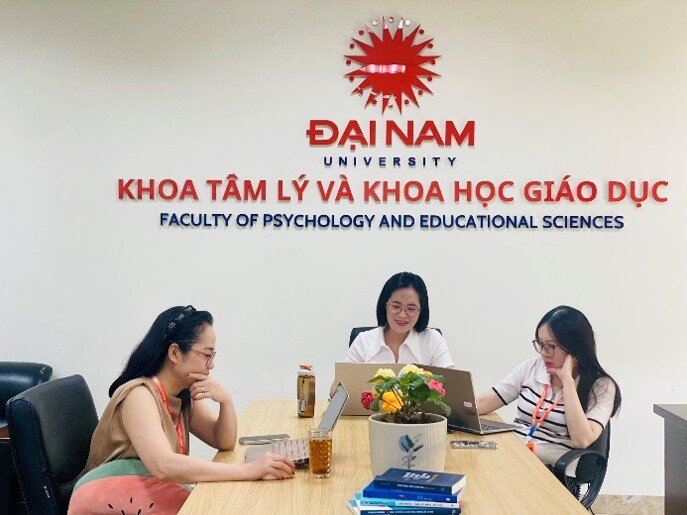
For Dai Nam University, international academic integration is not only an opportunity to connect with the world, but also a way to improve the quality of education, develop the faculty, and better serve students with up-to-date knowledge, modern teaching methods, and a safe, humane, and practical educational environment.
The participation of faculty members from the Faculty of Psychology and Educational Sciences at this forum marks a significant milestone in Dai Nam University's journey to improve the quality of education, expand international academic connections, and affirm its position as a dynamic, practical, and student-centered university.