English
 Tiếng Việt
Dai Nam University is honored to partner with EVNNPC in developing training programs tailored to the specific needs of the electricity industry.



Dai Nam University is honored to partner with the Northern Power Corporation (EVNNPC) in developing and implementing a training program stemming from the practical needs of the power industry. Beginning with a program on emergency response, evacuation, and first aid skills for EVNNPC staff, both sides collaborated on content research, connected with experts, and organized training through practical exercises and simulations, aiming to help learners calmly identify risks and act correctly when incidents occur. This is not only the beginning of a long-term cooperation journey but also a source of pride and responsibility for Dai Nam University in contributing its knowledge, expertise, and training capabilities to a key unit of Vietnam's power industry.
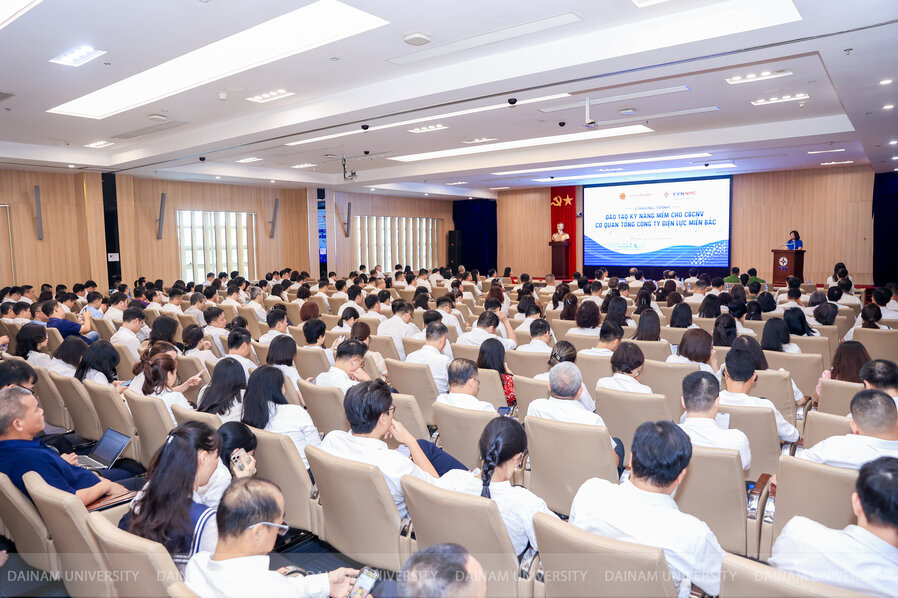
Dai Nam University, in collaboration with the Northern Power Corporation (EVNNPC), has inaugurated a training program on "Emergency Response, Escape, and First Aid Skills" for EVNNPC staff and employees.
From a practical need to a long-term partnership.
On August 17th, Dai Nam University, in collaboration with the Northern Power Corporation (EVNNPC), inaugurated a training program on "Emergency Response, Escape, and First Aid Skills" for EVNNPC staff and employees. This is the first practical training activity implemented after the two parties officially signed a training contract in August 2026, marking a shift from exchanging needs and designing content to organizing direct training for the workforce.
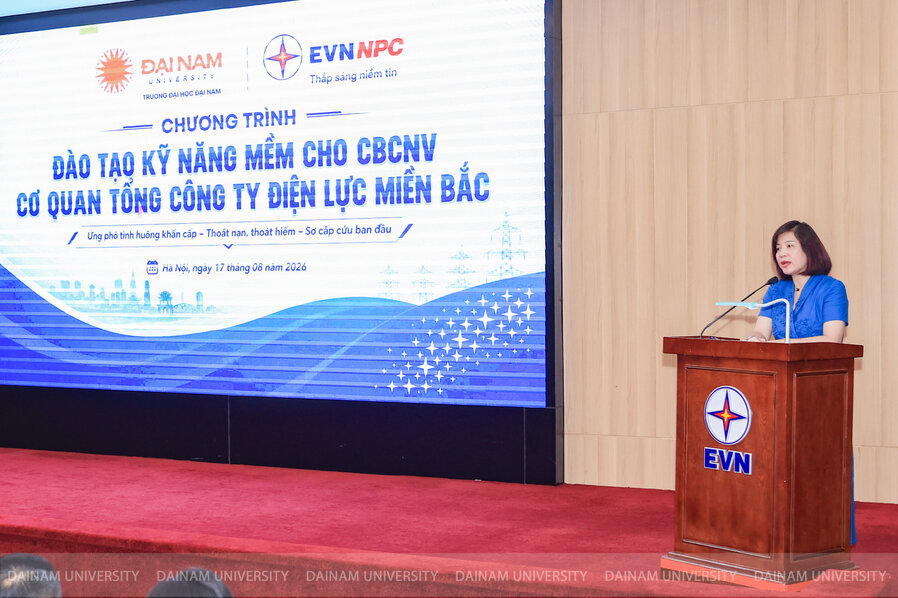
Associate Professor Dr. Dao Thi Thu Giang, Rector of Dai Nam University, speaking at the program, emphasized the role of the university in bringing knowledge and training capabilities to accompany businesses, workers, and the community.
Notably, the program was not built on a pre-existing mass training model. From mid-March 2026, Dai Nam University and EVNNPC jointly exchanged information, surveyed needs, analyzed job specifics, and identified situations that electricity workers might face. Based on EVNNPC's practical requirements, the University collaborated to develop objectives, content, structure, and organizational plans suitable for a work environment with exceptionally high safety standards.
This collaboration reflects the convergence of responsibilities and goals between the two entities: EVNNPC's commitment to caring for and protecting its employees; and Dai Nam University's leveraging its expertise, team of specialists, and capacity to organize application-oriented training. Through the joint development and implementation of the program, Dai Nam University's capacity to train according to enterprise needs is concretely demonstrated: starting from practical problems, designing appropriate content, and focusing on the ability to apply knowledge after training.
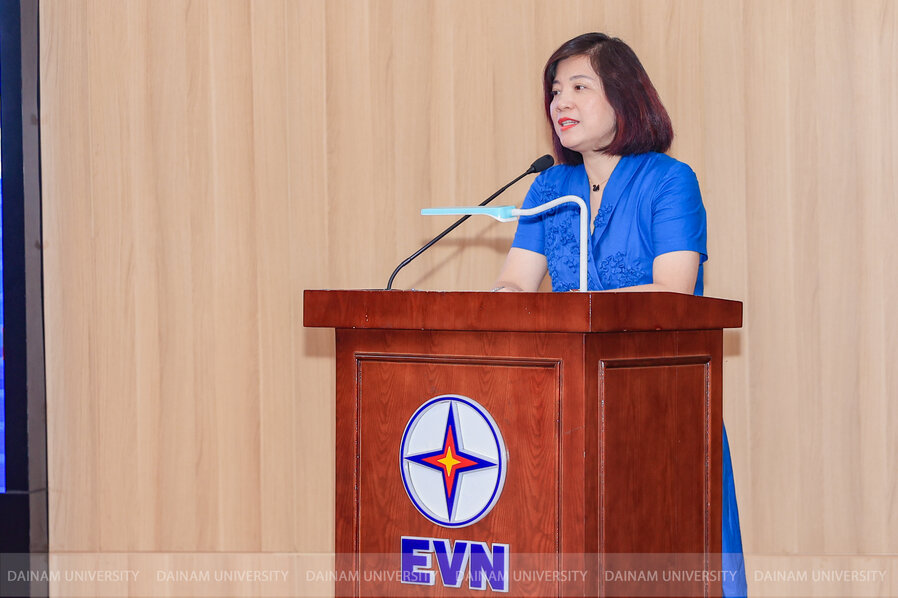
Speaking at the program, Associate Professor Dr. Dao Thi Thu Giang, Rector of Dai Nam University, emphasized that the responsibility of universities lies not only in training formal human resources, but also in bringing knowledge, expertise, and training capabilities to support businesses, workers, and the community. With this program, the goal is not just to help learners "learn more," but to aim for the ability to correctly identify risks, calmly handle situations, and perform the correct actions when unexpected events occur.
Partnering to transform safety from a process into a capability.
EVNNPC's decision to train a group of people in emergency response, evacuation, and first aid skills stems directly from the specific nature of the electricity industry – a field with a working environment that inherently poses many risks and requires employees to strictly adhere to safety regulations. Besides electrical incidents, employees may also face many unexpected situations in their work and lives, such as fires, explosions, choking, fainting, suspected strokes, traffic accidents, storms, lightning, landslides, or floods.
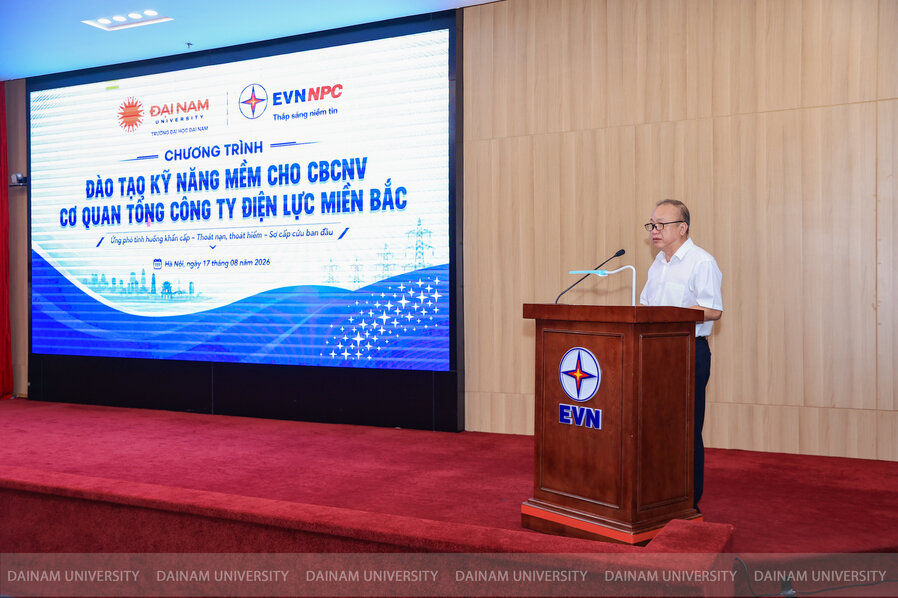
Mr. Vu Anh Phuong, Deputy General Director of EVNNPC, shared information about the requirement to equip workers with skills in identifying hazards, providing initial first aid, and choosing safe escape options.
At the opening ceremony, Mr. Vu Anh Phuong, Deputy General Director of EVNNPC, stated that knowledge is necessary but not sufficient. The important thing is that each person must know how to identify risks, protect themselves, call for assistance, coordinate with those around them, perform proper first aid, and choose a safe escape route.
From that perspective, the program is not simply a soft skills training course, but is directly linked to ensuring safety, caring for, and protecting employees. The broader goal is to contribute to the formation of a safety culture within EVNNPC, so that safety is not just in written documents, procedures, or instruction manuals, but becomes the awareness, capability, and correct reflex of each employee.
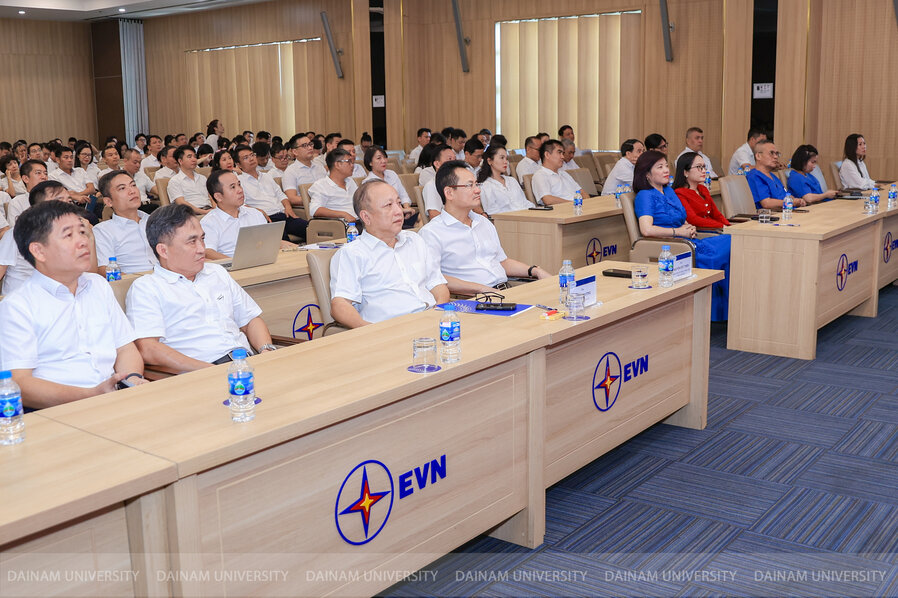
This also represents a convergence of training objectives between the two units. EVNNPC addresses the practical challenges of operation and the need to ensure the safety of its employees; Dai Nam University collaborates by designing programs tailored to needs, connecting interdisciplinary experts, and organizing application-oriented training. The university leverages its strengths in skills training, medical and nursing education, and practical training; while also collaborating with experts in electrical safety, first aid, fire prevention and rescue, and survival skills.
Learn to know - practice to be able to act.
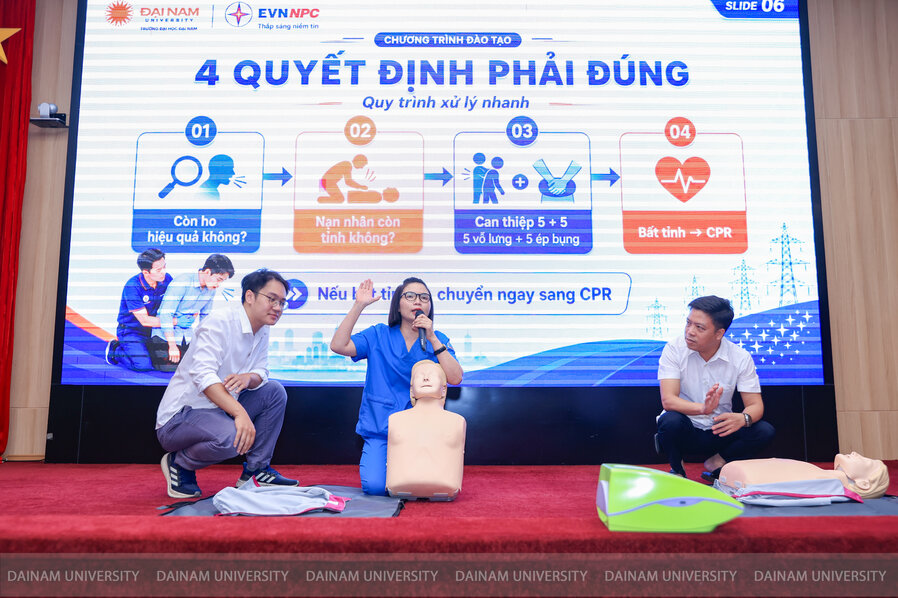
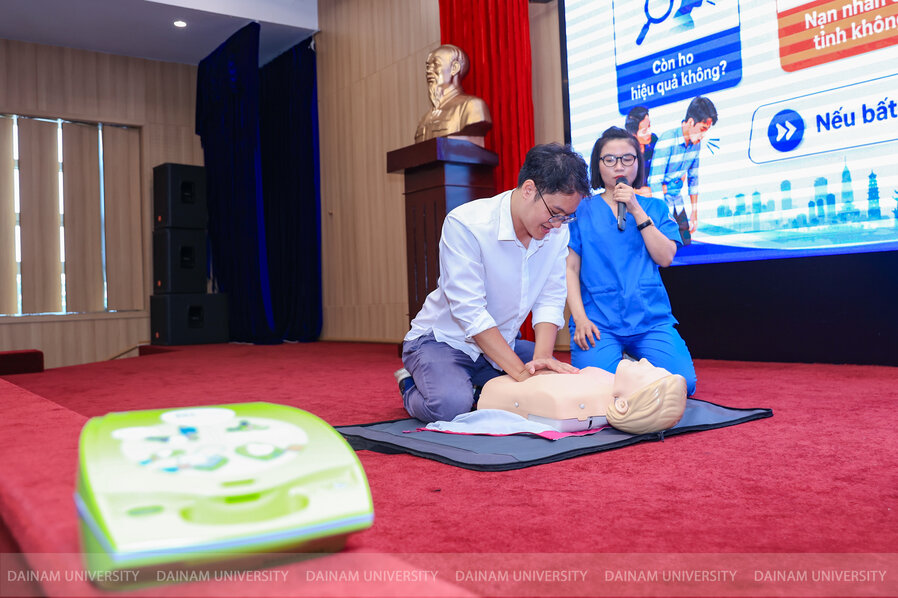
EVNNPC trainees are guided through basic first aid procedures, gradually transforming knowledge into skills that can be applied in real-life situations.
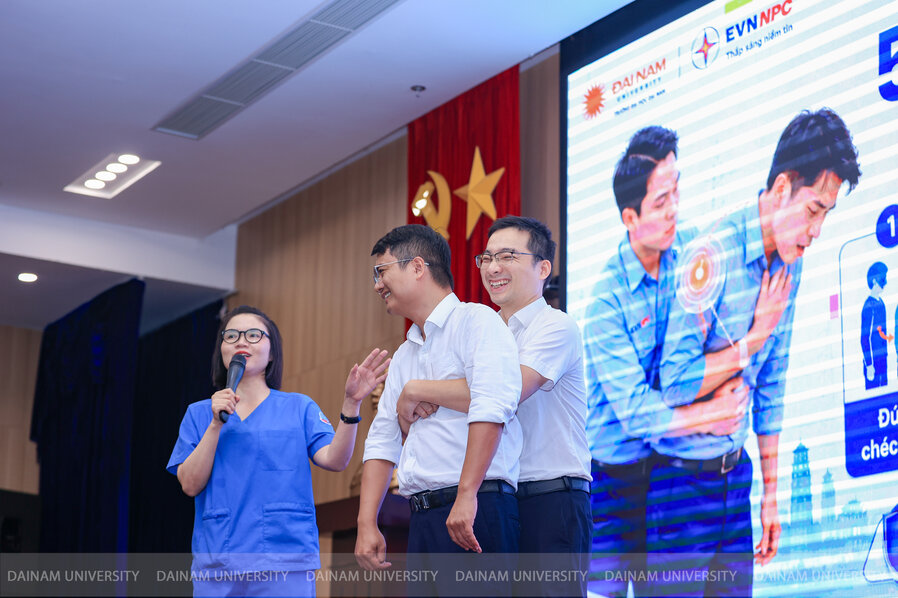
According to the plan, the training session on August 17th is for approximately 300 participants, focusing on disseminating core knowledge and skills. On August 18th and 19th, about 70 participants will continue with an intensive session, enhancing group and station-based practice, situational handling, and integrated drills.
The training content covers eight key skill groups:
- Initial first aid in case of an electrical accident.
- Treating foreign body obstruction and airway blockage.
- Handling fainting, suspected stroke, and other health emergencies.
- Escape in case of fire.
- Responding to isolation due to landslides and flooding.
- What to do when a car or motorcycle catches fire.
- Safe shelter from rainstorms, lightning, strong winds, and flooding.
- Practice handling integrated scenarios.
To ensure depth of expertise and applicability, the program is implemented with the participation of an interdisciplinary team of experts. MSc. Nguyen Quang Quan is in charge of initial first aid in electrical incidents; BSCKI. Hoang Van Hai teaches topics related to choking, airway obstruction, drowning, fainting, stroke, and other health emergencies; Major, MSc. Tran Van Khai and his team from the Fire Prevention and Rescue Academy are in charge of topics on escape, survival skills, vehicle fires, natural disasters, and handling trapped situations.
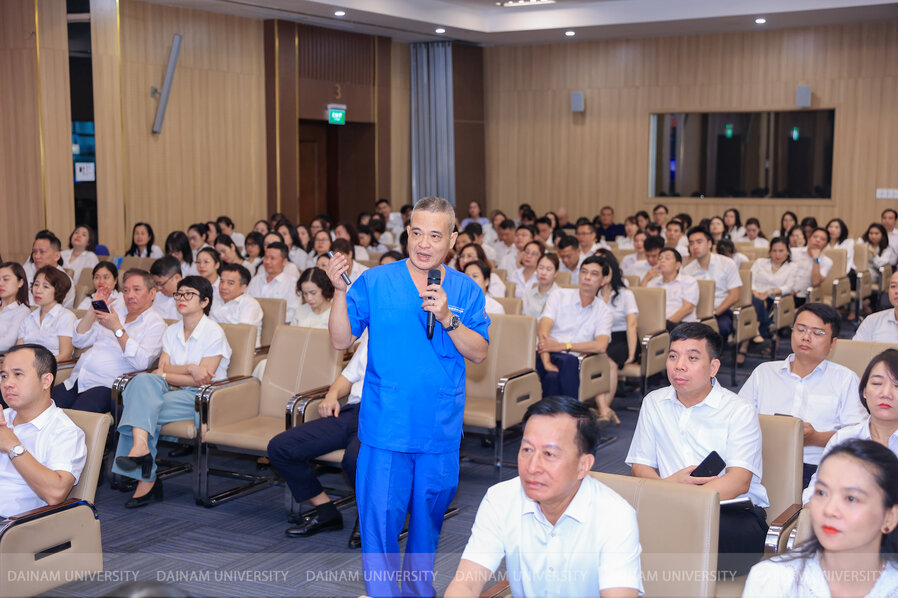
From theory to simulated scenarios, the program aims to help students practice identifying risks, handling situations, and performing the correct actions in emergency conditions.
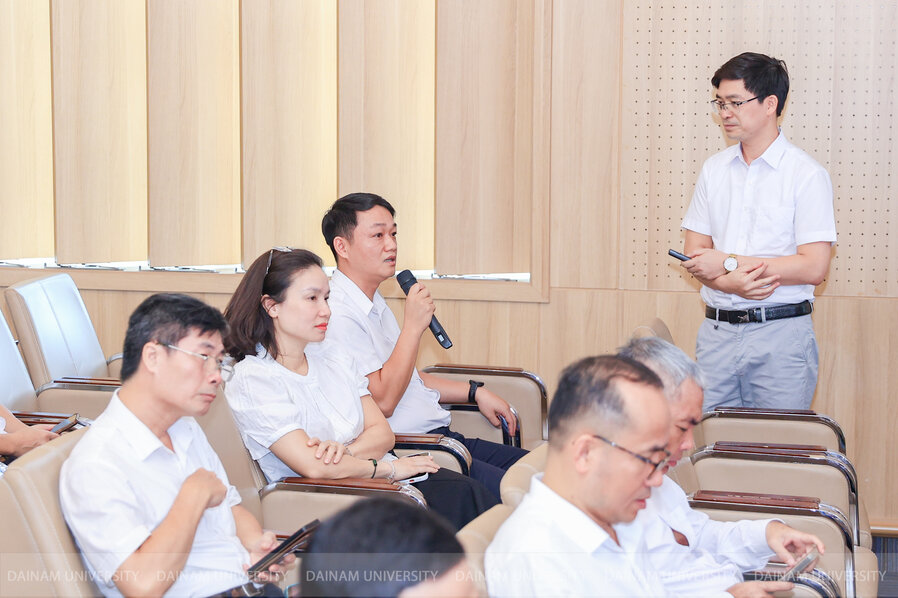
Instead of dedicating most of the time to theory, learners are approached in a cyclical manner: knowledge acquisition - observation of simulations - guided operation - group practice, station-based practice - situational problem-solving - integrated drills. During practice, learners are directly observed, guided, corrected, and given immediate feedback by experts. For skills directly related to life and safety, knowing the correct way is only the first step; learners must practice to be able to act correctly, promptly, and calmly when real-life situations occur.
This organizational approach also clearly reflects the training orientation of Dai Nam University: knowledge must be transformed into skills; training content must be linked to practice; and the final results must be demonstrated by the learners' ability to act.
The beginning of a long-term cooperation model.
The training session from August 17-19 was just the beginning of a collaborative effort between Dai Nam University and the Northern Power Corporation. Following the program, the University's Faculty of Soft Skills Training and Development will continue to cooperate with experts to organize training at power companies in the northern provinces. Through this, training activities will be brought closer to the workers, and the content and practical scenarios will be adjusted to suit the specific characteristics of each unit.
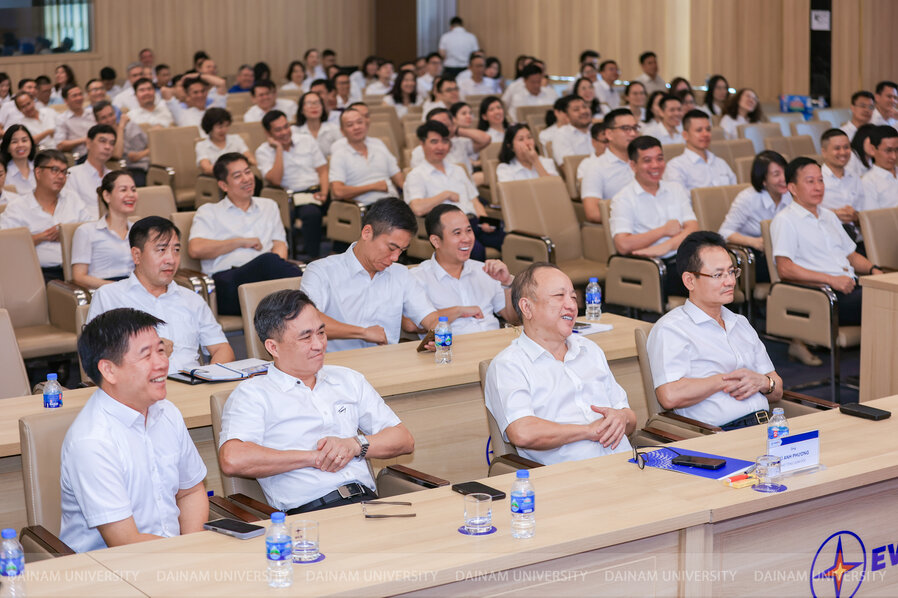
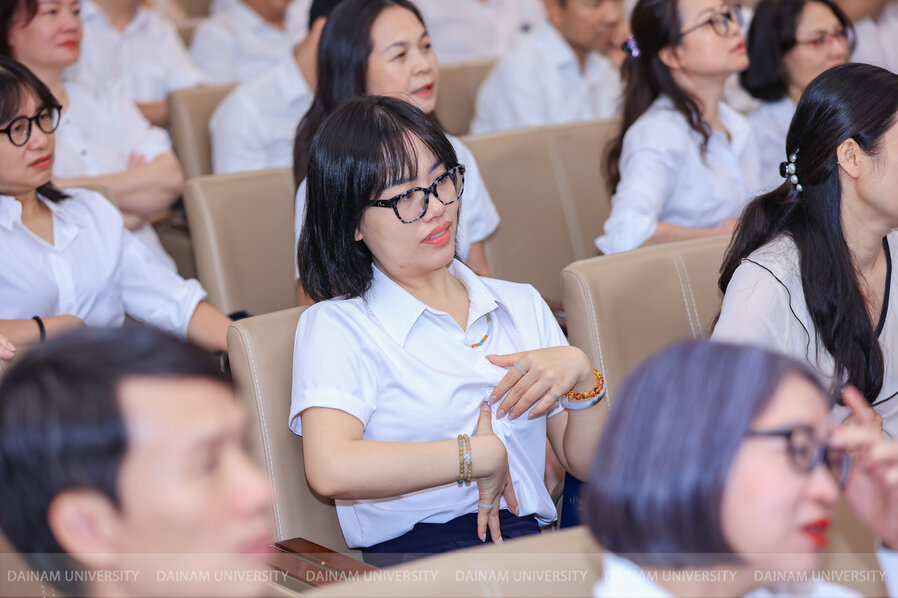
Trainees practice in groups and stations under the direct observation and guidance of experts, thereby receiving immediate corrections and skill refinement.
In the long term, both sides aim to build a multi-level training roadmap: disseminating safety knowledge and skills to the general public; providing in-depth training for core personnel; enhancing practical exercises and drills; evaluating post-training capabilities; and gradually standardizing the model for replication throughout the EVNNPC system.
From a specific need, the collaboration between Dai Nam University and EVNNPC is opening up a systematic and long-term direction of cooperation. The enterprise brings practical operational problems; the university leverages its knowledge, expert team, and training capacity to find solutions; and the workers are the direct beneficiaries of the program.
This training program is the first step in a long-term cooperation roadmap between Dai Nam University and EVNNPC, aiming to build a safety training model suitable for the specific characteristics of the electricity industry.
For Dai Nam University, partnering with EVNNPC in the journey of caring for, protecting, and developing the capabilities of its workforce is an honor, a source of pride, and also a responsibility. This is an opportunity for university knowledge to step out of the classroom, be present in practice, and create tangible value for businesses, workers, and the community.
Because in emergency situations, the difference between "knowing" and "doing the right thing" is sometimes measured in seconds. Equipping hundreds of employees with the capacity to respond effectively not only helps protect each individual in the workplace but also creates more people who can support colleagues, family, and the community when incidents occur.
That is also the value that Dai Nam University pursues: education should not stop at knowledge, but must create real capabilities and real changes in practice.
BTT