English
 Tiếng Việt
What makes a quality healthcare training institution?



Each admissions season, the health sciences sector always attracts special attention from students and parents. The cut-off scores for medicine, pharmacy, and nursing programs are often among the highest in the country. However, when choosing a university, more and more parents are not only concerned about whether their child will be admitted, but are more interested in one question: Where should their child study to truly become a skilled doctor, pharmacist, or nurse after 4-6 years?
Because the entrance exam score only determines the opportunity to enter university. What truly determines one's future career is the quality of education and the competence of the student after graduation.
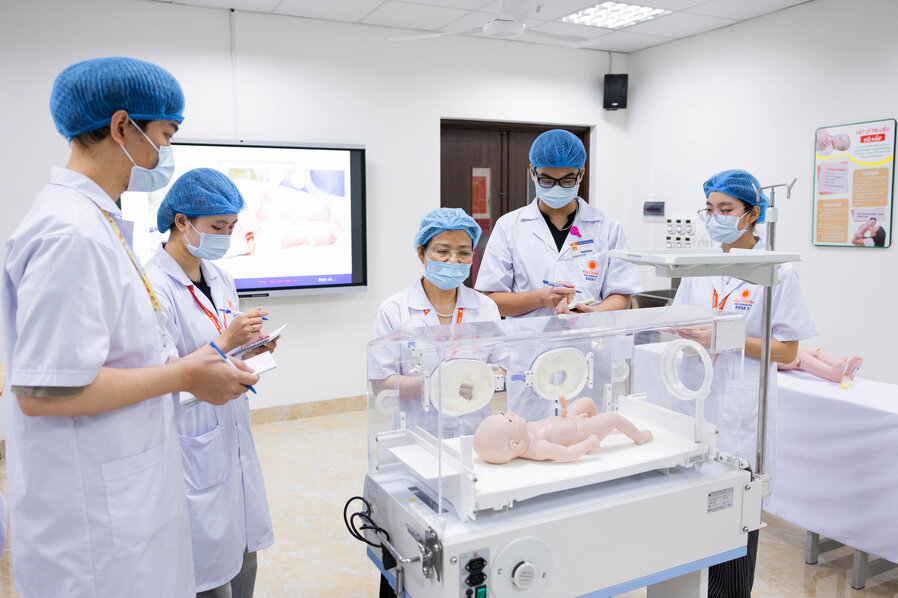
HIGH BENCHSTONE SCORES REFLECT APPEAL, NOT THE ONLY MEASURE OF SUCCESS
For many years, the health sciences sector has consistently had some of the highest entrance exam scores nationwide. Fields such as Medicine and Dentistry have very high competition rates; Pharmacy and Nursing also attract a large number of applicants due to stable workforce demand and wide-ranging career opportunities.
According to Associate Professor, Doctor of Medicine Hoang Duc Hanh - Head of the Faculty of Medicine, Dai Nam University, former Deputy Director of the Hanoi Department of Health, the Ministry of Education and Training's regulation of the minimum quality assurance threshold for admission to health-related fields confirms that candidates achieving 22 points for Medicine, 20 points for Pharmacy, and 18 points for Nursing are fully qualified to study if they have the aptitude, perseverance, and are trained in a suitable environment.
He argued that while admission scores reflect the level of competition in a field of study, they are not the deciding factor in whether someone will become a good doctor.
This view is also shared by Associate Professor Pham Trung Kien, former Vice Rector of the University of Medicine and Pharmacy, Vietnam National University, Hanoi. According to him, in addition to academic ability, students in the health sciences need scientific thinking, meticulousness, a sense of responsibility, compassion, and the ability to withstand professional pressure. These qualities are developed throughout the training and development process.
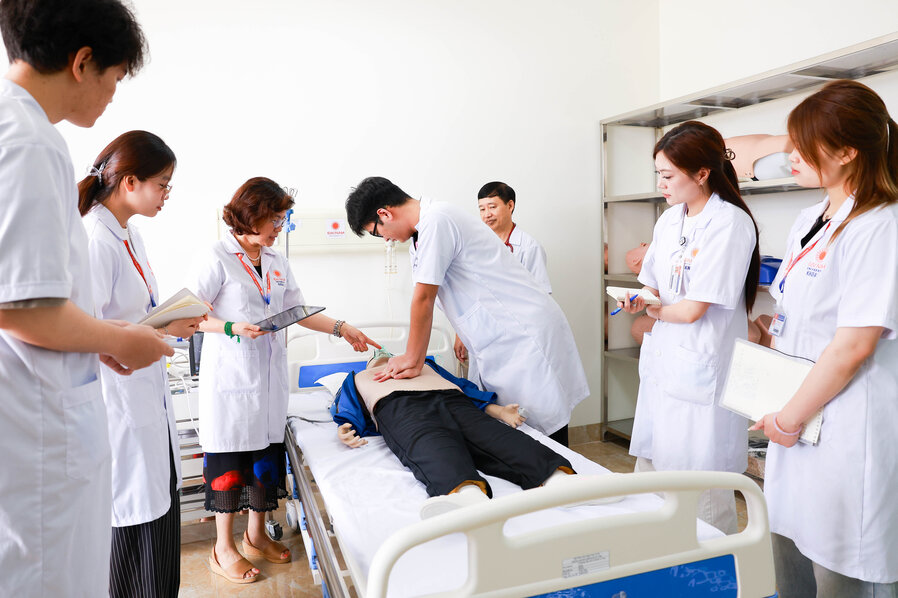
THE QUALITY OF TRAINING DETERMINES THE VALUE OF A PHYSICIAN.
A health-related training institution is not judged by entrance exam scores, but by very practical questions:
After graduation, will patients have enough confidence to entrust their health and lives to that doctor?
This is also the direction that Dai Nam University is steadfastly pursuing, identifying Medicine, Pharmacy, and Nursing as the three pillars of training in the Health Sciences sector.

After 15 years of development, the Pharmacy program has trained many generations of pharmacists who are working in hospitals, pharmaceutical companies, pharmacy chains, and health management agencies nationwide. The training program is designed in a modern way, emphasizing practical application and closely following the practical needs of the industry.
In the field of Medicine, the first graduating class of doctors from Dai Nam University has officially completed their studies, marking a significant milestone in the university's development. Notably, 95.4% of students graduated on schedule, and 13 new doctors were admitted to the residency program – a highly competitive postgraduate training program considered one of the important indicators of a young doctor's professional competence.


Meanwhile, the Nursing program is designed with an application-oriented approach and a large amount of practical training, helping students quickly become familiar with the hospital environment, master professional skills, and confidently enter the labor market.
These results demonstrate that Dai Nam University's goal is not only to train students to graduate on time, but also to train healthcare professionals with genuine professional competence.
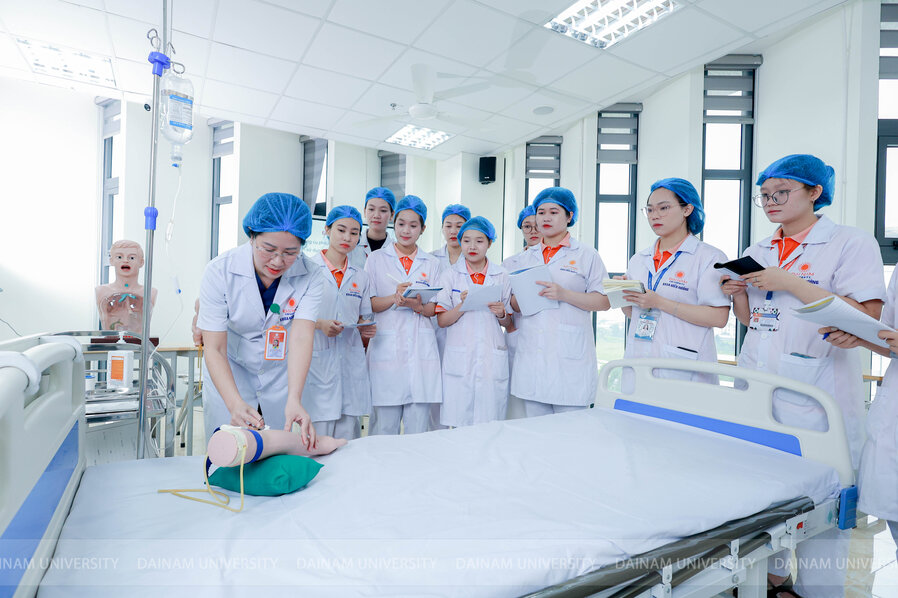
TRAINING SKILLED WORKERS, NOT JUST TRAINING PEOPLE WITH DEGREES.
According to Associate Professor Dr. Dao Thi Thu Giang - Rector of Dai Nam University, the university's goal is not just to help students complete their studies, but also to train a team of medical professionals with sufficient professional knowledge, skills, medical ethics, and courage to serve the community.
Students study in modern practice rooms and laboratories; gain enhanced practical experience at partner hospitals and medical facilities; and are equipped with foreign language skills, communication skills, teamwork skills, and the ability to adapt to the professional environment in the context of integration.
From hesitant students on their first day of school, through thousands of hours of theoretical study, practical training, clinical internships, and professional skills development, they gradually mature to confidently wear the white lab coat with the responsibility of caring for and protecting human health.
The philosophy of "Dedicated to the learner" is realized through a training program closely linked to practice, using output competencies as a measure of training quality.
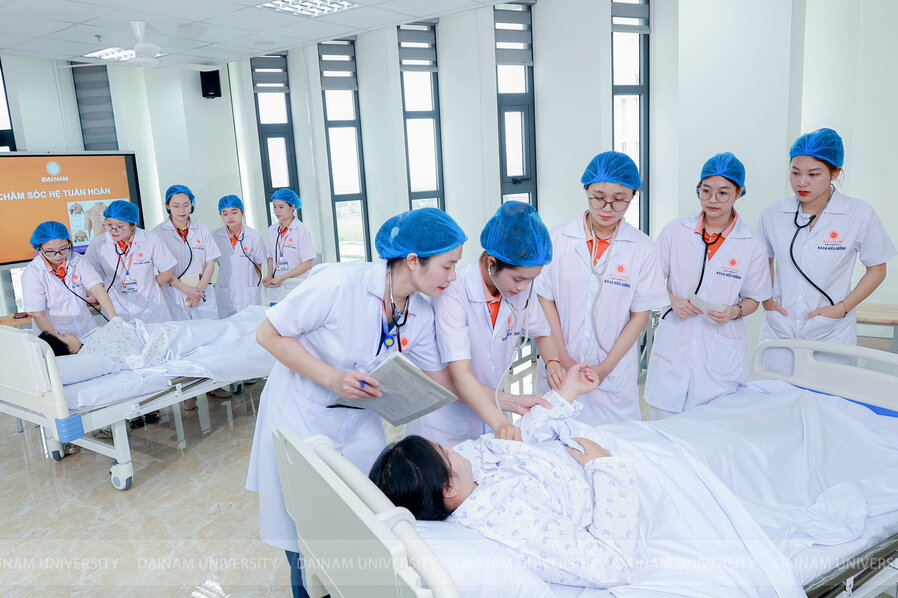
CHOOSING THE RIGHT TRAINING ENVIRONMENT MEANS CHOOSING THE RIGHT CAREER FUTURE.
According to experts, instead of focusing solely on admission scores, candidates should consider more important factors such as the training program, faculty, practical training conditions, career opportunities, and the quality of graduates.
These are also the values that Dai Nam University is bringing to its students: a team of experienced professors, doctors, and experts; training programs linked to practical experience at hospitals and businesses; a modern infrastructure; a scholarship fund of 55 billion VND; a policy of committing to not increasing tuition fees throughout the entire course; and a dynamic and humane learning environment.
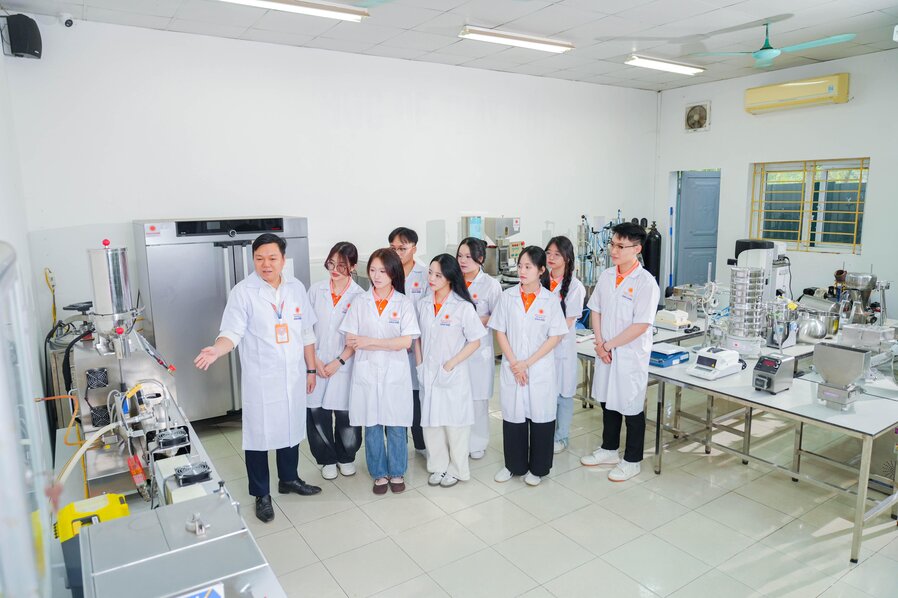
For the health sector, choosing a university is not just about choosing a place to study, but about choosing an environment that is good enough so that after years of training, students can confidently enter the profession with real competence, strong medical ethics, and a desire to serve public health.
That is also the spirit of "Unleash your identity - Illuminate your journey" that Dai Nam University persistently pursues in its journey of training future generations of healthcare professionals.

Multiple admission methods for health-related fields in 2026
In 2026, Dai Nam University (school code DDN) will recruit students for its regular undergraduate programs in the Health Sciences field through four methods:
1. Admission will be based on the results of the 2026 high school graduation exam.
2. Admission based on high school transcripts.
3. Direct admission according to the regulations of the Ministry of Education and Training.
4. Admission is based on the results of the High School Aptitude and Thinking Skills Assessment (HSA) exam.
>>> Register for admission at: https://xettuyen.dainam.edu.vn/
BTT