English
 Tiếng Việt
What is the Korean Language major? What do you study and what are the career opportunities?



What is the Korean Language major? What do you study and what are the career opportunities? These are questions that many students and parents are interested in as Korean is increasingly becoming one of the foreign languages with high recruitment demand in Vietnam.
What is the Korean Language major?
The Korean Language major is a program that provides in-depth training in the Korean language, while also equipping students with knowledge of Korean culture, history, society, economy, and people.
Unlike learning Korean at language centers, students majoring in Korean Language receive comprehensive training in both language proficiency and professional skills. They not only become proficient in listening, speaking, reading, and writing Korean, but also learn how to apply the language in business, commerce, tourism, education, and international exchange activities.
Amidst the growing cooperation between Vietnam and South Korea, and with the presence of thousands of Korean businesses in Vietnam, the Korean language is becoming one of the foreign languages with high demand for human resources. This is also why the Korean Language major is chosen by many students due to its wide range of job opportunities and career development potential in an international environment.

Why is the Korean Language major becoming increasingly attractive to students?
In recent years, the Korean Language major has consistently been among the most popular foreign language majors, attracting many applicants due to its wide range of job opportunities and increasing demand for personnel.
South Korea is currently one of the largest foreign investors in Vietnam, with thousands of businesses operating in manufacturing, technology, trade, services, and logistics. The presence of major corporations such as Samsung, LG, Hyundai, Lotte, CJ, Posco, and Doosan has led to a high demand for Korean-speaking personnel in various positions, from translation and interpretation to human resources, public relations, and international business.
Besides job opportunities, the Korean cultural wave (Hallyu) also contributes to the strong appeal for young people. Korean music, movies, fashion, food, and technology have become familiar to many students, thereby sparking a desire to learn more about the language and culture of this country.
In particular, amidst the growing economic, educational, and cultural cooperation between Vietnam and South Korea, those who know Korean have many opportunities for study, work, and career development in an international environment. This is one of the reasons why the Korean Language major has become an attractive choice for many students today.
What do you study in the Korean Language major?
The Korean Language program is designed to combine linguistic knowledge, cultural understanding, and professional skills, enabling students to use Korean in their studies, work, and international environments.
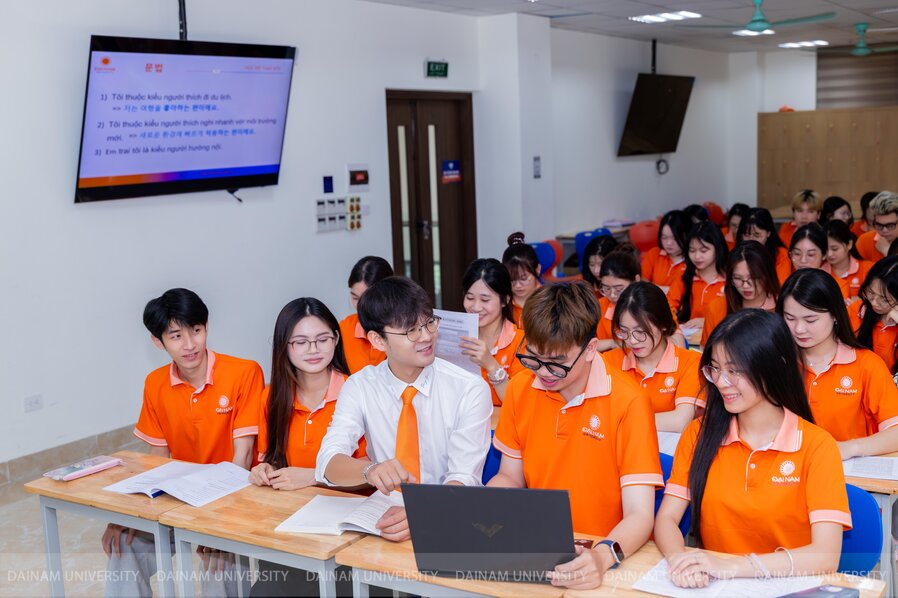
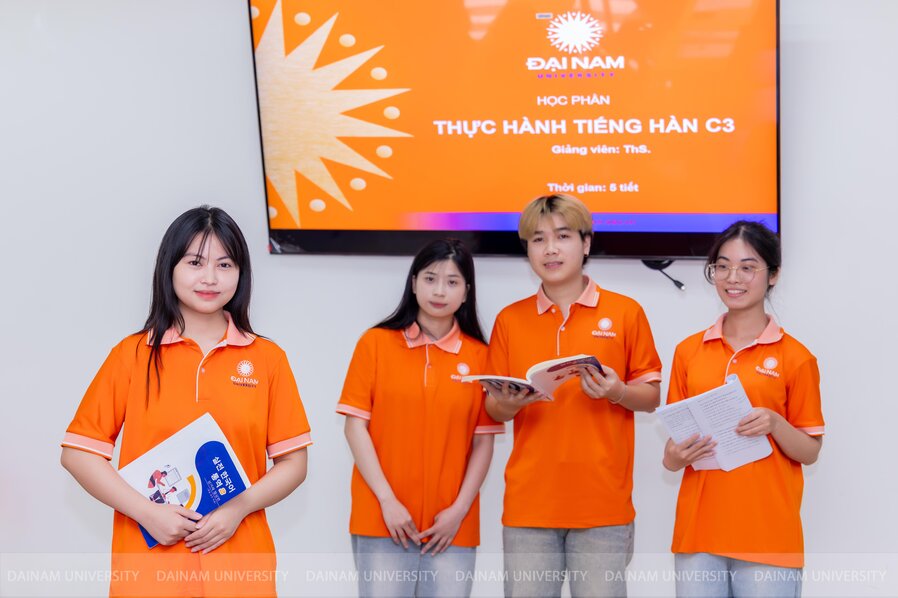
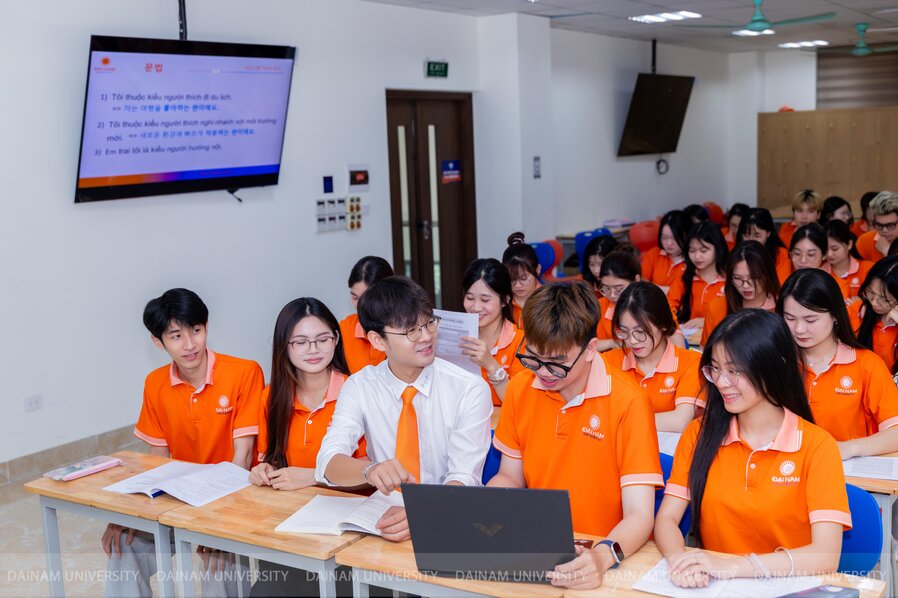
During their studies, students are comprehensively equipped with all four Korean language skills: listening, speaking, reading, and writing. They also study modules on grammar, vocabulary, academic Korean, and specialized Korean to enhance their language proficiency.
In addition, students will learn about Korean culture, history, society, economy, and people. This is an important foundation that helps students gain a deeper understanding of partners, customers, and the working environment of Korean businesses.
What sets the current Korean Language program apart is its focus not only on language skills but also on developing professional competencies. Students are introduced to modules such as Korean translation and interpretation, business Korean, corporate communication, and skills for working in an international environment.
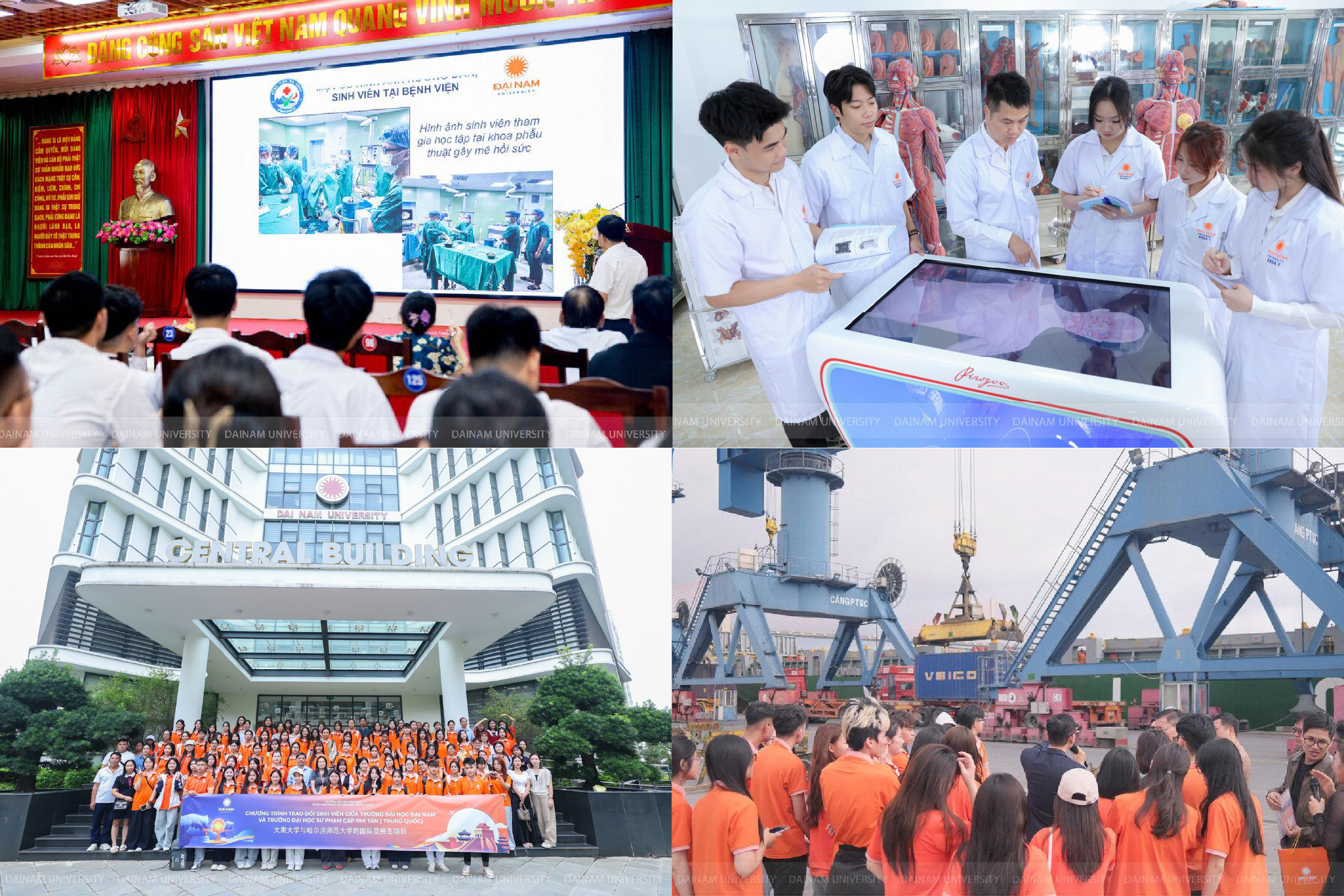
At many universities, including Dai Nam University, students also participate in business experience activities, interact with native-speaking experts, undertake practical internships, and participate in academic exchange programs with Korean partners. These experiences help students quickly access the real-world work environment, enhance their professional skills, and increase their competitive advantage after graduation.
Is it easy to find a job with a Korean language degree?
The answer is yes, if the learner possesses good Korean language skills along with suitable professional skills.
Currently, the demand for personnel fluent in Korean remains high, especially in Korean companies operating in the manufacturing, technology, trade, logistics, and service sectors. Vietnam is now a destination for thousands of Korean businesses, leading to a significant need for human resources capable of using Korean in the workplace.
The income level for personnel fluent in Korean is also considered quite competitive. For recent graduates, the salary typically ranges from 10 to 15 million VND per month. For positions requiring a high level of Korean proficiency, work experience, or a high TOPIK certificate, the income can reach 15 to 30 million VND per month, or even higher in positions such as interpreter, executive assistant, external relations specialist, or project manager.
However, businesses today not only recruit people who know Korean but also prioritize candidates who can use Korean for work, communication, problem-solving, and adapting to an international environment. Therefore, in addition to foreign languages, students need to proactively equip themselves with soft skills, digital skills, an integrated mindset, and practical experience to enhance their competitiveness in the labor market.

What kind of jobs can you get after graduating with a degree in Korean Language?
This is one of the most frequently asked questions by students and parents when researching the Korean Language major.
In fact, career opportunities for Korean language students are quite diverse thanks to the increasing demand for recruitment from Korean companies and companies with Korean investment in Vietnam.
After graduation, students can work in various fields such as manufacturing, trade, import/export, logistics, tourism, education, media, and international services. The work environment is not limited to Korean businesses but extends to multinational corporations, international organizations, and agencies that collaborate with Korea.
Some common job positions include:
- Korean translator/interpreter.
- Assistant and secretary to a Korean leader.
- Human Resources Specialist at a Korean company.
- External relations specialist, international relations.
- Sales and market development specialist for the South Korean market.
- International Customer Service Specialist.
- Korean-speaking tour guide.
- Teaching Korean at language centers or educational institutions.
- Researcher in the field of Korean Studies.
In particular, with the strong development of cooperation between Vietnam and South Korea, the demand for personnel fluent in Korean is constantly increasing. This is an advantage that gives students majoring in Korean Language many job opportunities immediately after graduation.
The starting salary for recent graduates typically ranges from 10 to 15 million VND per month. Those with a high TOPIK certificate, work experience, or positions in translation/interpretation, public relations, executive assistant, or project management can earn between 15 and 30 million VND per month, or even higher depending on their skills and experience.
With an increasing number of South Korean businesses investing in Vietnam, Korean is not just a foreign language but is becoming a career advantage, helping young people access more job opportunities and develop their careers in an international environment.
Where is a good place to study Korean Language?
At Dai Nam University, the Korean Language major is designed to be closely aligned with the practical needs of businesses and the trend of international integration.
According to Dr. Tran Hai Duong, Head of the Department of Korean Language and Culture, the program's goal is not only to help students become proficient in Korean and understand Korean culture and people, but also to equip them with the skills to work in a business environment immediately after graduation.
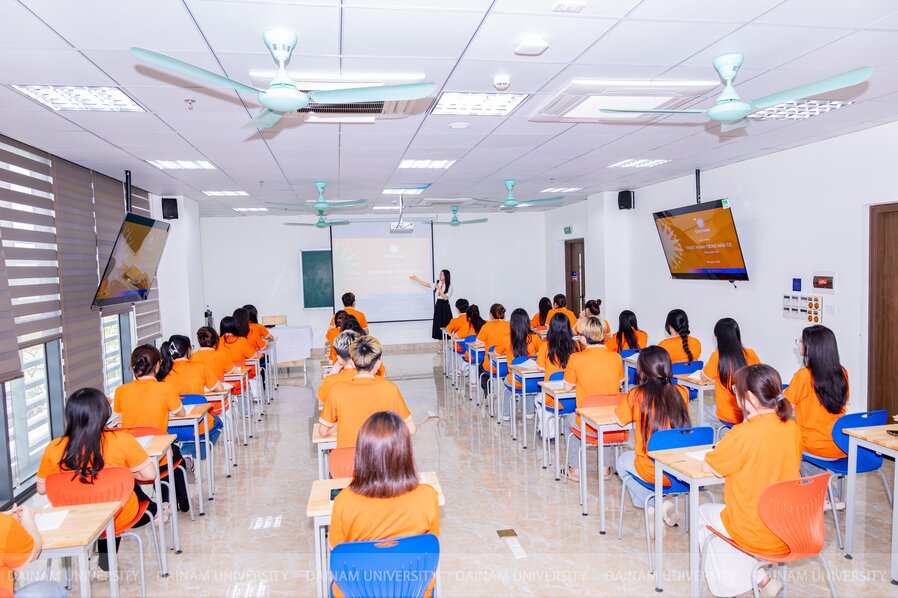
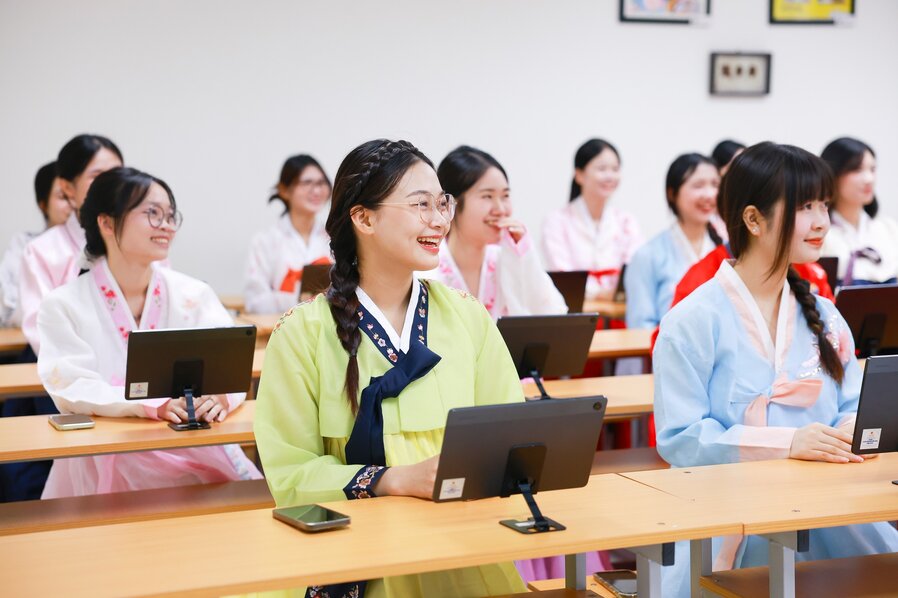
A class session for students majoring in Korean Language at DNU.
"We don't train students just to know Korean, but aim to train people who can use Korean as a tool to work, connect, and create value in an international environment. Therefore, the curriculum is always linked to practical applications, professional skills, and the recruitment requirements of the labor market," said Dr. Tran Hai Duong.
Students can choose from two specializations: Korean Translation and Interpretation, and Business Korean. In addition to specialized knowledge, the training program enhances practical business experience, simulating real-world work environments and developing application skills.

Students majoring in Linguistics at Dai Nam University are participating in an exchange program in South Korea with a 100% scholarship.
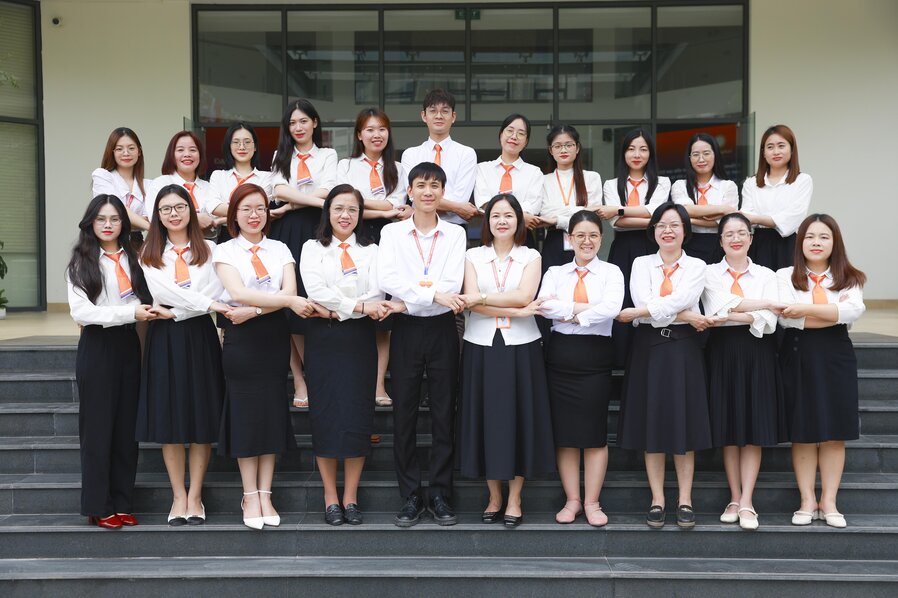
Faculty members of the Department of Korean Language and Culture, Dai Nam University.
Through collaborative networks with Korean universities and businesses, students have the opportunity to participate in academic exchange programs, international semesters, internships, and gain practical work experience during their studies.
To support students, the school invests in specialized classrooms, digital learning materials, a team of experienced lecturers, and numerous scholarship programs to encourage academic achievement. In addition, the policy of committing to no tuition fee increase throughout the entire course helps parents and students be more proactive in their long-term financial planning.

A panoramic view of Dai Nam University.
Amidst the growing cooperation between Vietnam and South Korea, the Korean Language major is opening up many job opportunities and career development prospects for young people.
If you love foreign languages, aspire to work in an international environment, and are looking for a highly practical field of study, Korean Language at Dai Nam University is a worthwhile option to consider.
In 2026, Dai Nam University will recruit students for the Korean Language major through five methods: considering high school graduation exam scores; considering high school academic transcripts; direct admission according to the regulations of the Ministry of Education and Training; considering the results of aptitude and thinking assessment exams (HSA, TSA, SPT, V-SAT); and admission based on the results of vocational school, college, or university graduation in the same field.
Register for admission: https://xettuyen.dainam.edu.vn/
Alternatively, contact our hotline at 0961 595 599 / 0931 595 599 for advice.
BTT