English
 Tiếng Việt
Cafef.vn - AI can translate Korean, but it cannot replace young people who possess this ability.



Just a few years ago, foreign language proficiency was considered a significant advantage for young people entering the job market. However, the emergence of AI is forcing many to reconsider this view.
Today, AI can translate almost instantly, assist in writing content in multiple languages, and even participate in conversations with increasing accuracy. Jobs that once required specialized language skills are now being performed faster and at lower costs by technology.
In this context, the question arises: What will language students use to compete?
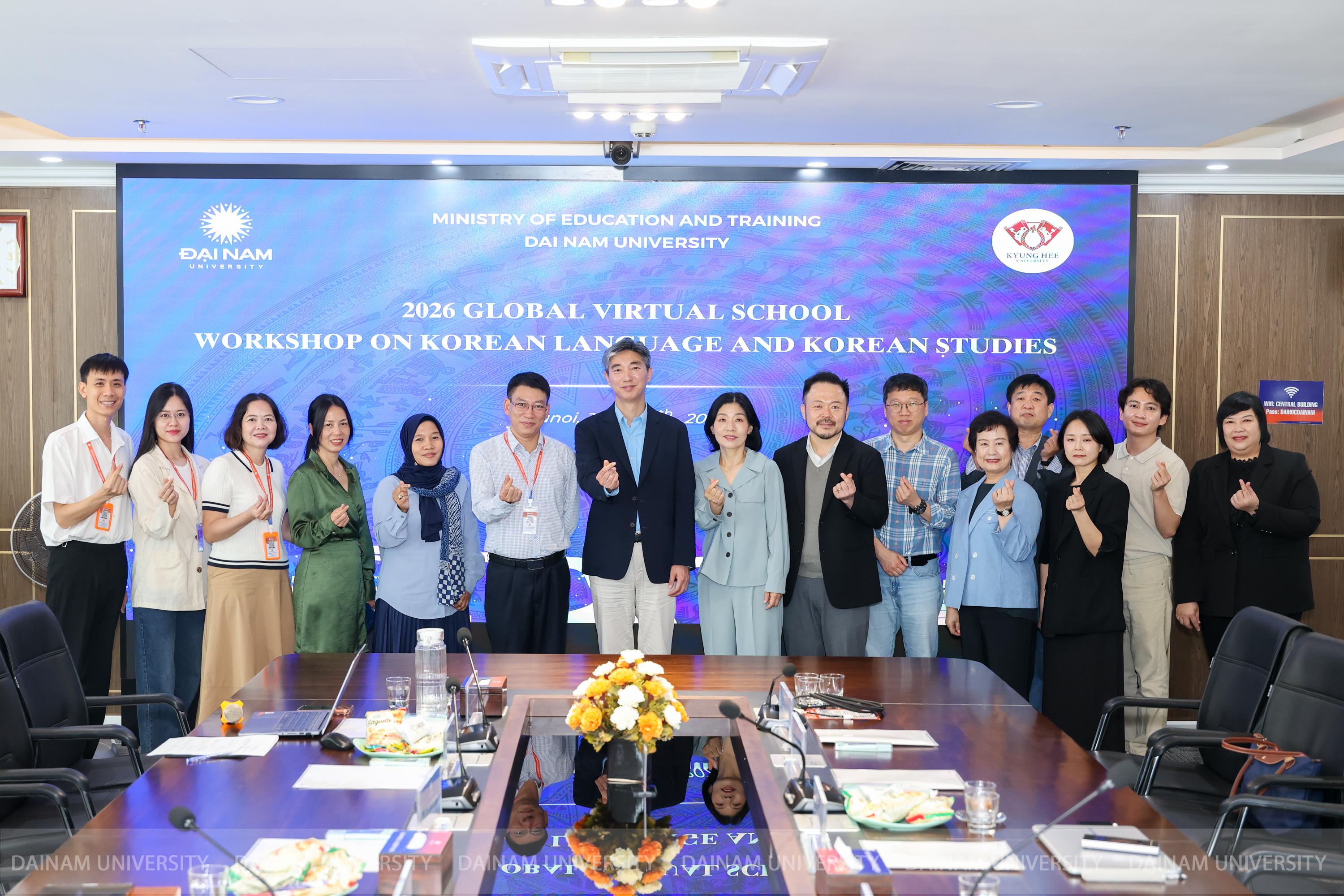
This was also one of the topics discussed by Vietnamese and Korean experts at the international scientific conference "Digital Transformation in Korean Language and Korean Studies Education: Connecting Vietnamese and Korean Academia Towards the Future" organized by Dai Nam University.
When knowing a foreign language is no longer an absolute advantage.
According to Woo Hyung Min, Chief Representative of the Hanoi Office of the Korea Foundation (KF), the rapid development of technology is creating profound changes to language training.
"In a period of significant change due to technological advancements, the fact that experts from both countries are discussing digital transformation and seeking solutions is extremely timely and encouraging," said Woo Hyung Min.
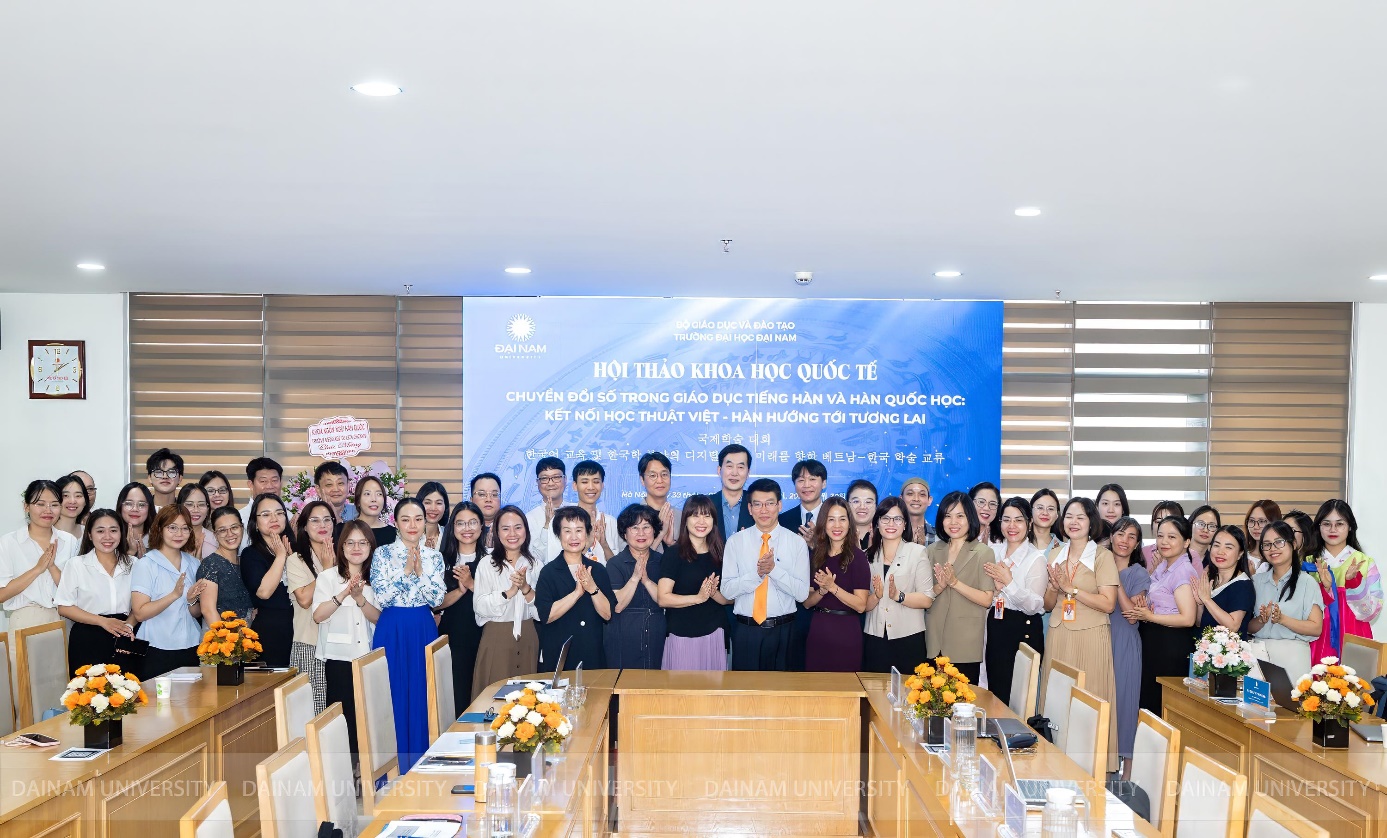
The workshop brought together leading Korean language experts from both the country and internationally.
In reality, businesses today are no longer looking for employees whose skills are limited to just using a foreign language. What they need are people who can use a foreign language as a tool to solve problems, connect with partners, and participate in business activities in an international environment.
Professor Yoon Insun of Hanbat National University (South Korea) argues that adaptability, the ability to work in a multicultural environment, and problem-solving skills are becoming important criteria when recruiting personnel.
In other words, AI can assist with language, but it cannot yet replace the ability to make decisions, negotiate, handle situations, or build relationships in a business environment.
That is also why many experts believe that foreign language education is entering a new phase of transformation: training is not just about knowing the language, but about working with the language.
Opportunities remain wide open for those who know Korean.
Technological changes do not necessarily mean a decline in the demand for foreign language professionals.
Conversely, alongside the wave of investment by South Korean businesses in Vietnam, the demand for personnel proficient in Korean remains high in many sectors such as manufacturing, trade, logistics, technology, services, and finance. However, the market is showing a clear trend towards differentiation.
While previously, the ability to communicate in Korean could easily help workers find jobs, businesses now expect more from candidates who understand the international work environment, possess professional skills, and can adapt to technological changes.
According to experts, this is precisely why language training programs must change.
From language training to job skills training
In response to the increasing demands of the labor market, many foreign language training programs are shifting from a model of language knowledge transmission to developing professional skills for learners.
At Dai Nam University, the Korean Language major is designed to be closely aligned with the practical needs of businesses and the trend of international integration.
According to Dr. Tran Hai Duong, Head of the Department of Korean Language and Culture, the program's goal is not only to help students become proficient in Korean and understand Korean culture and people, but also to equip them with the skills to work in a business environment immediately after graduation.
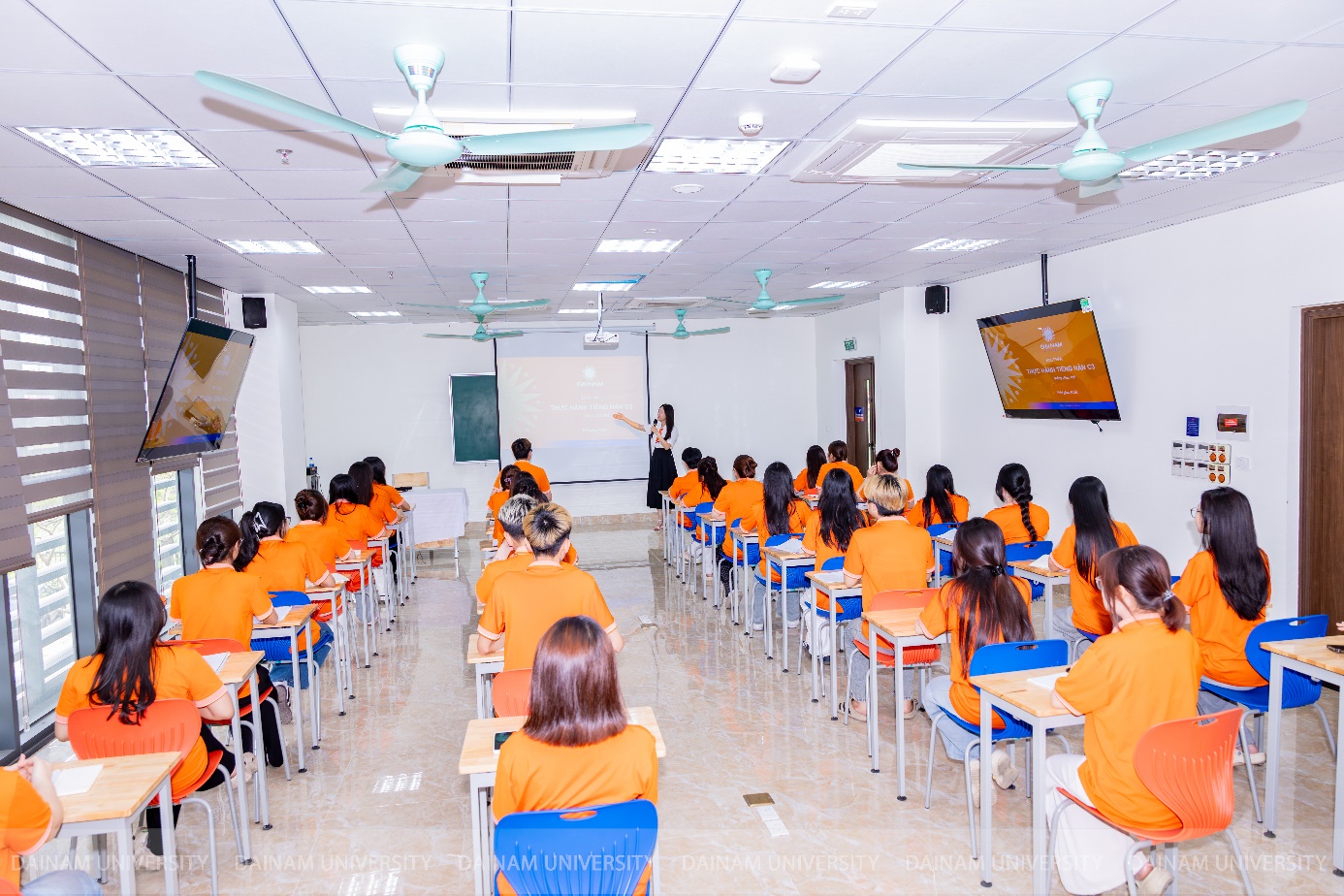
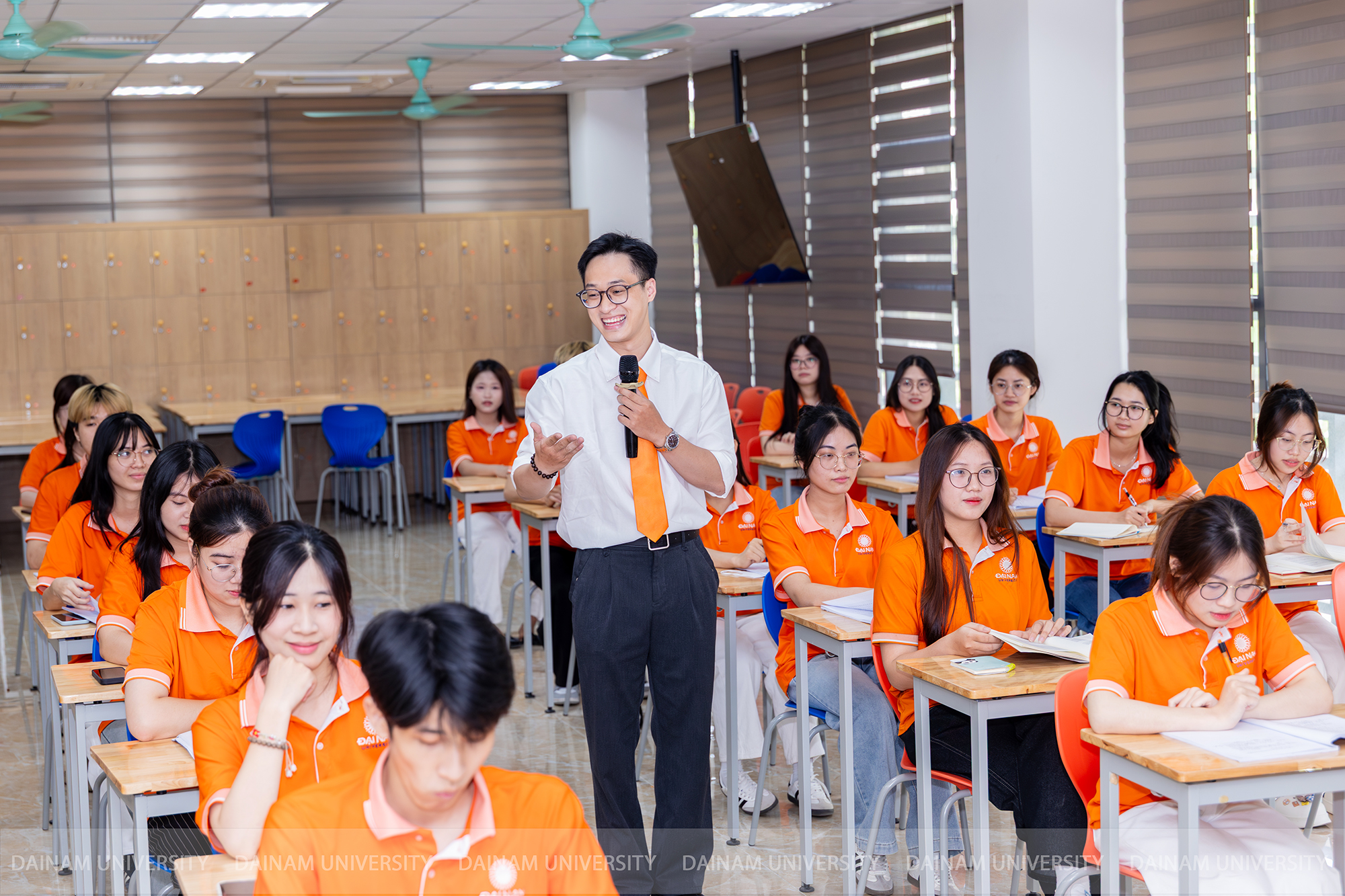
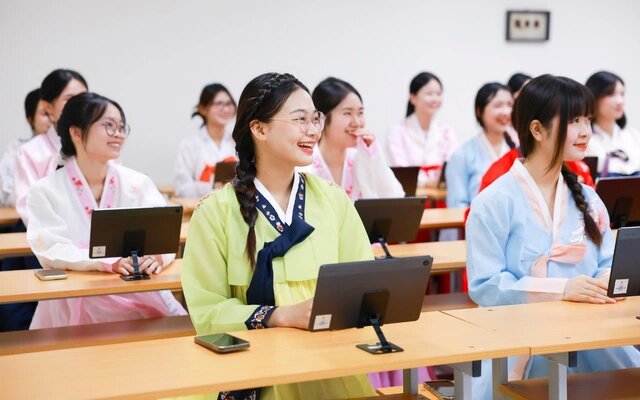
A class session for students majoring in Korean Language at DNU.
"We don't train students just to know Korean, but aim to train people who can use Korean as a tool to work, connect, and create value in an international environment. Therefore, the curriculum is always linked to practical applications, professional skills, and the recruitment requirements of the labor market," said Dr. Tran Hai Duong.
Students can choose from two specializations: Korean Translation and Interpretation, and Business Korean. In addition to specialized knowledge, the training program emphasizes practical business experiences, simulating real-world work environments, and developing applied skills.
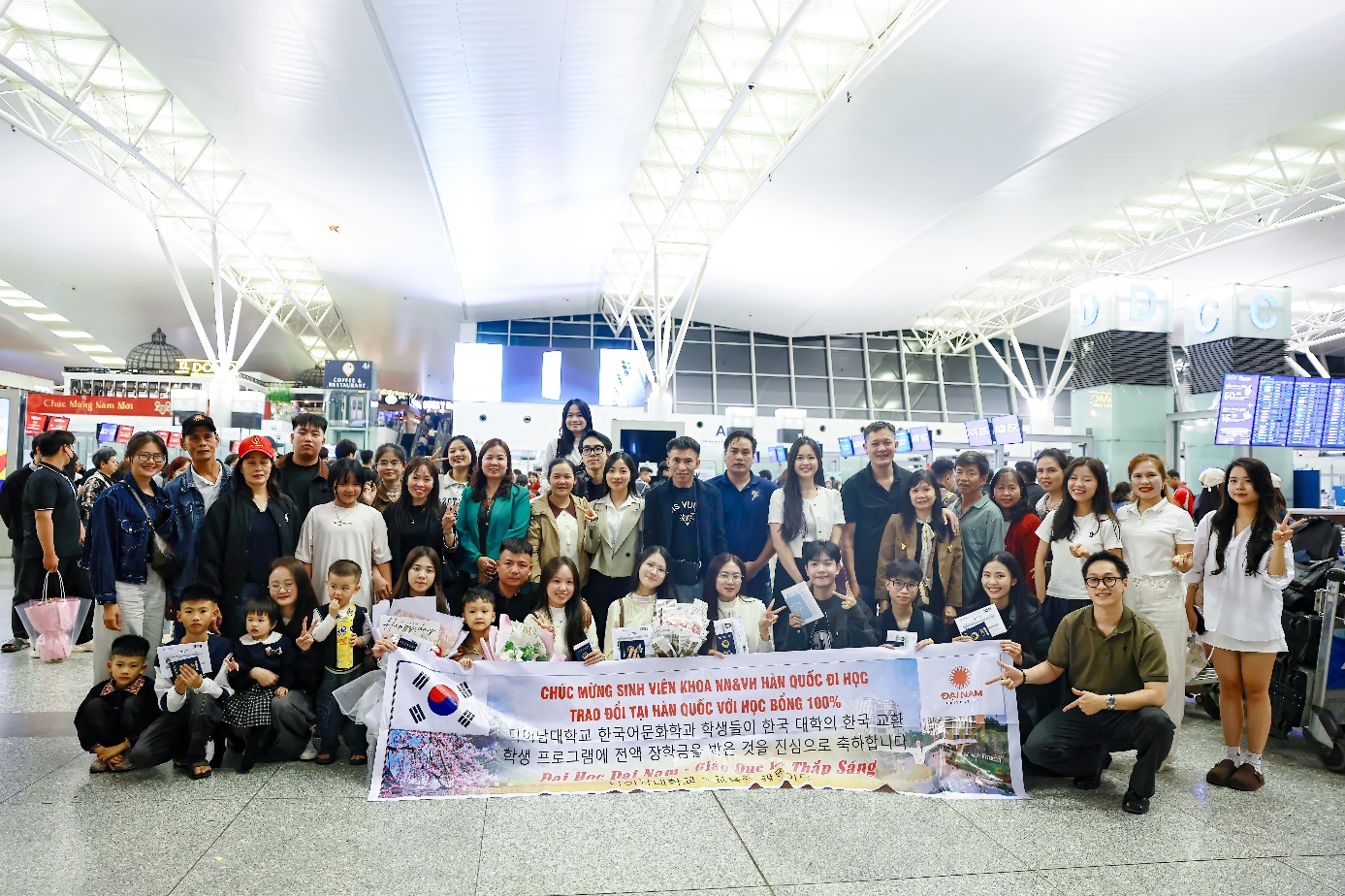
Students majoring in Linguistics at Dai Nam University are participating in an exchange program in South Korea with a 100% scholarship.
Through a network of collaborations with Korean universities and businesses, students have the opportunity to participate in academic exchange programs, international semesters, internships, and gain practical work experience during their studies.
To support students, the school invests in specialized classrooms, digital learning materials, a team of experienced lecturers, and numerous scholarship programs to encourage academic achievement. In addition, the policy of committing to no tuition fee increase throughout the entire course helps parents and students be more proactive in their long-term financial planning.
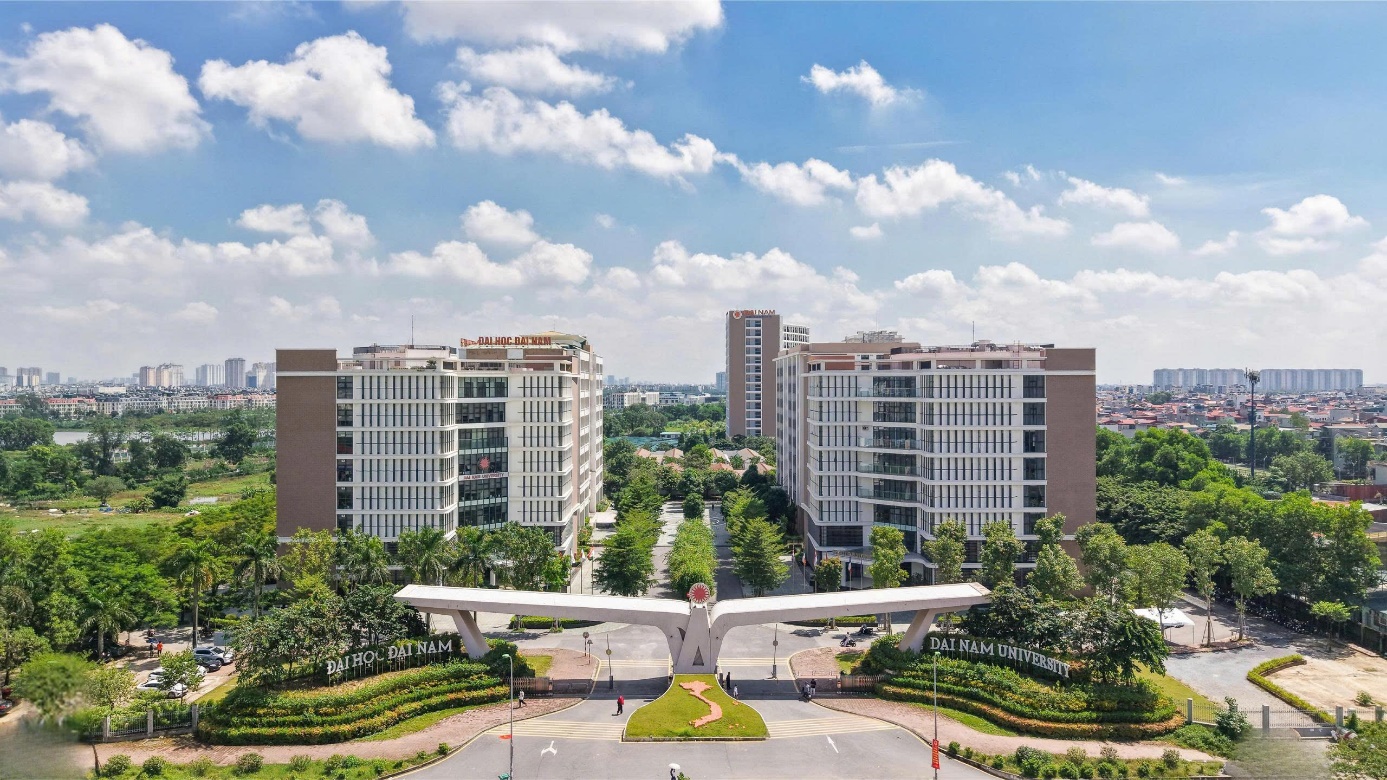
A panoramic view of Dai Nam University.
In 2026, Dai Nam University will recruit students for the Korean Language major through five methods: considering high school graduation exam scores; considering high school academic transcripts; direct admission according to the regulations of the Ministry of Education and Training; considering the results of aptitude and thinking assessment exams (HSA, TSA, SPT, V-SAT); and admission based on the results of vocational school, college, or university graduation in the same field.
Register for admission: https://xettuyen.dainam.edu.vn/
Alternatively, contact our hotline at 0961 595 599 / 0931 595 599 for advice.
Theo CafeF