English
 Tiếng Việt
"Understanding to accompany": From the kindness of each individual to the culture of an entire school.



A question posed right at the beginning of the presentation "Unleashing the Culture of Dai Nam University - Understanding to Accompany" silenced the entire auditorium. Ms. Cao Thi Hoa, Vice President of the University Council, raised the issue: "How can the kindness of educators not only remain as intentions or actions, but become something that students truly feel throughout their journey of growth?"
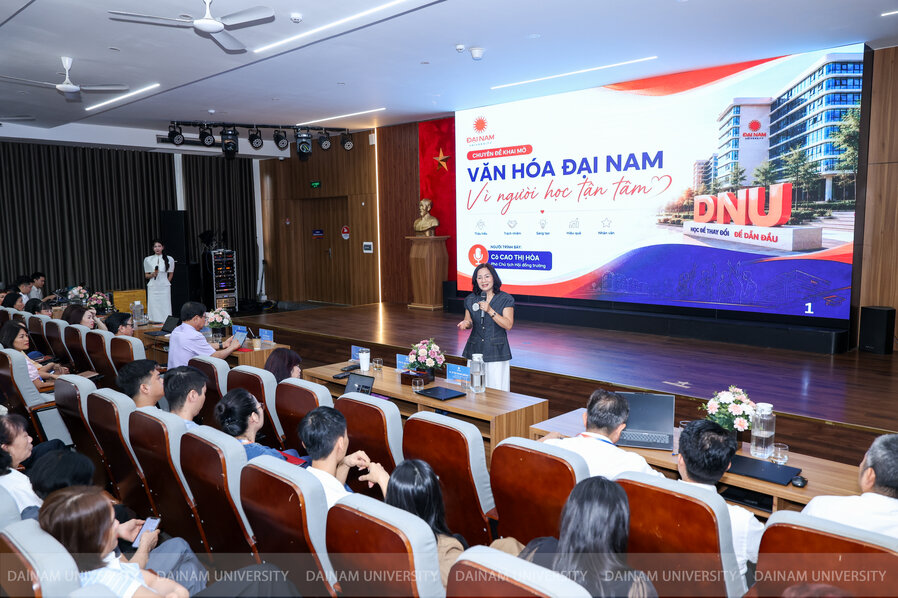
The presentation "Unlocking the Culture of Dai Nam University - Understanding to Accompany" was given by Ms. Cao Thi Hoa - Vice President of the University Council, during the Opening Week of the 2026-2027 academic year.
That question wasn't a random idea, but the starting point of a months-long research process, developed by Ms. Cao Thi Hoa - Vice President of the School Board - and her colleagues from survey data of 17,930 students, over 2,000 in-depth interviews, and thousands of student feedback comments.
It's worth noting that this thematic study wasn't designed to answer the question, "What has Dai Nam University accomplished?" but rather to address a more challenging question: "What have students actually gained from what we are doing?"
The difference in this approach stems from the very way the questions are phrased. When a university shifts from focusing on what it has already accomplished to measuring what its students truly experience, it represents not only a change in governance but also a change in educational philosophy.
Kindness cannot be just something the teacher feels.
For years, educators have talked about dedication. They talk about long hours in the classroom, late nights grading papers, and silent sacrifices. But this paper doesn't ask how hard teachers work. It raises a different question: Do students truly feel that dedication?
Following the opening events of the academic year such as "Hanoi in the Eyes of Others," "Stories of Kindness," and specialized topics on AI and educational innovation, Dai Nam University has chosen to return to the most fundamental value of the teaching profession: kindness.
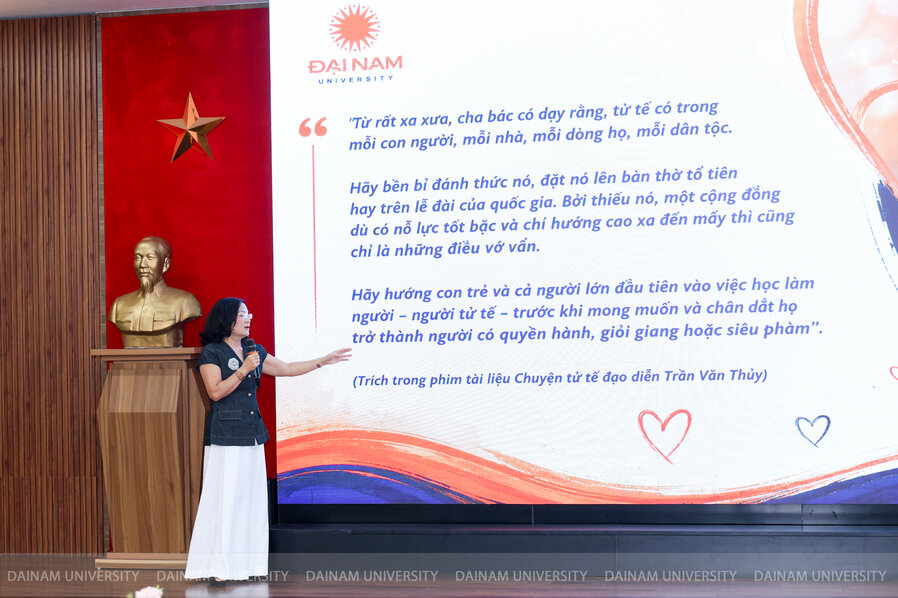
The overarching question of this topic is: How can the kindness of educators be truly felt by learners?
But kindness here shouldn't be seen as a quality for educators to be proud of. It only truly becomes meaningful when it becomes an experience for the learners. That's when Ms. Cao Thi Hoa presents a central argument throughout the topic: "In education, what matters is not how kind we think we are, but how much kindness the learners perceive."
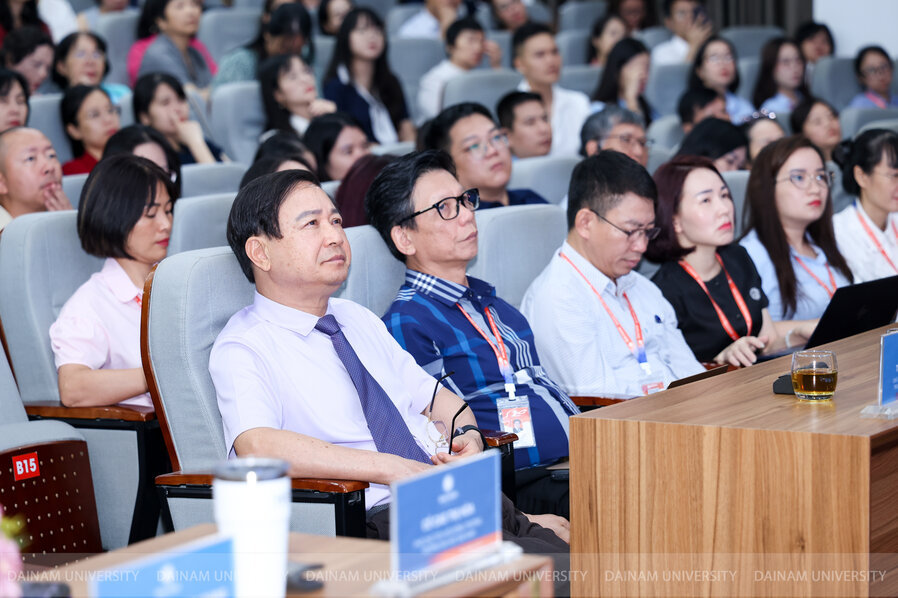
Faculty, lecturers, and staff of Dai Nam University reflect on how to transform kindness into a genuine learning experience for students.
This is also the difference between a dedicated educator and a learner-centered education. Dedication is not measured by what the teacher gives, but by what the learner actually receives. This could be a timely word of encouragement, a call when a student is absent for several days, feedback that isn't overlooked, someone willing to listen, or the feeling that when facing difficulties, you always know who to turn to.
These are all very small things. But it is these small things that determine what students will remember about their school after graduation. Expertise is a necessary condition; to become a true teacher, a lecturer must also know how to listen, understand, and support.
To be able to work together, one must first understand.
If kindness is the destination, then understanding is the journey. According to Ms. Cao Thi Hoa, educators cannot accompany students based solely on emotions, nor can they rely on experience or goodwill. To understand learners, one must first listen to them; and to listen, one must have data.
Therefore, the research team did not stop at satisfaction figures, but delved into the entire student experience journey, from researching the school, enrollment, studying, training, internships, to before graduation.
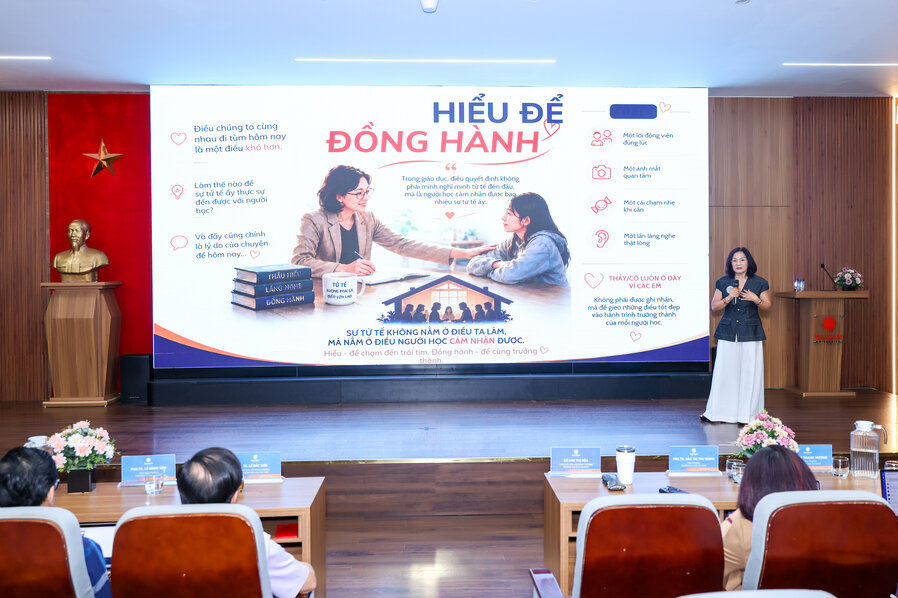
"Understanding to accompany" helps faculty and staff listen to learners through data and their entire experiential journey.
The survey results showed that nearly 90% of students were satisfied and over 92% appreciated the dedication of the faculty and the university. These are encouraging numbers, reflecting the recognized efforts. However, what prompted the most reflection from the audience was the 71% of student feedback. Not because it was a complaint, but because each suggestion contained a gap that needed filling: perhaps information that wasn't delivered on time, a response that wasn't quick enough, a cumbersome process, a lesson that wasn't inspiring enough, or simply an explanation that wasn't relatable enough.
According to Ms. Cao Thi Hoa, praise provides motivation, but it is the areas of dissatisfaction among students that help the school clearly identify areas for improvement. Therefore, throughout the workshop, the question "Which unit is responsible?" was almost non-existent. Instead, a different approach was adopted: "Which touchpoints on the student's journey need better care?" This shift in questioning also represents a movement from a management mindset to an experience-based design mindset, placing the student at the center of all improvements, from fixing errors in individual departments to perfecting the entire journey.
When kindness becomes a systemic capability
One of the most thought-provoking aspects of the seminar was the "10 Links of Partnership" model. When introducing this model, Ms. Cao Thi Hoa emphasized: "The 10 links are not 10 separate steps. They represent 10 promises that Dai Nam University makes to its students."
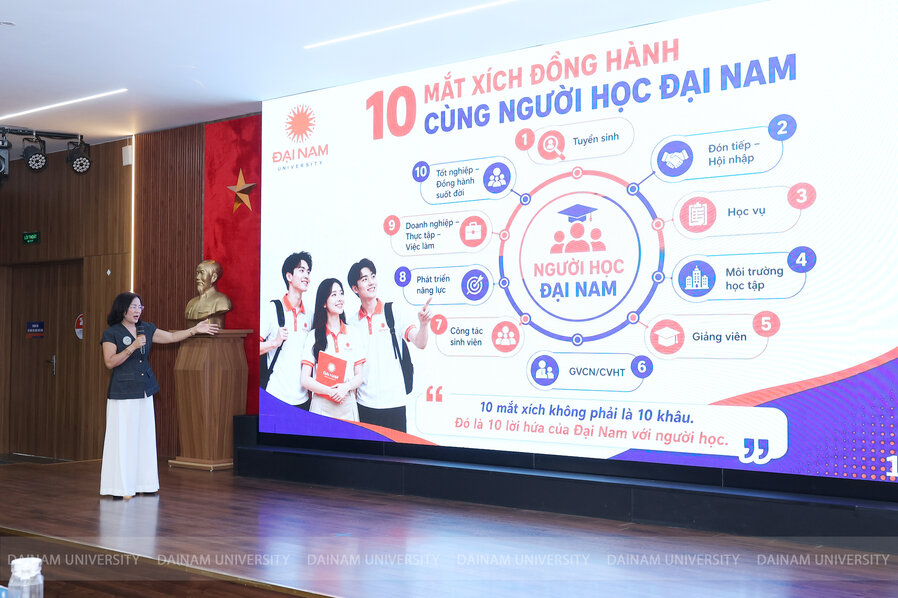
The "10 Links of Partnership" model represents 10 promises that Dai Nam University makes to its students throughout their journey from enrollment to post-graduation.
It's a promise that students will be supported throughout their entire learning journey: from the first day of exploring their chosen field of study, being welcomed upon enrollment, being listened to in class, receiving support when facing difficulties, being connected with businesses, and continuing to be supported even after graduation.
The core value of the model lies not in adding another management process, but in building a system where kindness no longer depends on the dedication of a few individuals. A dedicated teacher is always valuable, but a university cannot place the experience of tens of thousands of students on the shoulders of a few people.
What needs to be built is a system where, at every touchpoint, learners feel cared for, connected, and supported. When each link operates with the same commitment, kindness is no longer an individual quality, but becomes a capability of the entire organization – a capability built on the culture, processes, and shared responsibility of the entire system.
No one is a "supporting character" in education.
The most impactful part of the presentation was when Ms. Cao Thi Hoa mentioned the people who rarely appear on stage, but are present in almost every aspect of the students' experiences: admissions counselors, homeroom teachers, academic staff, student affairs specialists, library staff, technology and engineering personnel, accountants, janitors, and security guards.
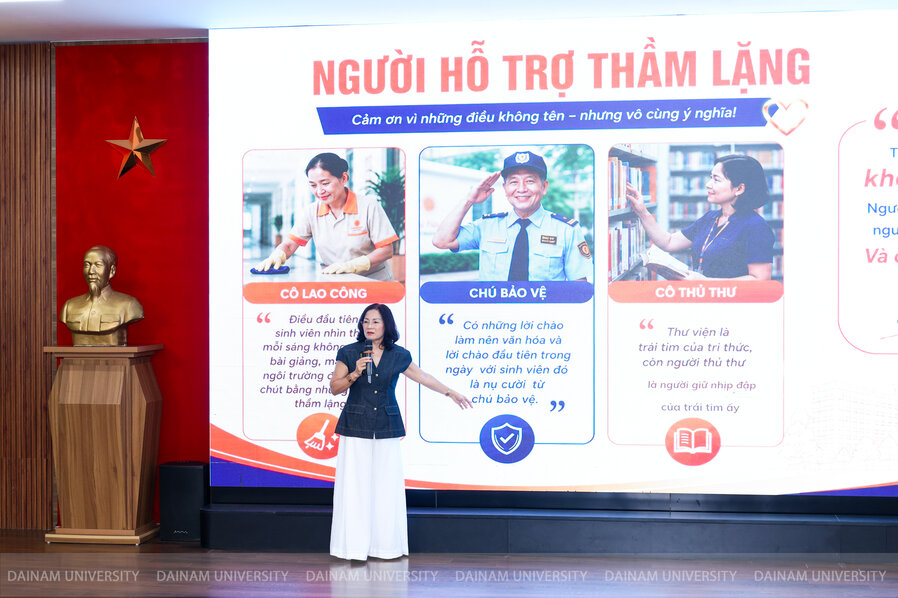
This special feature pays tribute to the unsung heroes – the unsung heroes who contribute to a fulfilling learning experience.
Each person has a different job. Some stand on the podium imparting knowledge, others fix a light bulb, stand guard at the gate from early morning, or quietly clean the hallways before students arrive for class. They don't teach directly, but they are all contributing to education through their daily work.
Because education doesn't just happen in a single class. Education is present in every greeting, every phone call received, every email responded to on time, every timely support provided when students encounter difficulties, and in the way each faculty member and staff member chooses to interact with learners.
A university is remembered not only for its inspiring lectures or quality training programs, but also for the feeling students carry with them each day when they enter the campus. When every member understands that they are a link in the students' journey of growth, no one will be a "supporting character" in education. Because every act of dedication, however quiet, contributes to creating a humane learning environment and a complete educational experience.
What remains after a sharing session
After the workshop, what many faculty and lecturers took home was not a new model or process, but a new way of questioning their own daily work.
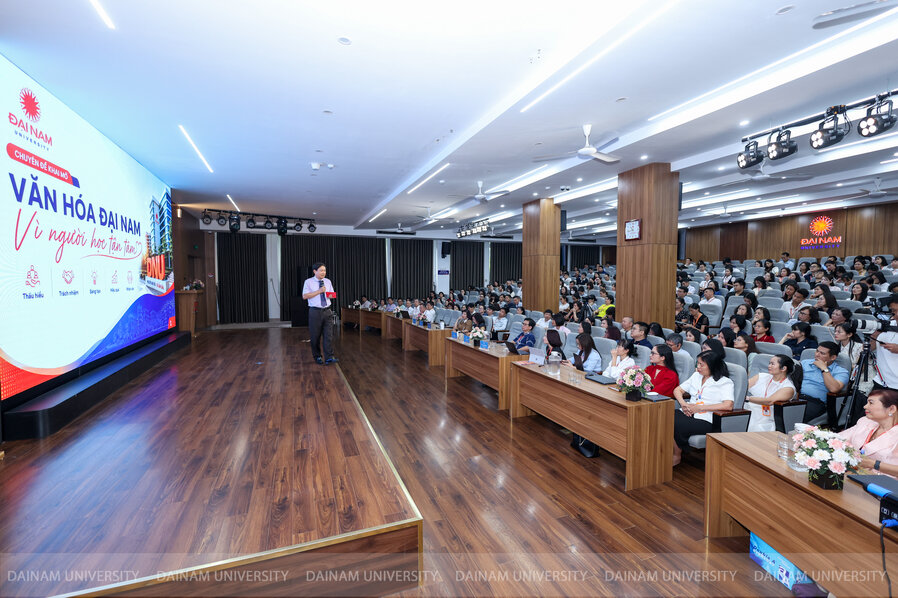
Dr. Le Dac Son - Chairman of the University Council - highly appreciated the value of the thematic study, considering it an important foundation for building a strong, unified, and sustainably developing culture at Dai Nam University.
Dr. Le The Anh, Head of the Accounting Department, shared: "We often worry about whether we've taught enough. But what students need more is the feeling of always having a teacher by their side. When learners are listened to and understood, acquiring knowledge becomes more natural."
According to the professor, the value of education lies not only in the amount of knowledge imparted but also in the support it provides, helping learners confidently navigate their journey to adulthood.
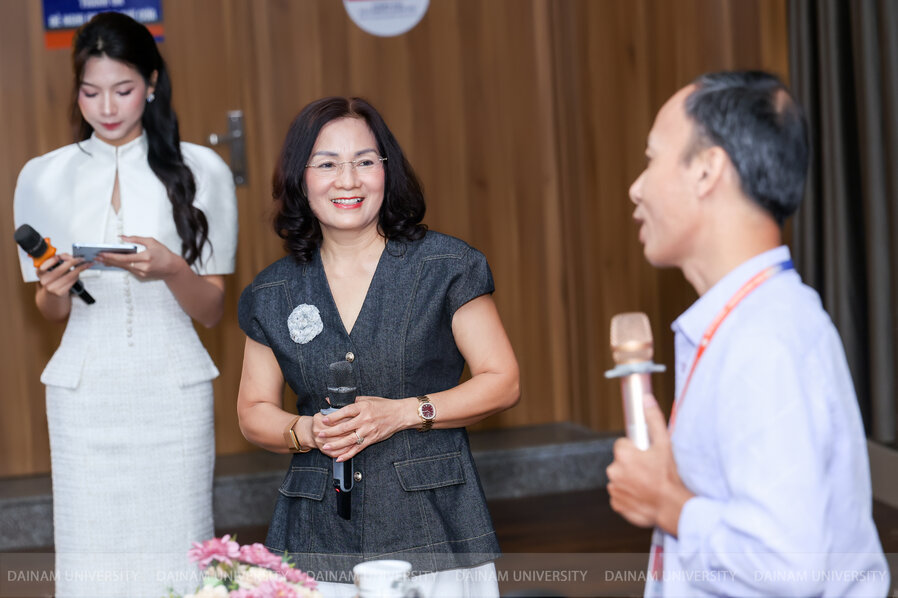
Dr. Le The Anh - Head of the Accounting Department, discussed the role of lecturers in accompanying students on their journey to maturity.
From a management perspective, Associate Professor Dr. Truong Duc Thao - Head of the Faculty of Business Administration and Marketing - believes that the thematic study has transformed the concept of "dedication to learners" from a spiritual value into concrete actions that can be measured, evaluated, and improved at each unit.
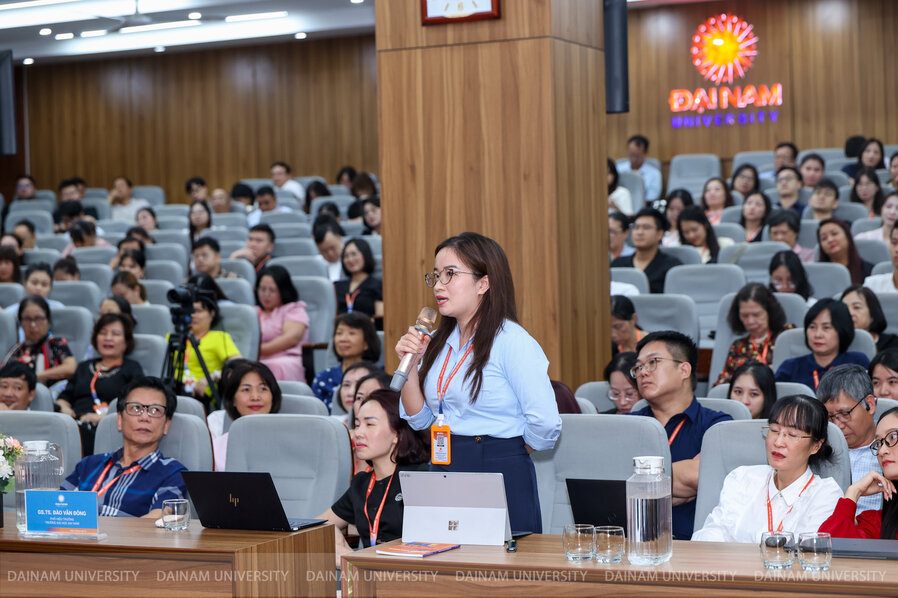
Ms. Cao Thi Quynh, Head of Admissions, shared her perspective on the role of admissions in the student's learning journey.
From an admissions perspective, Ms. Cao Thi Quynh believes that admissions is not just about bringing students to Dai Nam University or completing enrollment procedures. More importantly, it is the first point of contact for students to build trust in the university and feel supported throughout their university years.

Ms. Nguyen Thi Giang, Deputy Head of the Faculty of Business Administration and Marketing, shared: "Every student feedback is an opportunity for educators to understand them better."
For Ms. Nguyen Thi Giang, Deputy Head of the Faculty of Business Administration and Marketing, the most valuable takeaway from the workshop was the realization that: "Every student feedback is an opportunity for educators to understand them better."
The greatest value of this project lies not in the models presented or the published survey data, but in the unity of understanding among the entire team. From the lecturer to the support staff, from a management decision to a morning greeting, every action needs to answer one question: Does what I am doing today help learners feel heard, respected, and supported?
Years later, students may forget a lecture, a test, or a formula. But what they will remember is the feeling of having studied and grown in a school where there were always people ready to listen, share, and support them when needed most.
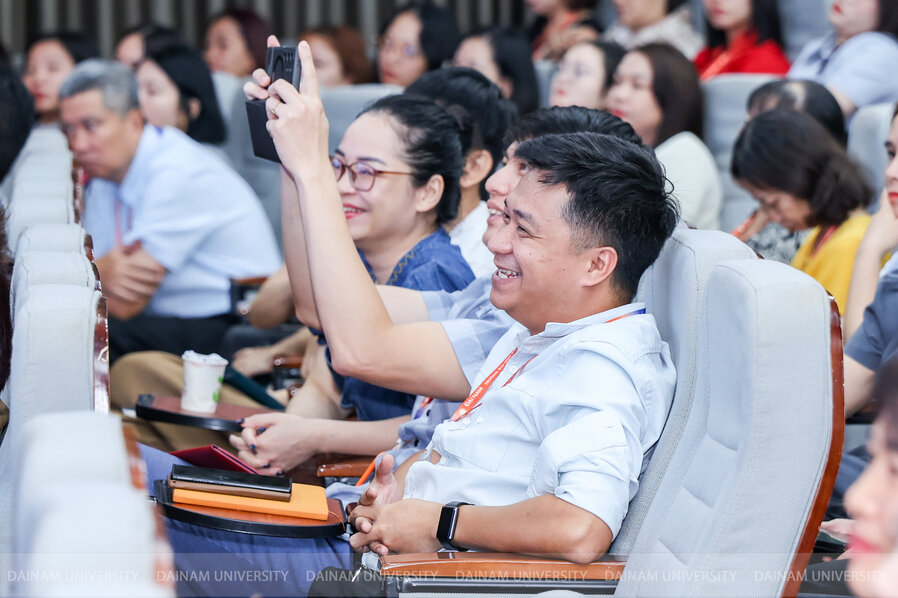
An open and friendly atmosphere allows the team to share perspectives, build consensus, and work towards a common goal: delivering a better learning experience at every touchpoint.

Team consensus is the foundation for translating the commitment to "serving learners wholeheartedly" into action at every touchpoint.
The true measure of an education is not just how many students a school has trained, how many achievements it has made, or how many programs it has implemented, but how many positive values its students carry with them into life after leaving school. That is the sustainable success of a student-centered university.
BTT