English
 Tiếng Việt
Từ Ấn Độ đến Việt Nam học Y: Hành trình tìm thấy một nơi để thuộc về



From different regions of India to Hanoi to pursue their medical education, each student brings a unique story and their own way of adapting to a new environment. Through the stories of Shahla, Lovika, and Farzeen, their journey comes to life not only through academic achievements, but also through the ways they learn, build friendships, navigate cultural differences, and gradually find a sense of belonging in a place thousands of kilometers from home.
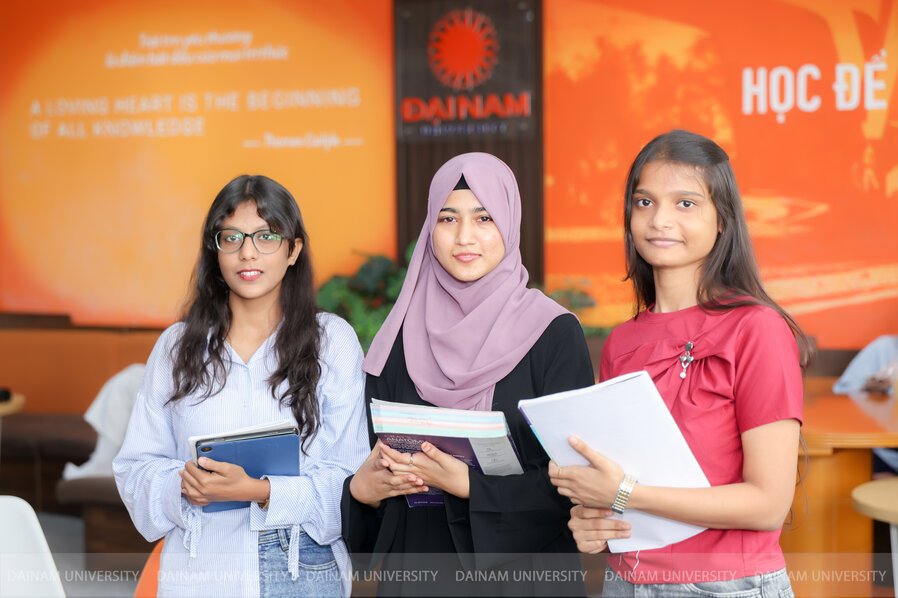
Shahla Hussain, Shaikh Farzeen Mohammed Nasir, and Lovika Vysree are international students with impressive academic achievements. During their year of study alongside nearly 200 Indian students at the International Institute of Medicine at Dai Nam University, each of them has experienced memorable moments both in their academic journey and in adapting to life in Vietnam.
From a “Culture Shock” in Learning Methods to the Confidence of a Class Leader
When Shahla Hussain arrived in Vietnam, she knew that Dai Nam University (DNU) would be the place where she would spend six years pursuing her dream of becoming a doctor. But the journey did not begin easily.
Taking on the role of Class Monitor of YKQT19-02, alongside adapting to an entirely new learning approach, quickly presented her with her first challenges.
Rather than simply listening to lectures and memorizing information, the Team-Based Learning approach at the International Institute of Medicine requires students to study the materials in advance, engage in discussion and critical thinking, and take responsibility for their own learning.
“At first, I felt a lot of pressure, especially as I had to bring together classmates from different regions and cultural backgrounds,” Shahla recalls.
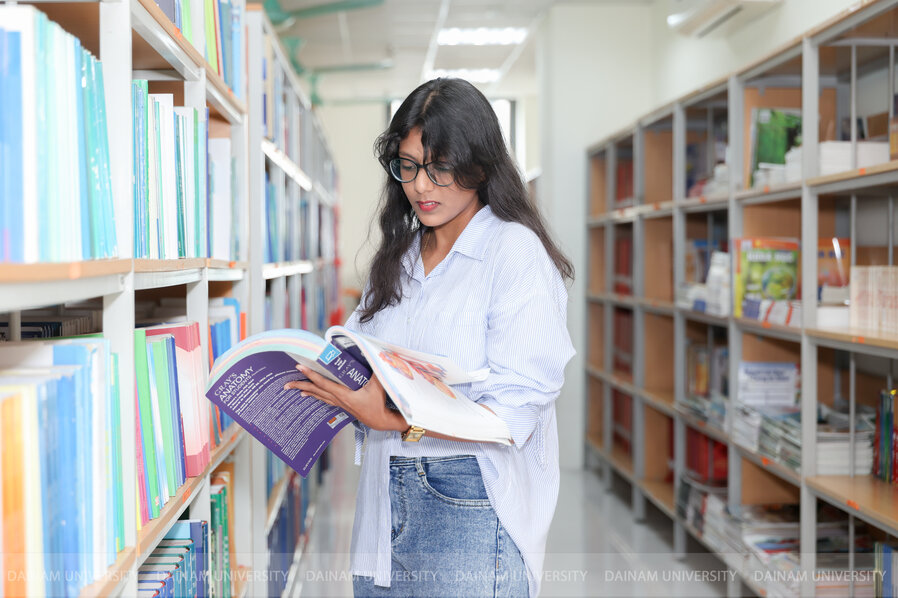
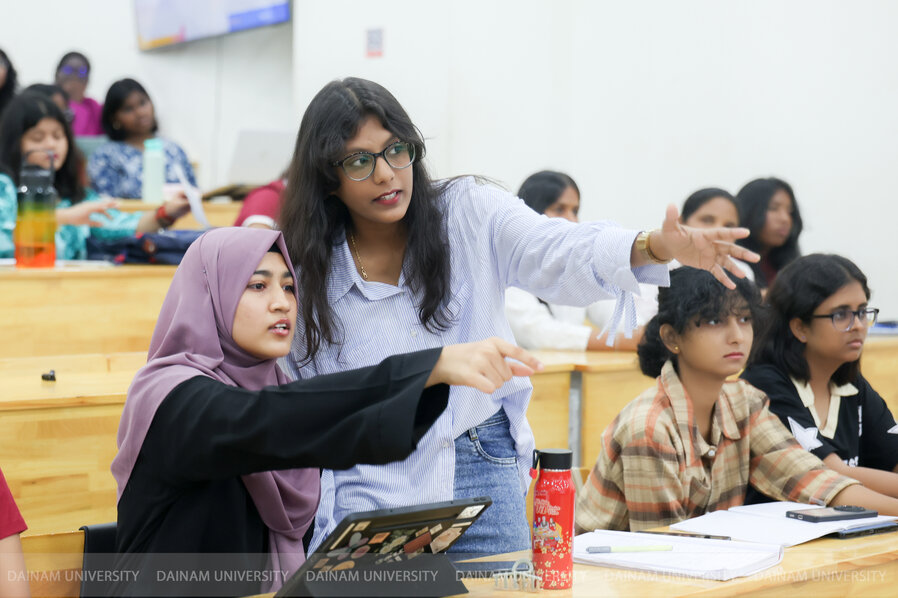
Shahla Hussain, Class Monitor of YKQT19-02, gradually adapts to the Team-Based Learning approach and the new learning environment at Dai Nam University.
The homeroom teacher was always there to support Shahla and help her overcome difficulties. Dr. Nguyen Hoai Giang, Deputy Director of the International Institute of Medicine, also regularly reminded students that when studying far from home, they could always turn to their lecturers for support whenever they faced challenges.
Little by little, Shahla adapted to the new learning approach, excelled in her role as Class Monitor, and achieved a GPA of 3.64.
But what she gained was more than just academic results. Shahla came to realize that in medicine, knowledge is essential, but it is not enough. Students must also learn to study independently, think critically, collaborate with others, and take an active role in their own learning.
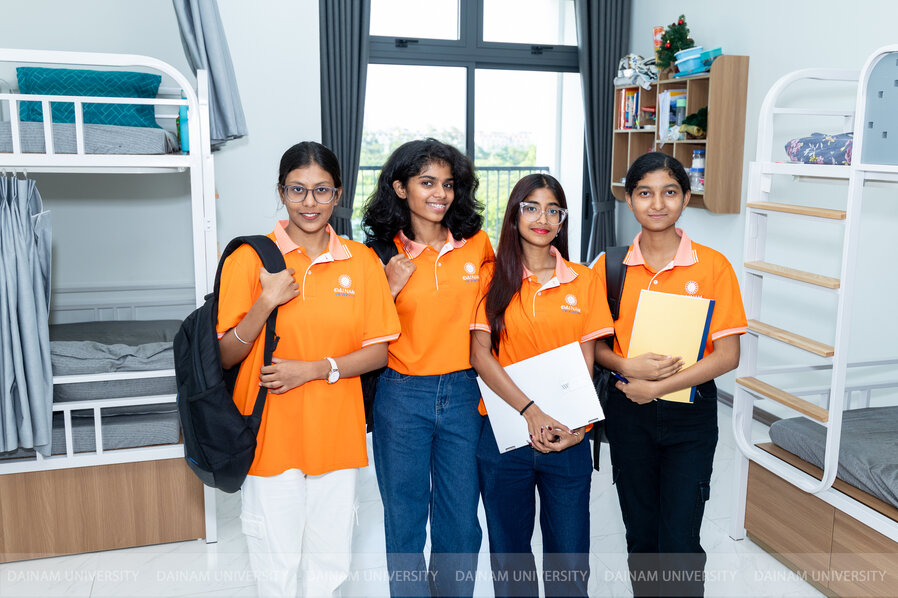
“My hard work is the driving force, but the guidance of my lecturers and the welcoming environment at Dai Nam University are the fuel and the map that guide me along the way,” Shahla shares.
From a young woman arriving in Vietnam for the first time, Shahla gradually found a class to belong to, friends to share her journey with, and lecturers she knew she could turn to whenever she needed support.
The Little Things You Won’t Find in a Medical Textbook
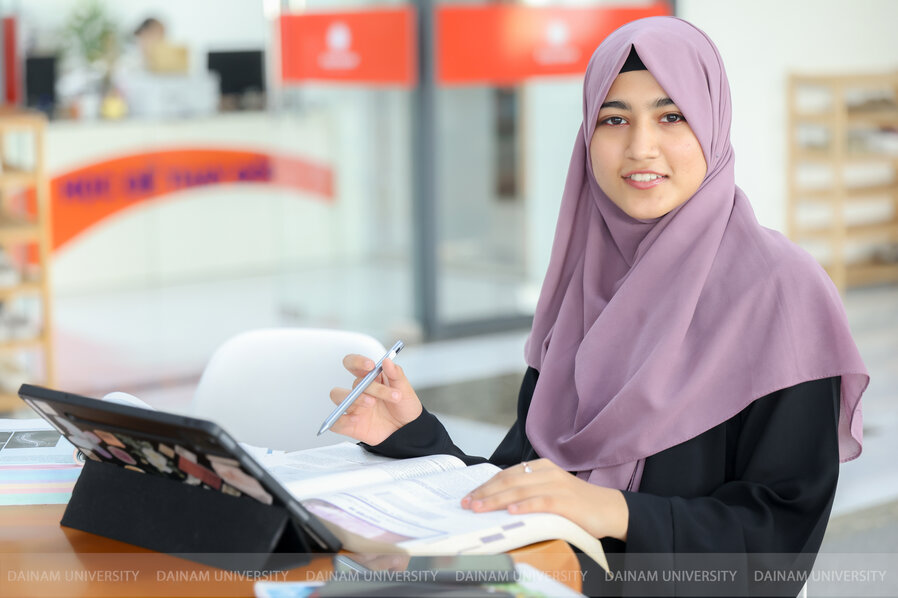
Lovika Vysree, an International Medicine student, found that the simple gestures of care and support from her lecturers, university staff, and friends helped her feel more at home in Vietnam.
For Lovika Vysree, who achieved a GPA of 3.67, her memories of the early days at Dai Nam began with the simplest of gestures.
Lovika and a group of international students arrived in Vietnam about a month later than scheduled. While their classmates had already started the program, the group had to quickly catch up on the lessons they had missed. The University arranged additional classes, while lecturers dedicated extra time to explaining the materials and helping them gradually get up to speed.
“We got off to a slightly late start, but the University made sure we had every opportunity to catch up,” Lovika recalls.
Yet what stayed with her the longest was not a lecture, but the kindness of a member of the university’s cleaning staff, who once brought fruit for the international students and checked in on them during those first days in an unfamiliar country.
“She didn’t have to do those things, and that’s exactly what made them so meaningful.”
Lovika also remembers her first Vietnamese teacher. After a stressful midterm, the teacher brought pre-cut mangoes and chili salt to class, just as she had promised. Towards the end of the course, she even prepared snacks and jasmine tea for the whole class.
These moments may not appear in any medical textbook. But for a student living thousands of kilometers away from her family, sometimes it is the smallest gestures that can make an unfamiliar place feel like home.
At the Cultural Gala, Lovika and Vietnamese students worked together to create a video that brought Vietnamese and Indian cultures together. They came up with ideas, rehearsed, filmed, made mistakes, and tried again. The video won the “Most Popular Video” award, but for Lovika, what mattered even more were the friendships she formed along the way.
She came to Dai Nam to study medicine, but along the way, Lovika also learned how to work in a team, communicate with others, sing in Vietnamese, step onto a stage, and confidently step outside her comfort zone.
When Cultural Differences Bring People Together
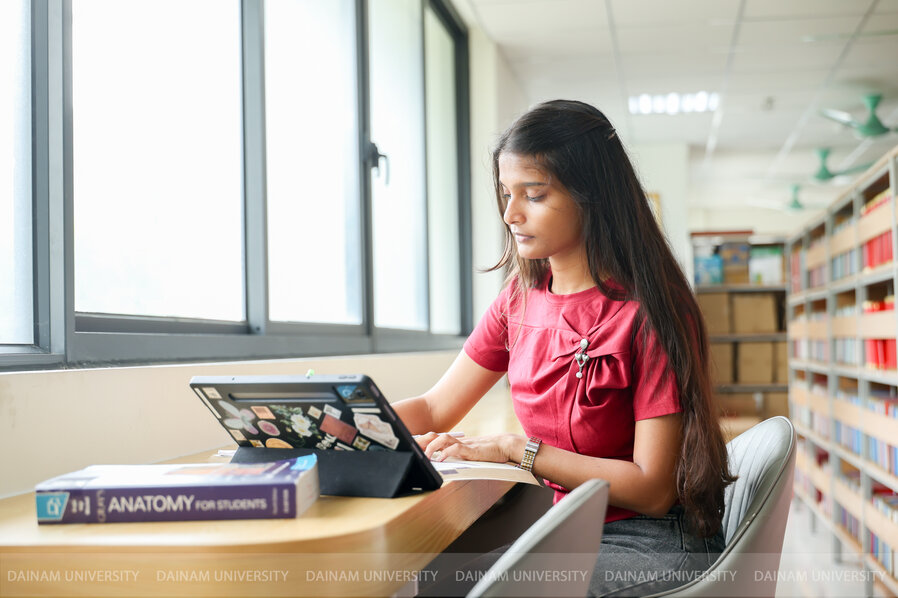
Shaikh Farzeen Mohammed Nasir, a YKQT19-01 student, found moments of connection with her Vietnamese friends beyond the intensity of academic life through cultural exchanges, music, and everyday student activities.
For Shaikh Farzeen Mohammed Nasir, a YKQT19-01 student with a GPA of 3.50, one of the things that impressed her most was the curiosity of her Vietnamese classmates about Indian culture.
Like many international students, Farzeen initially found it challenging to adapt to a new learning approach. Group discussions and guidance from her lecturers gradually helped her find her footing.
But beyond the classroom, other experiences opened up a different way for Farzeen to understand Vietnam — and for her Vietnamese friends to get to know her better.
“What I appreciate most is how curious the lecturers and Vietnamese students are about our culture and language, and how they always make a genuine effort to understand us,” Farzeen shares.
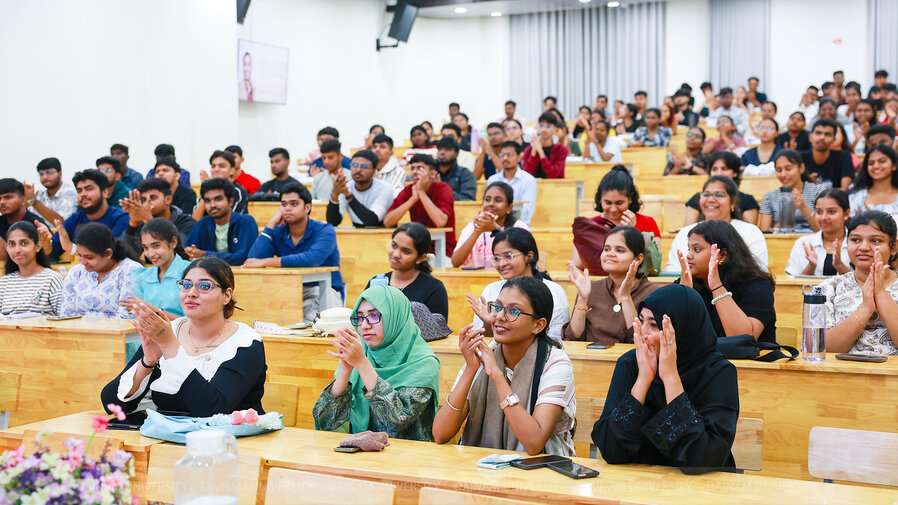
Students at the International Institute of Medicine study in an English-medium learning environment, with a strong emphasis on self-directed learning, discussion, and teamwork.
Cultural exchange programs, music and sports activities, and festivals have become opportunities for Indian students to share their heritage, language, and traditions, while also discovering Vietnamese culture.
In this way, cultural differences are no longer something to be overcome, but stories to be shared, questions to be asked, and bridges that bring young people closer together.
A Place to Learn, Live, and Grow
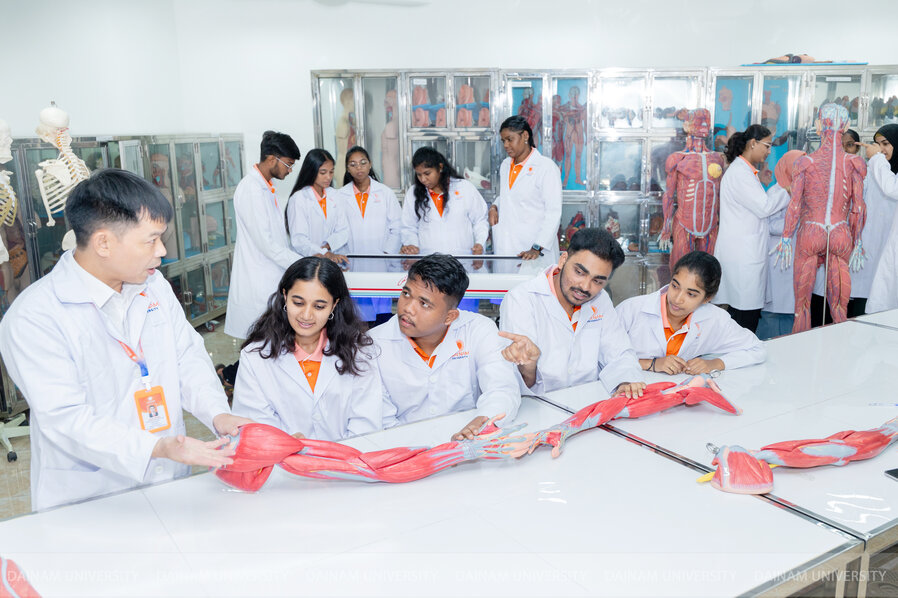
According to Dr. Nguyen Hoai Giang, what has impressed the lecturers most throughout the journey of international students is not only their academic performance, but also their ability to adapt.
“From the early days when they were still unfamiliar with their surroundings, worried about the weather, missing home, or adjusting to Vietnamese food, they gradually learned to navigate their new lives with confidence. Seeing students confidently present academic reports in English, communicate with their lecturers using polite Vietnamese phrases, or happily enjoy Vietnamese dishes are all clear signs of their growth — not only in knowledge, but also in confidence and resilience.”
For an international medical student, six years of university is a long journey. So the question is not simply whether they can succeed academically, but also whether they can build a fulfilling life, feel part of the community, and have someone to turn to when they face difficulties.
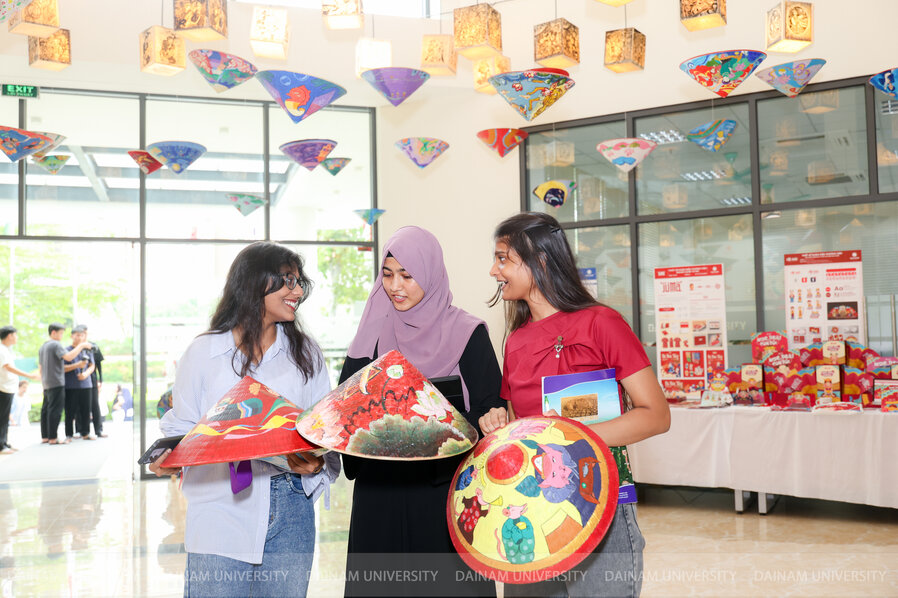
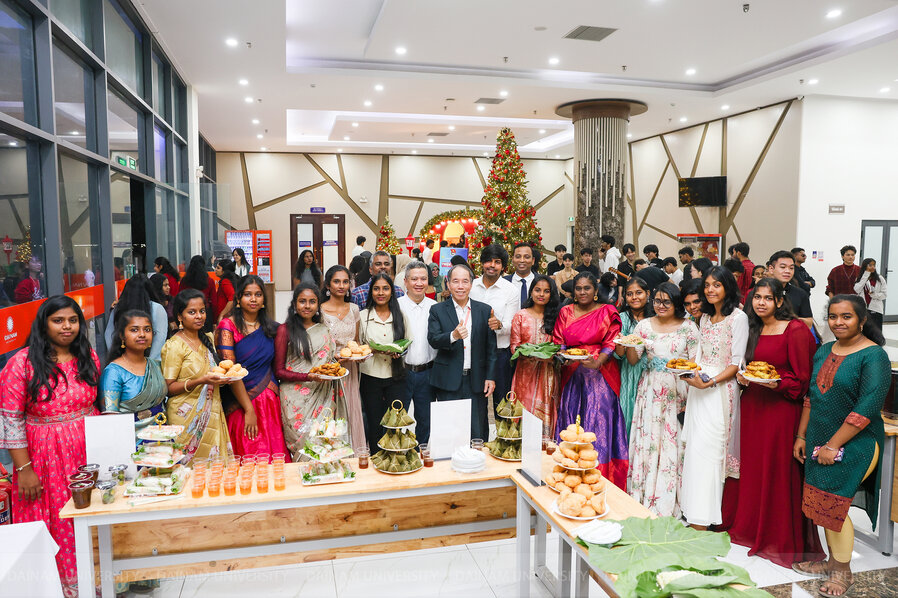
The learning environment at the International Institute of Medicine goes beyond academic knowledge, creating opportunities for international students to connect, integrate, and develop essential skills.
An English-medium curriculum, innovative learning methods, modern facilities, and dedicated lecturers provide the foundation for a strong academic environment. But for a young person to feel confident spending six years away from home, they also need a sense of safety, meaningful relationships, respect for differences, and the feeling of being welcomed.
The stories of Shahla, Lovika, and Farzeen are just three glimpses into the journeys of Indian medical students studying at Dai Nam University.
Each student has a different story to tell. Yet from the early days of finding themselves in an unfamiliar campus, unfamiliar classrooms, unfamiliar food, and even an unfamiliar way of learning, these young people are gradually building new lives in Vietnam — a place to learn, to grow, to make friends, and, little by little, to find a sense of belonging.
BTT