English
 Tiếng Việt
The demand for Japanese language professionals in the AI era: A breakthrough opportunity for Gen Z.



While many fear that artificial intelligence (AI) will replace humans, the reality of the labor market is showing a different trend: AI is not eliminating demand, but rather significantly differentiating the value of human resources. Repetitive jobs may be replaced, but positions requiring communication skills, cultural understanding, trust-building, and problem-solving abilities are becoming increasingly important. In this context, Japanese language studies are not just a field of study, but are becoming a clear competitive advantage in a restructuring labor market.

Japanese language studies is one of the most attractive fields of study for prospective university students during each admissions season.
AI is not replacing humans, but it is "refining" the value of human resources.
The development of AI places new demands on Japanese-speaking personnel. AI can assist with translation, but it cannot replace core activities in a Japanese business environment such as negotiation, partnership building, understanding corporate culture, or handling situations in a disciplined and standardized work environment. Therefore, what businesses need now is no longer just "people who know Japanese," but rather personnel who can use Japanese in practical work, understand how Japanese businesses operate, and act as a bridge between the two cultures. In other words, value lies not in knowing the language, but in the ability to use the language to create effective work.
The shortage isn't of people who know Japanese, but of people who can do the job using Japanese.
Japan is not only one of the largest investors in Vietnam, but is also facing a serious labor shortage due to an aging population. According to JETRO, 42.7% of Japanese businesses in Vietnam are experiencing difficulties in recruitment, with many sectors facing shortages exceeding 60%.
On a global scale, this need is even more evident, given that Japan already has approximately 3.77 million foreign workers (2024) and this number continues to increase significantly. Vietnam alone currently has over 430,000 workers employed in Japan, ranking first in terms of numbers.
These figures show that the demand for manpower has not decreased, but is expanding in both scale and quality.

The demand for Japanese language professionals is expanding in both size and quality.
However, the market doesn't lack people learning Japanese; it lacks people who can work in Japanese. Businesses need personnel who can communicate in a real-world environment, understand corporate culture, and adapt to the job immediately. Therefore, many companies are willing to recruit even before graduation or offer higher salaries to retain talented individuals.
The gap between "knowing Japanese" and "being able to work in Japanese" is a major barrier – but also an advantage for those who are properly trained. In the age of AI, where simple jobs are gradually being replaced, this very ability will determine who seizes the opportunities.
The old-fashioned way of learning a foreign language is no longer enough in the AI era.
In the age of AI, traditional language learning methods are no longer sufficient. Learners need training that is relevant to the workplace, provides practical experience, and offers clear career guidance from an early age. This is precisely what sets Dai Nam University apart in its Japanese Language program.
Dai Nam University: Training students to be job-ready immediately after graduation.

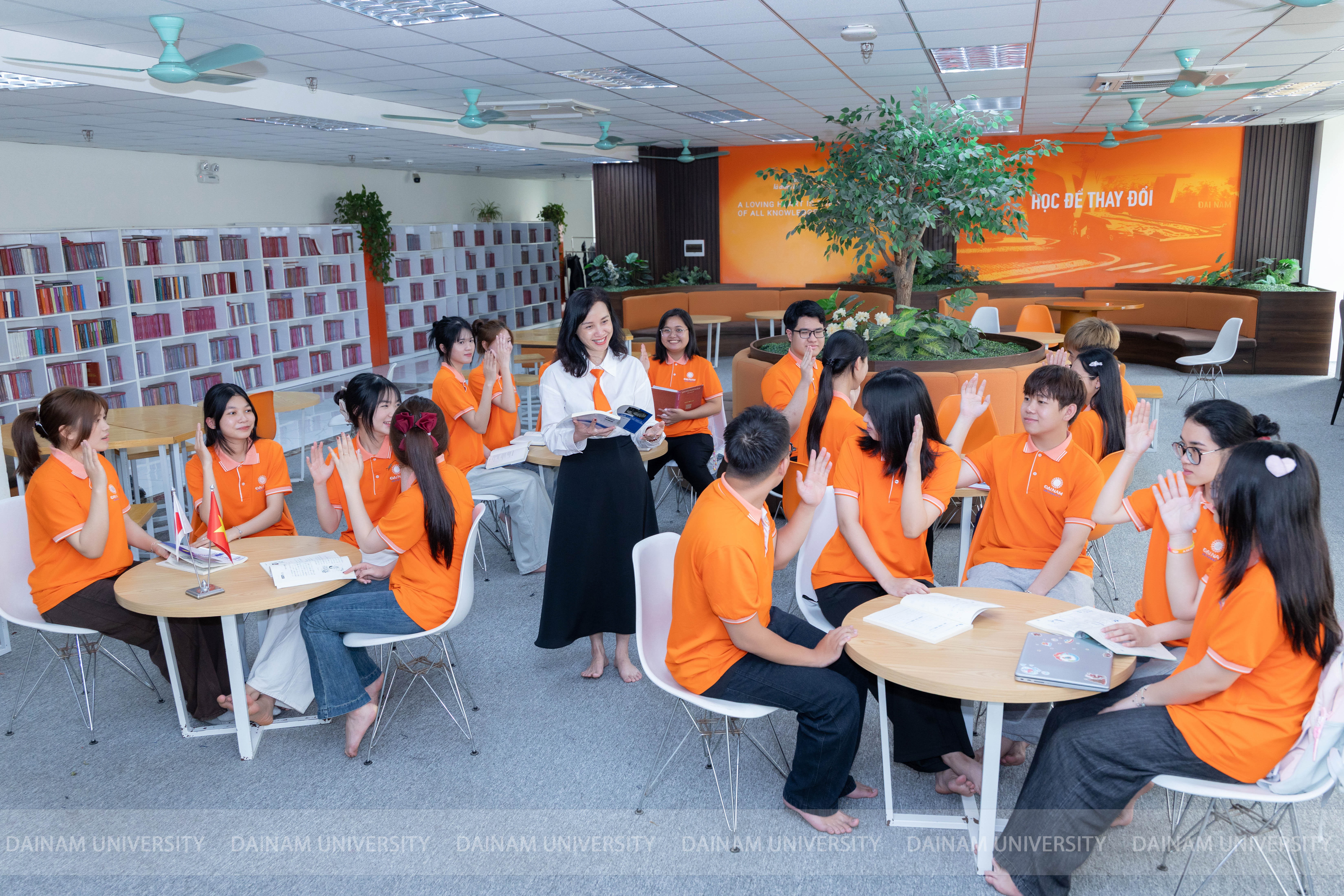
At Dai Nam University, Japanese language is one of the majors with a large number of applications for admission.
At Dai Nam University, the Japanese Language major is designed with a clear objective: graduates can work immediately without further training. The training program is "practical," emphasizing hands-on experience, problem-solving, and early exposure to the business environment, ensuring that the language is not detached from reality but directly linked to work. Students are supported by a team of highly qualified and experienced lecturers with a deep understanding of the business environment, who not only impart knowledge but also provide practical career guidance.
3.5 years - shortening the time, getting one step ahead in the job market: The optimized training roadmap spans 3.5 years across 11 semesters, allowing students to graduate sooner, enter the job market faster, and gain an advantage in accumulating experience in their early career years.
Fixed tuition fees for the entire course - a reassuring choice for parents: The school commits to keeping tuition fees unchanged throughout the entire course, helping families proactively plan their finances and ensuring stability throughout the student's studies.
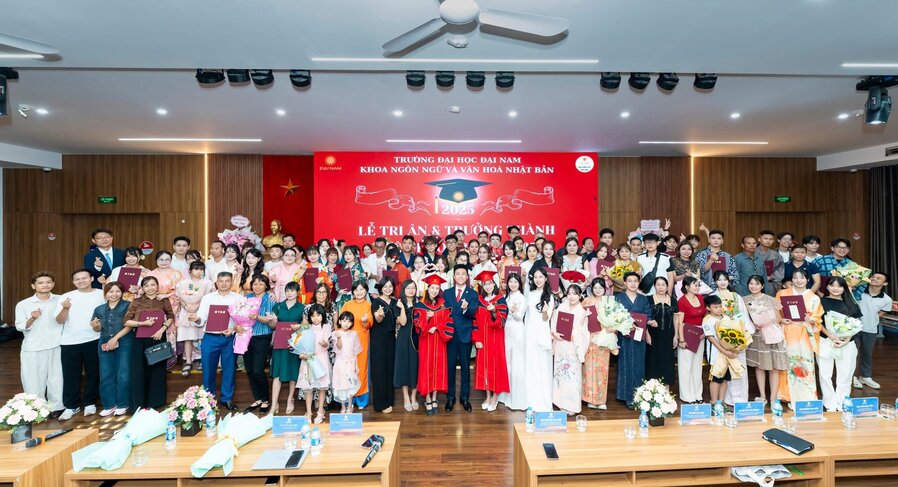
100% of students get to participate in paid internships or practical training programs lasting 6-12 months in Japan.
Paid internships in Japan: a "leap forward" that makes a difference after graduation: 100% of students have the opportunity to participate in paid internships in Japan. This is not just an international experience, but a phase that allows students to work directly in a real-world environment, enhance their skills, and create a clear competitive advantage when entering the job market.
A modern learning environment – the foundation for professionalism: The comprehensively invested infrastructure creates conditions for effective learning and contributes to the formation of a professional work ethic right from the time students are still in university.
Choosing the right major isn't enough; you also need to choose the right place to study.
AI will continue to develop, but the job market won't weed out the competent, only those who fail to adapt. Japanese language studies are a field of clear demand, but more importantly, it's a field that requires proper training.

Choosing the right major is the first step. But choosing the right training environment is the decisive factor. Dai Nam University not only trains in languages, but also develops practical work skills, helping students enter the labor market with confidence and a clear competitive advantage.
>>> LEARN MORE AND REGISTER FOR ADMISSION: HERE
BTT