English
 Tiếng Việt
What is the Japanese Language major, and is it really as easy to find a job as many people say?



Choosing a major before entering university is always a difficult decision, especially for those who love Japanese but have many concerns about job opportunities and income after graduation. What is Japanese Language major, and is it really as "easy to find a job" as many people say? Is it difficult to study, and what talents are needed? And what will you do after graduation, and will the salary be attractive enough to pursue it long-term? This article will help you answer these questions clearly, from the most practical and comprehensive perspective.

Among the language majors, Japanese Language remains a highly attractive option for prospective students.
What is the Japanese Language major?
The Japanese Language major is a specialized field of study focusing on the Japanese language, culture, and society, aiming to train human resources capable of using Japanese proficiently in academic, research, and international work environments. In addition to language skills, students are also equipped with interdisciplinary knowledge in fields such as economics, commerce, tourism, and communication to meet the diverse needs of the labor market in the context of globalization.
With Vietnam increasingly attracting investment from Japan, the Japanese Language major has become a highly stable career choice with abundant job opportunities and a clear career development path.

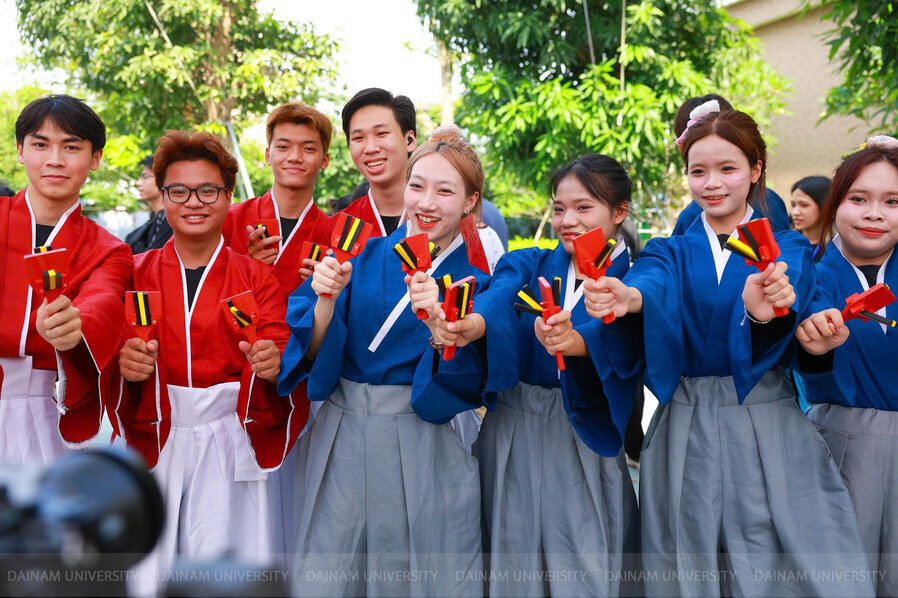
High school students excitedly explore the "authentic Japanese" learning environment of Japanese Language students at Dai Nam University.
What do you study when majoring in Japanese Language?
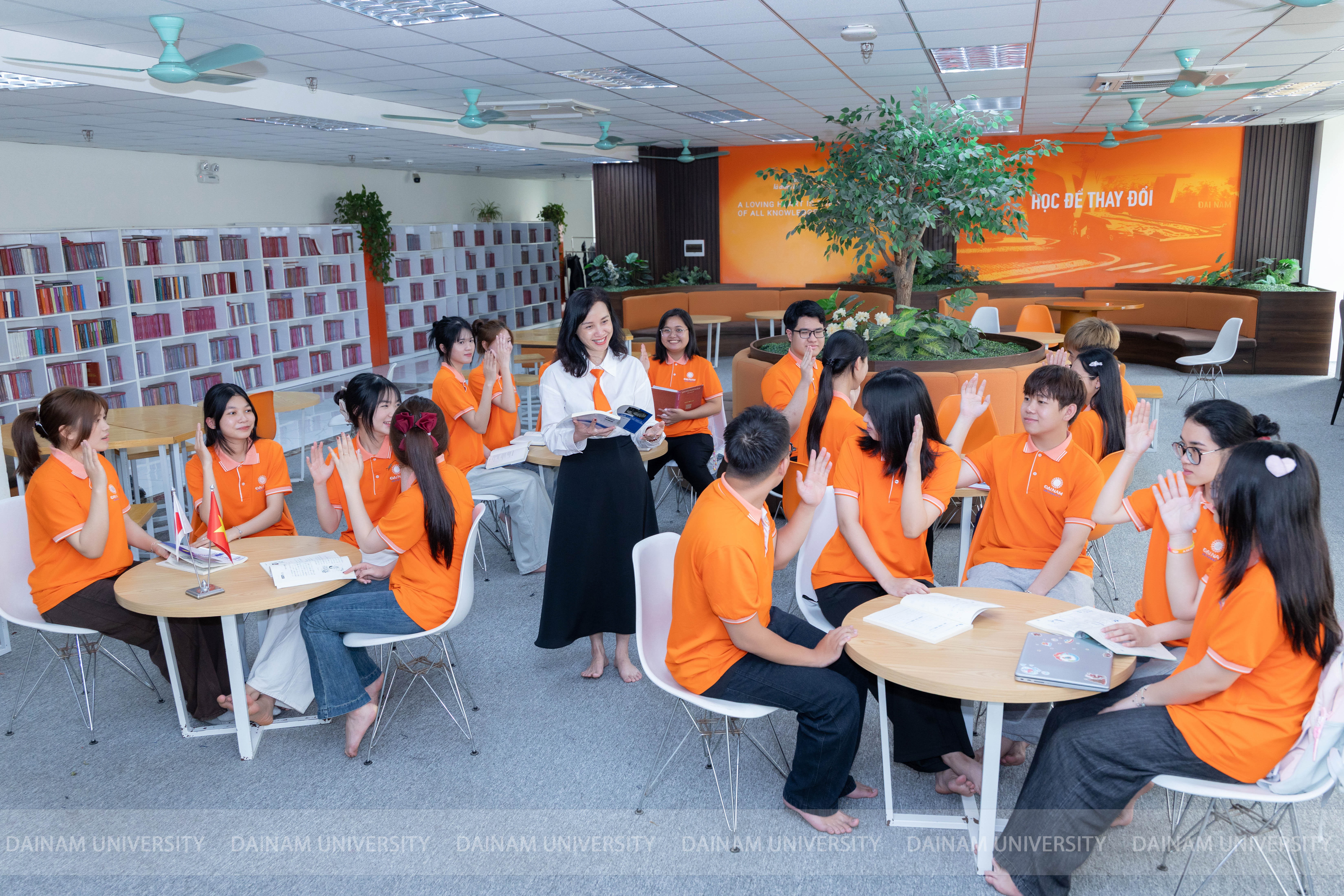
The Japanese Language program is designed to be comprehensive, combining academic foundations with practical application. Students receive thorough training in the four skills of listening, speaking, reading, and writing, while also developing their ability to use Japanese in professional contexts.
In addition, students have access to specialized modules such as business Japanese, translation and interpretation, Japanese for tourism, journalism, technology, and Japanese language teaching methodology. Modules on Japanese culture and society help students gain a deep understanding of the Japanese work environment and mindset, thereby enhancing their adaptability in real-world work situations.
In addition, the program integrates supplementary skills such as computer skills, soft skills, and a second foreign language, creating a foundation for long-term development for students.
What kind of jobs can you get after graduating with a degree in Japanese Language?
Graduates in Japanese Language can fill a variety of positions in domestic and international businesses and organizations. Common jobs include Japanese translation and interpretation, office work at Japanese companies, and human resources in import/export, logistics, tourism, or media.
Additionally, students can pursue a career in teaching Japanese or working directly in Japan in fields relevant to their expertise. With their language skills and cultural understanding, graduates of this program are often able to adapt quickly and thrive in an international environment.
Salary range for Japanese Language majors
The income of Japanese Language majors is considered competitive compared to many other professions. Newly graduated students can earn between 10 and 15 million VND per month. After 2-3 years of experience, the income can increase to between 15 and 25 million VND per month.
For those with a high level of Japanese proficiency (equivalent to JLPT N2, N1) or who work directly in Japan, salaries can start from 20 million VND/month or even higher depending on the position and qualifications.
Why choose Japanese Language at Dai Nam University?
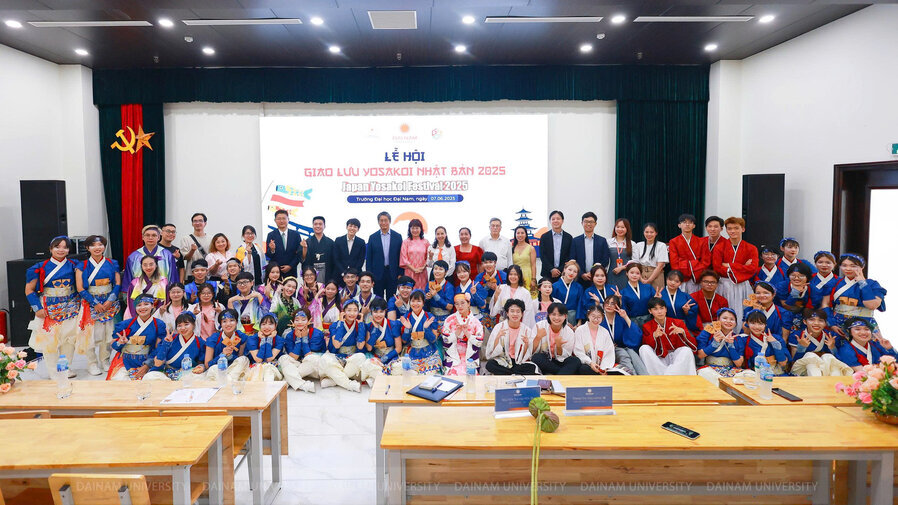
The Japanese Language program at Dai Nam University (school code DDN) is designed with an applied orientation, with professional advice from leading experts from Japan such as Ito Sukero - Professor at Tokyo University of Foreign Studies and Mizobe Eriko - educational advisor of the Japan Foundation. The collaboration of these international experts ensures the program's quality is close to Japanese training standards.
After nearly a decade of establishment and development, the Department of Japanese Language and Culture has built a well-structured training system with a clear roadmap for each academic year. First-year students achieve a level equivalent to JLPT N4, second-year students reach N3, and third-year students aim for N2. This is a significant advantage that helps students confidently enter the job market even before graduation.
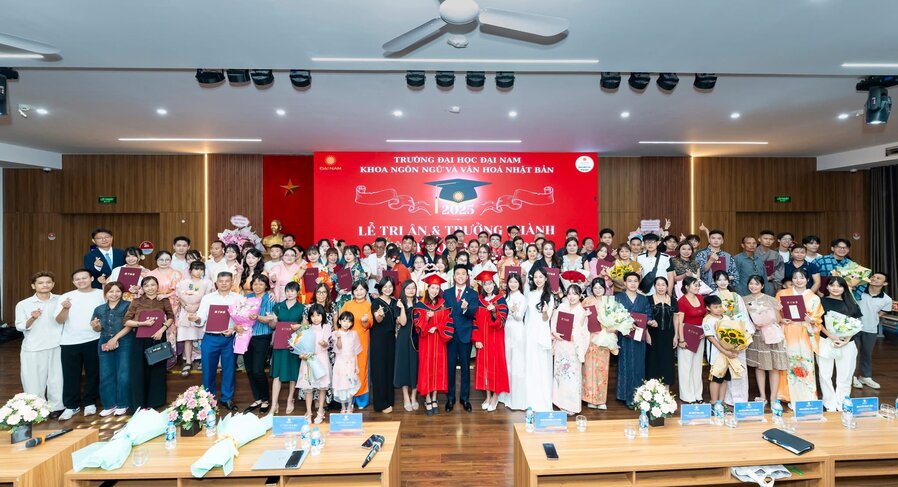
After nearly a decade of establishment and development, the Department of Japanese Language and Culture has become a reputable destination and a source of inspiration for thousands of young people passionate about Japanese language and culture.



A highlight of the program is that over 60% of the learning time is dedicated to practical training. From their second year, students have the opportunity to participate in internship programs in Japan lasting from 6 to 12 months, with a monthly stipend of 15 to 20 million VND. This not only enhances language skills but also helps students gain work experience in an international environment.
In addition, students have the opportunity to participate in short-term study and experience programs in Japan, receive scholarships from businesses and international organizations, and participate in large-scale cultural and academic exchange activities.
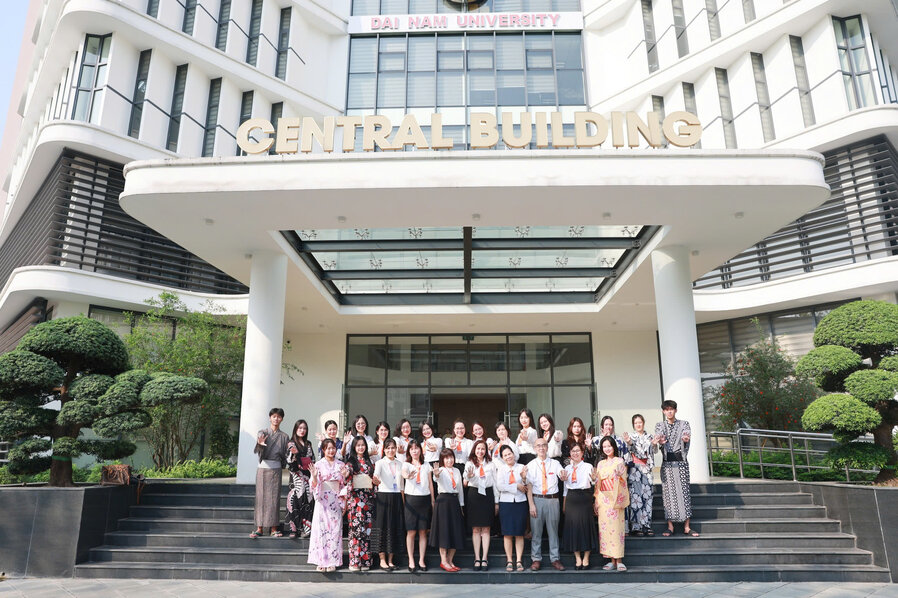
The faculty consists of experienced associate professors, doctors, and masters, along with Japanese lecturers who teach directly. The combination of theory and practice, and the collaboration between academic lecturers and business experts, creates a dynamic learning environment that closely aligns with real-world needs.
In particular, the school is committed to securing employment for 100% of its graduates, with salaries starting from 12 million VND/month in Vietnam and from 20 million VND/month or more if working in Japan. This is a highly practical commitment, demonstrating a training orientation aligned with societal needs.
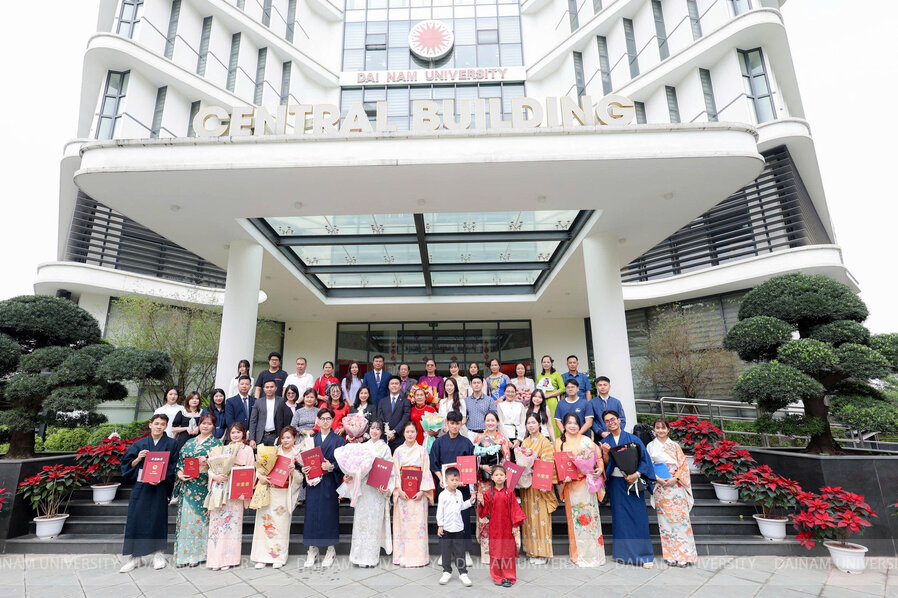
Dr. Vu Thuy Nga, Head of the Department of Japanese Language and Culture at Dai Nam University, stated: “We not only train students to be proficient in the language, but also aim to develop practical work skills and the ability to adapt to an international environment. The department's goal is for each graduate to be able to confidently work immediately, especially in Japanese companies – which demand high standards of discipline, work ethic, and professional competence.”
The Japanese Language major is opening up many attractive career opportunities in the context of deep economic integration. With a well-structured training program, closely linked to practical applications and with a clear commitment to job placement, Dai Nam University is one of the suitable choices for candidates who wish to pursue this field of study seriously and long-term.
>>> REGISTER FOR ADMISSION: HERE
BTT