English
 Tiếng Việt
Studying e-commerce is not just about knowing, but about doing: Dai Nam University brings the business environment into the classroom with its 2,000 m² E-commerce Practice Center.



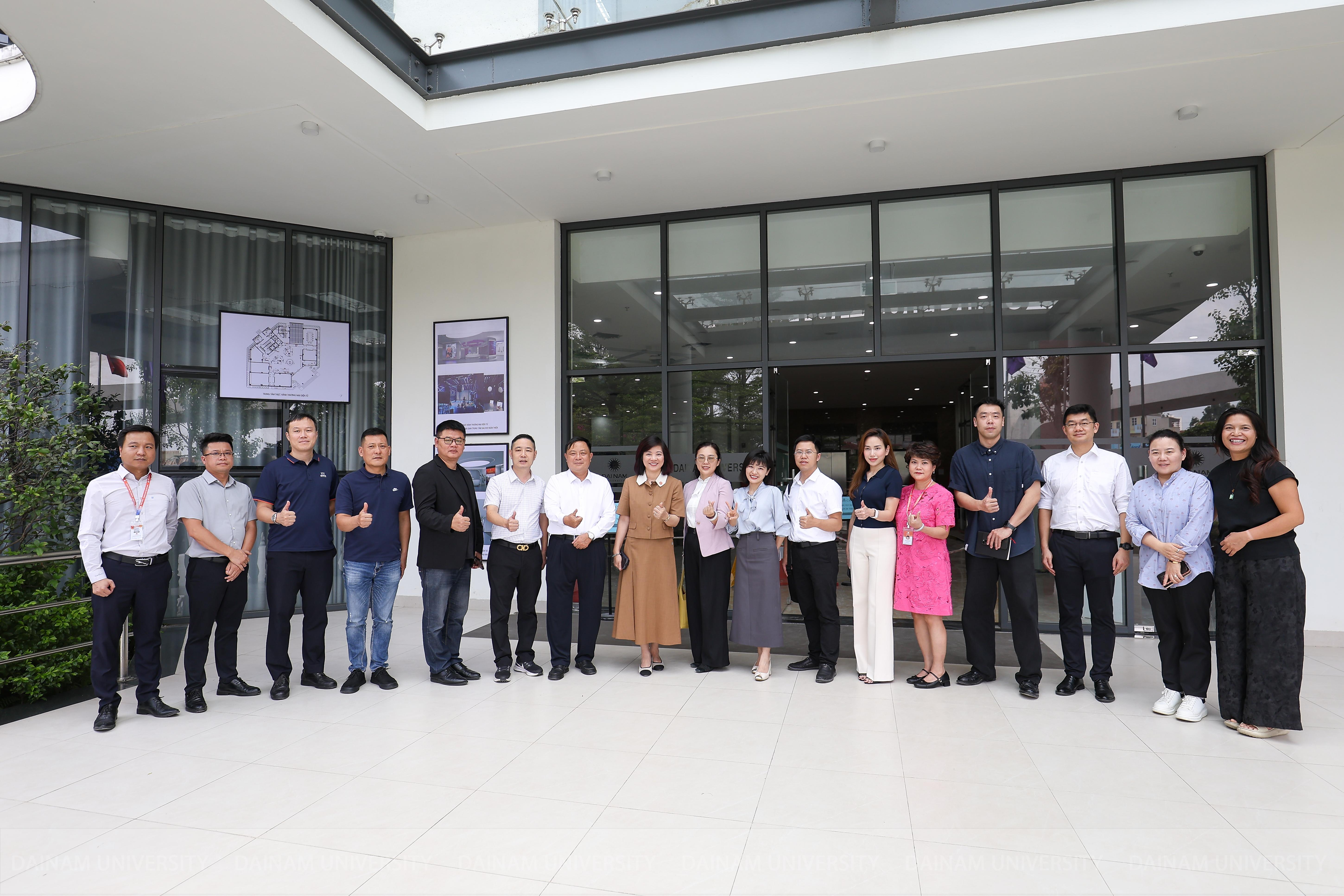
You can learn about e-commerce from books. But to actually do e-commerce, you need to know how to operate a digital store, understand customers, create content, run marketing campaigns, analyze data, livestream, use technology, and solve real-world business problems. That's why Dai Nam University (DNU) invested in building a 2,000 m² E-commerce Practice Center in the Startup Building, with the participation of Chinese partners in technology, equipment, training programs, and operational experience.

But what DNU wants to tell prospective students is not "we have a 2,000 m² center," but rather "within that 2,000 m², what will students learn, what will they do, and what skills will they develop for their future careers?"
Ultimately, the value of a university doesn't lie in the buildings it owns. Its true value lies in the capabilities its graduates carry with them when they leave those buildings.
University is not just a place to learn knowledge.
E-commerce is a rapidly changing field. Today one platform is leading, tomorrow another may emerge. Customer behavior changes. Technology changes. AI changes how businesses find customers, produce content, analyze data, and operate.

Therefore, if students only learn what's in the textbook, the gap between the classroom and the business world can widen. A student might know many concepts about digital marketing but may not necessarily be able to build a marketing campaign; they might understand what e-commerce is but may not necessarily be able to operate a store; they might learn about data but may not necessarily know how to use data to understand customers and make decisions; they might learn about livestream commerce but have never stood in front of a camera to introduce and sell a product.
The biggest gap in higher education isn't always the gap between "knowing little" and "knowing much." It's also the gap between "knowing" and "being able to do." This is precisely the problem that DNU aims to address with its investment in the E-commerce Practice Center. According to the university's vision, the Center is not simply a larger practice room, but an environment that integrates learning, practice, technology, and business, allowing students to gradually become familiar with the tools, processes, and requirements of the job while still studying.
2,000 m² is not for viewing, but for students to work on.
The E-commerce Practice Center is located on the 1st and 2nd floors of the Startup Building at Dai Nam University, with a total area of approximately 2,000 m². DNU provides the space and infrastructure; Chinese partners participate in investing in equipment, technology, software, training programs, and facilities for practical training.
However, a 2,000 m² space is only meaningful when that space is actually used to develop students' capabilities. Associate Professor Dr. Dao Thi Thu Giang - Rector of Dai Nam University emphasized: " We believe that investing in education is primarily investing in the capabilities of the learners."
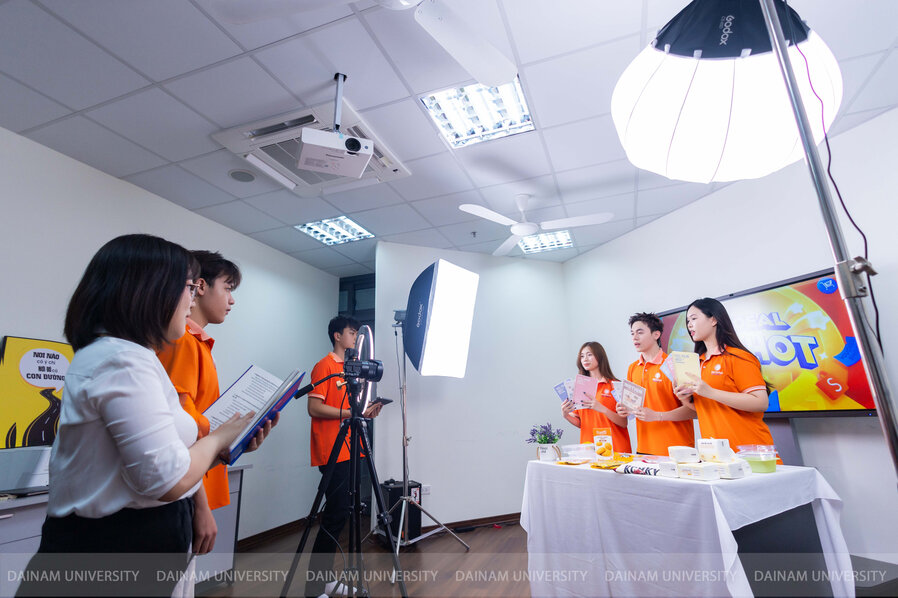
Following this orientation, students not only come to the Center to listen to lectures or observe equipment, but are also guided to access professional activities such as operating digital platforms and marketplaces, managing e-commerce stores, digital marketing, developing commercial content, livestreaming, customer data management, cross-border e-commerce, and applying technology to business operations.
The important thing is not how much content students have "learned," but whether they can apply what they've learned after completing the course.

Try to imagine a different kind of e-commerce class.
Instead of simply sitting in class listening to lectures on digital sales techniques, students are assigned a specific product. The student group must research the product, analyze the target audience, conduct market research, build content, design a customer outreach strategy, practice operating the online store, create marketing content or livestream, monitor data, and analyze results. Finally, students must explain: Why did they choose that approach? What were the results? If they were to do it again, what would they change?
At that time, knowledge of marketing, e-commerce, data, communication, and technology were no longer separate subjects but converged in a real-world problem. This is also how young people will have to work after graduation. Businesses rarely ask employees, "Explain the concept of e-commerce." Instead, they will pose a problem: "This is our product. This is our customer. This is our budget. Find a way to bring the product to market." Universities, therefore, need to prepare students to solve such problems.

Bringing experience from a major e-commerce market into the classroom.
A notable aspect of the Center is the involvement of Chinese partners in program development, expert networking, technology, and practical operational experience. According to DNU documents, Hoan Vu International Education and Technology Co., Ltd. participated in program development, expert networking, and training coordination; while Kinh Hong Cultural Entertainment Co., Ltd. contributed practical operational experience in e-commerce and livestream commerce in China.
What DNU is interested in is not simply having another international partner. The greater value lies in the ability to integrate the practical experience of businesses into the training process. Through cooperation, the university aims to acquire an ecosystem encompassing programs, technology, equipment, practical processes, and business operational experience. For students, this opens up opportunities for earlier access to how the market operates outside the classroom.
Because in a rapidly changing field like e-commerce, learning from practice cannot be a side part of the training program. It must become an integral part of the learning process.
What do students receive?
This is the most important question. It's not about how much money DNU invests, how many square meters the center is, or how much equipment it has, but rather: What skills will students possess after their university years?
Dr. Nguyen Thanh Huyen, Head of the Faculty of Economics and Management, believes that what matters is not how much content students learn, but what they can do after the learning process. The school aims to demonstrate this competence through products and work results. Through practical training, students have the opportunity to simultaneously develop many competency groups, from business skills with the ability to understand the market, customers, products, and business models; digital skills through the use of platforms, tools, and technologies serving business; marketing skills with the ability to build content, reach customers, and implement digital marketing activities; to data skills, operations, and problem-solving. In addition, students are trained in the ability to work with others through teamwork, communication, and taking responsibility for their work and the overall results. These are competencies that are difficult to fully develop if the learning process only takes place between lecturers, blackboards, and textbooks.

Not just for E-commerce students
The digital economy is blurring the lines between many professions. E-commerce intersects with marketing; marketing is increasingly linked to data; data is linked to technology; international business is increasingly connected to digital platforms and cross-border trade; and digital content is increasingly directly linked to sales. AI continues to transform all of these fields.
Therefore, the Center is not solely oriented towards serving the E-commerce industry. According to DNU's plan, the practice space will also serve the fields of Digital Business, Business Data Analytics, and programs related to digital marketing, thereby expanding the experience for students in many related fields. This also reflects a reality of the labor market: businesses increasingly need less of someone who only knows one thing within a closed "box" of specialization. They need young people with a professional foundation but who also know how to use technology, understand data, understand customers, work with others, and adapt to changing market conditions.
From simulation exercises to business problems
No one becomes a skilled professional after just a few practice sessions. Therefore, practice also needs a roadmap. Following the Center's guidelines, students can start with simulation exercises, then gradually increase their level through practical projects, working with experts, interacting with businesses, and solving specific problems.
This is a crucial point, because "practical training" doesn't mean students using a device or software for a few sessions and then finishing the course. Practical training is valuable when learners create a product, take responsibility for the results, receive feedback, correct mistakes, and redo things. A poorly designed product can be redone; an ineffective livestream can be analyzed; a campaign that hasn't met its goals can have its causes identified; and a decision based on incorrect data can be pointed out and adjusted. University is where young people are allowed to experiment, to make mistakes, and to learn how to correct them before those mistakes cost them money, customers, and the reputation of the business.
When you graduate, a degree is not enough.
The job market is changing. As technology and AI advance, jobs that rely heavily on repetitive tasks or readily available knowledge will face increasing pressure. What helps a young person succeed is not just the amount of knowledge they've acquired, but their ability to use that knowledge to produce results.
Therefore, DNU aims to bridge the gap between "knowing" and "being able to do." The university recognizes that businesses need not only people with specialized knowledge, but also people who know how to use technology, understand customers, solve problems, work in teams, and adapt quickly.
That's also why the E-commerce Practice Center shouldn't be viewed simply as a physical infrastructure project. It's part of how DNU is gradually reorganizing the learning experience: learning knowledge but linking it to practice; learning technology but knowing how to use technology to solve problems; learning in school but interacting with businesses; and ultimately, university education should be geared towards the employability and growth of learners.
2,000 m², but its value cannot be measured in square meters.
A beautiful center doesn't necessarily produce excellent students. Modern equipment doesn't automatically guarantee quality training. And collaboration with businesses won't be very meaningful if they only appear at signing ceremonies.
DNU understands that the real challenge begins after the Center becomes operational. 2,000 m² is only truly valuable when students can use it. Technology is only valuable when students master it. Businesses only truly collaborate when their problems are integrated into the learning process. And a training program can only prove its quality when students' competence is demonstrated by what they actually accomplish.
Therefore, the greatest value of the Center does not lie in the 2,000 m² area. It lies in the professional competencies that the School aims to develop within that space: operating digital booths, content creation, digital marketing, livestreaming, data analysis, customer outreach, technology application, and solving real-world business problems.
If you choose to study E-commerce, ask the university a question.
Don't just ask, "What subjects does the school teach?" Ask more questions like, "What will I get to do during my years here?"
Don't just ask, "Does the school have good facilities?" Ask, "Will I actually be able to use those facilities to study and pursue my career?"
Don't just ask, "Does the school collaborate with businesses?" Ask, "How do businesses get involved in my learning?"
And most importantly, ask yourself: “When I graduate, besides my degree, what can I demonstrate that I can do?”
That's also the question DNU asks itself. Building the 2,000 m² E-commerce Practice Center is one of the steps to answer that question. Not through slogans, but through training programs, technology, a practical environment, the participation of businesses, and ultimately through the products, capabilities, and work skills of the students themselves.
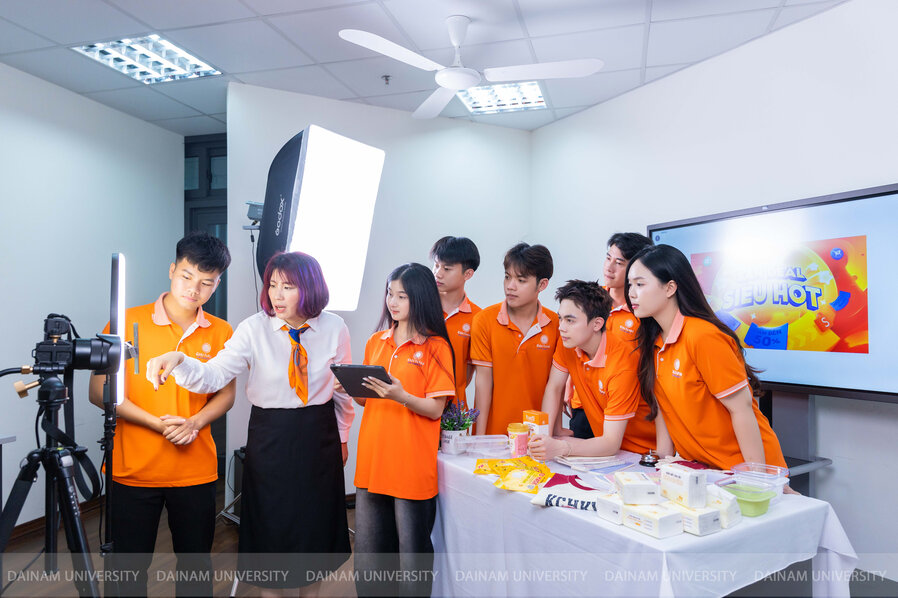
Learn for real – practice for real – develop real skills
Dai Nam University believes that investing in education must first and foremost be an investment in the learners. Therefore, the 2,000 m² E-commerce Practice Center is not the destination; it is a tool. The destination is a generation of students who can enter the labor market with better knowledge, skills, technological proficiency, practical experience, and professional confidence.
It's not about how much the 2,000 m² space is. What matters is what DNU students will accomplish within that 2,000 m². And beyond that: When they graduate from Dai Nam University, what skills will they possess to build their own future?
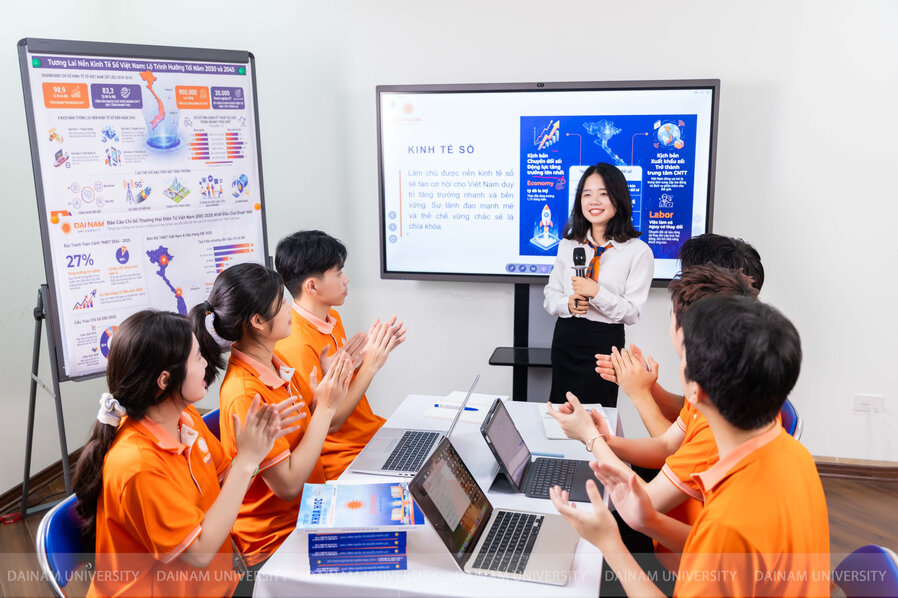
That is the ultimate measure of investment in education. That is also what Dai Nam University aims for when building an environment where students learn genuinely, work genuinely, and grow through real abilities.
LĐS