English
 Tiếng Việt
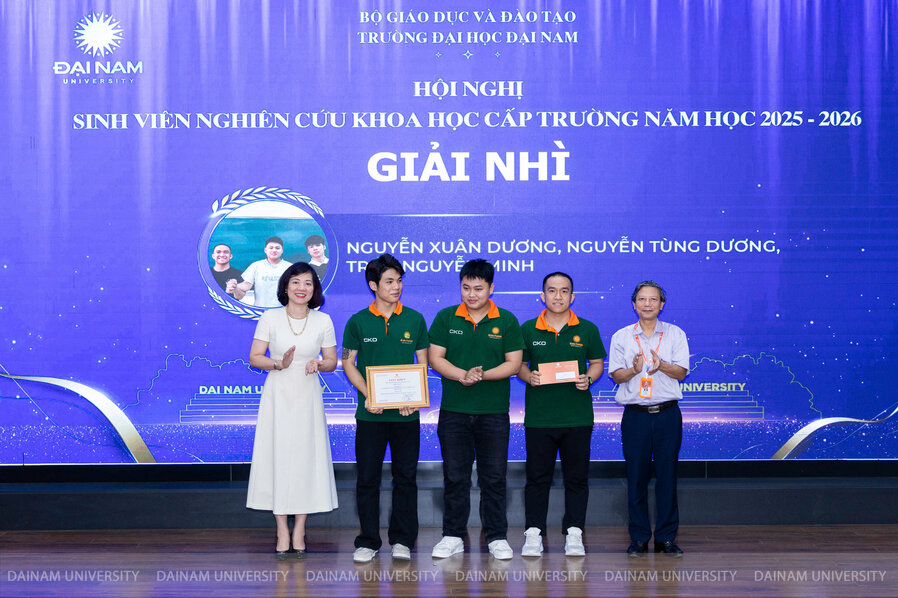
"Remote-controlled car window lifting model": A research achievement by Automotive Engineering students.



Beyond theoretical learning in the classroom, students of the Automotive Engineering Technology Faculty at Dai Nam University are gradually applying their textbook knowledge to create practical applications through student scientific research activities. The project "Designing a Remote-Controlled Window Lifting Model for Automobiles" is a clear example of the experiential learning spirit, technological mastery, and proactive research of Dai Nam University students.
From a passion for automotive technology to a practical research idea.
The research team, led by student Nguyen Xuan Duong from class CKO 18-03, along with other members who share a passion for automotive electrical and electronics engineering, was motivated by the desire to create a model with practical applications (specifically for older car models).
Sharing the reasons for choosing the topic, Xuan Duong said: “Our group chose this topic because it is a familiar system in modern cars, has high applicability, and is directly related to the field of automotive electrical and electronics that our group is studying. We also wanted to delve deeper into the control principles and the possibility of integrating remote control technology into vehicle systems.”
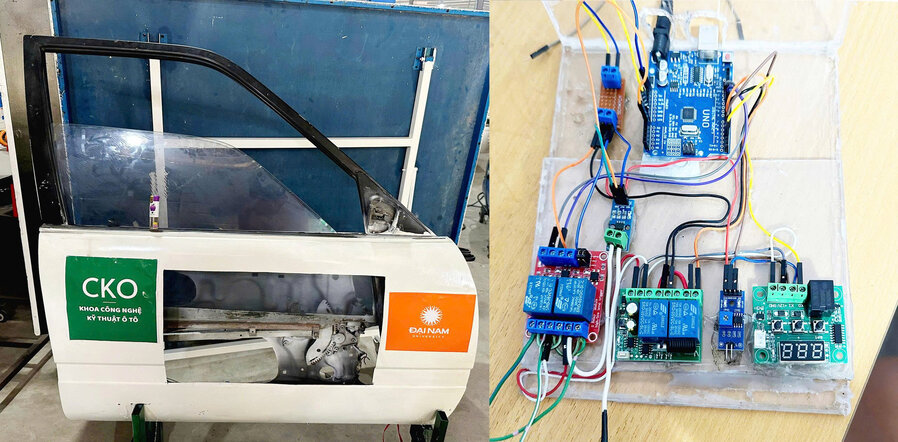
The research idea stems from the real needs of users today, as vehicles increasingly prioritize convenience and safety. A remote-controlled window system allows users to easily open or close windows without direct operation, especially useful in cases where the windows are forgotten or quick ventilation is needed. Furthermore, building upon existing hardware, the team expanded the system to include features such as automatic window lowering when the vehicle is submerged (in case of a fall), automatic window lowering when encountering obstacles during window raising (preventing the user's hands from getting caught), and finally, automatic window lowering by approximately 5cm to ventilate the vehicle when it gets too hot, preventing overheating of the vehicle's components.
Scientific research is not just about theory.
To complete the model, the student team was directly involved in the entire process, from mechanical design and control programming to circuit assembly and product testing.
The model is designed with components such as a window lifting motor, a control relay, a microcontroller, and a remote control. When the user presses a button on the remote, a signal is transmitted to the controller to activate the relay, reversing the current supplied to the motor, thereby raising or lowering the window.
It's worth noting that behind that model lies a long journey of continuous experimentation and bug fixing.
“ The biggest challenge for the team was synchronizing the mechanical parts with the electrical control system. At times, the motor was unstable, the control signals were interfered with, or the window lifting mechanism didn't operate as smoothly as desired,” Xuan Duong shared.
To address the problems that arose, the team members divided the work according to their individual strengths. Some were responsible for control programming, others for mechanical design, and still others for assembling the electrical circuits and testing the system.
The process of researching, experimenting, and staying up late to perfect the product together not only helped the team accumulate more practical knowledge but also created a bond between the members.
"The most memorable moment was when the model finally worked successfully after numerous trials and adjustments," the student recalled.
According to MSc. Vu Tien Dai - Lecturer in the Faculty of Automotive Engineering Technology and the thesis supervisor, the most valuable quality in students is not only the completion of the product but also their proactive research spirit and willingness to face challenges.
“During the project, the students demonstrated a very serious learning spirit, proactively seeking out materials and persistently addressing errors that arose during testing. This is very important for engineering students, because scientific research not only helps them consolidate their professional knowledge but also cultivates technological thinking, teamwork skills, and practical problem-solving abilities,” said MSc. Vu Tien Dai.
Create an environment where students can master knowledge.
According to Dr. Nguyen Anh Tuan, Head of the Automotive Engineering Technology Department, scientific research activities are always given special attention by the University and the Department to create an environment for students to develop their creative abilities, increase their ability to apply knowledge to practice, and master technology from the moment they are in the classroom.
“The Faculty of Automotive Engineering Technology always encourages students to participate in scientific research and practical projects to help them develop creative thinking, the ability to apply knowledge to practice, and master technology. The university and the faculty always provide facilities, laboratories, equipment, and the support of lecturers to help students confidently implement their research ideas,” shared Dr. Nguyen Anh Tuan.
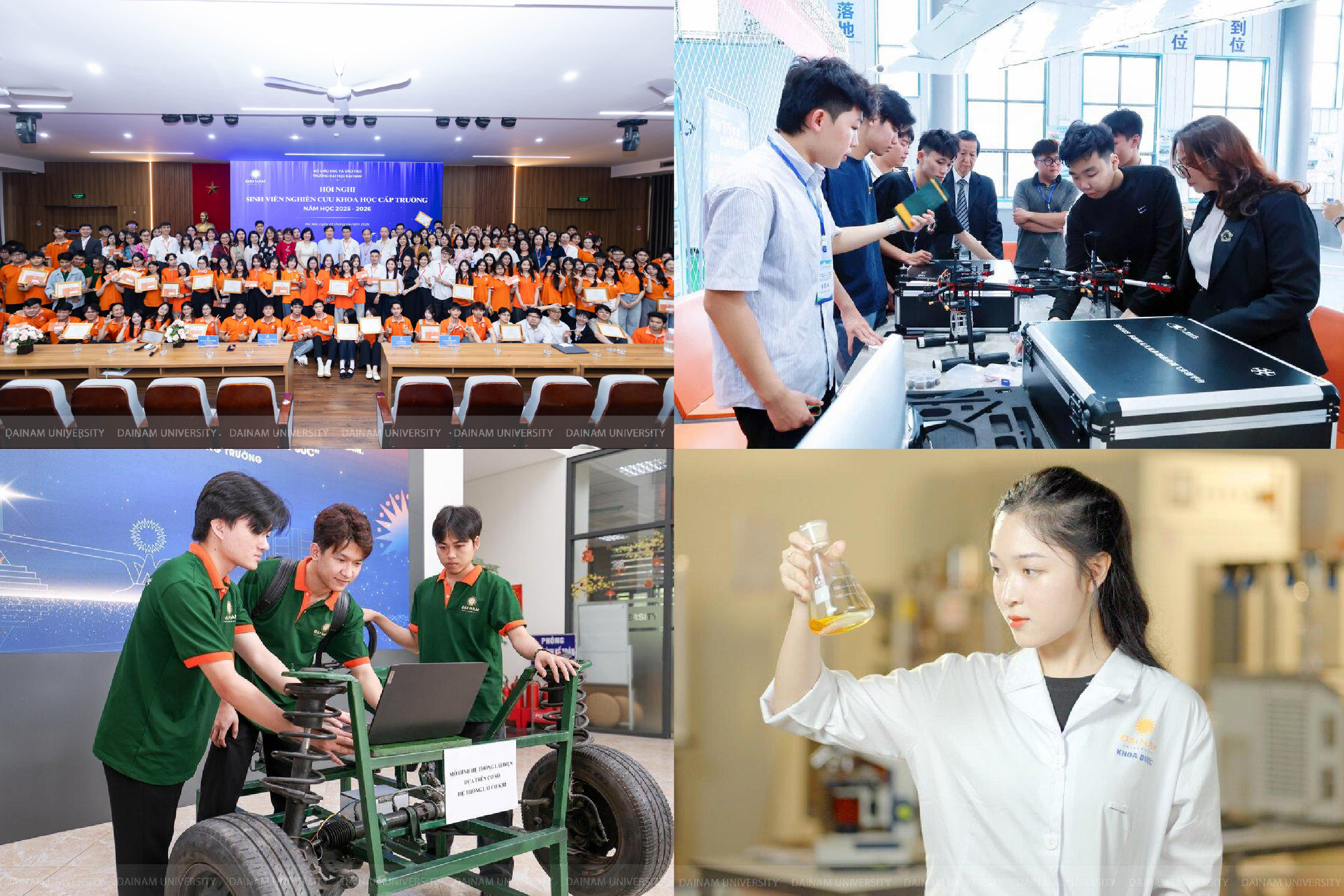
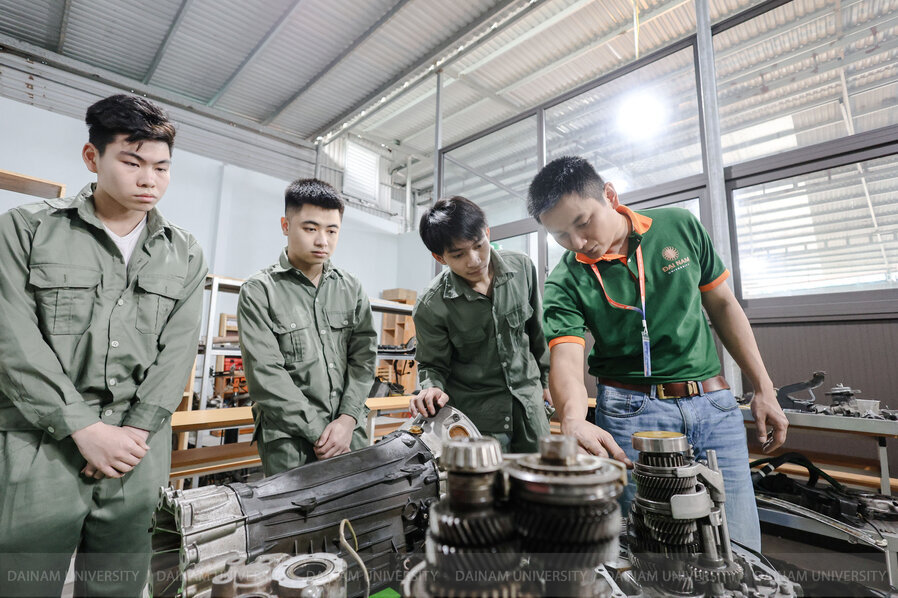
Beyond theoretical lectures, students in the Automotive Engineering Technology program at Dai Nam University also participate in practical projects, research, professional competitions, and hands-on experiences with the orientation of "real learning - real practice - real career."
It is this rich, experiential learning environment that helps students gradually develop research thinking, creativity, and a proactive spirit in the face of technological change.
From scientific research to the journey of growth.
Beyond being just an academic model, the topic also demonstrates its practical applicability in the field of modern automotive technology.
According to the research team, the system could be further developed in the future by integrating anti-jamming sensors, smartphone control, or connection to smart car systems to enhance safety and convenience for users.
Most importantly, the scientific research journey has helped students mature significantly in terms of expertise, skills, and professional mindset.
"After completing the project, I gained a better understanding of the electrical and electronic systems in automobiles, and at the same time, I honed my teamwork skills, research thinking, problem-solving abilities, and perseverance in pursuing a product," Xuan Duong said.
At Dai Nam University, scientific research is not only an academic activity but also an environment where students can explore their own abilities, proactively master knowledge, and approach careers through practical experience.
From today's student research models, the journey to becoming capable and innovative automotive technology engineers is gradually taking shape right from the university lecture halls.
BTT