English
 Tiếng Việt
Learning foreign languages in the age of AI: What do students need to avoid being replaced?



(Dan Tri Newspaper) - AI can translate, write, and communicate increasingly like humans. So what will create value for a foreign language student in the future?
Many experts believe the answer lies not in knowing another language, but in the ability to transform that language into a tool for working, creating, and adapting in the digital world.
This was also a topic discussed by many Vietnamese and Korean scientists at the international scientific conference "Digital Transformation in Korean Language and Korean Studies Education: Connecting Vietnamese and Korean Academia Towards the Future" organized by Dai Nam University.
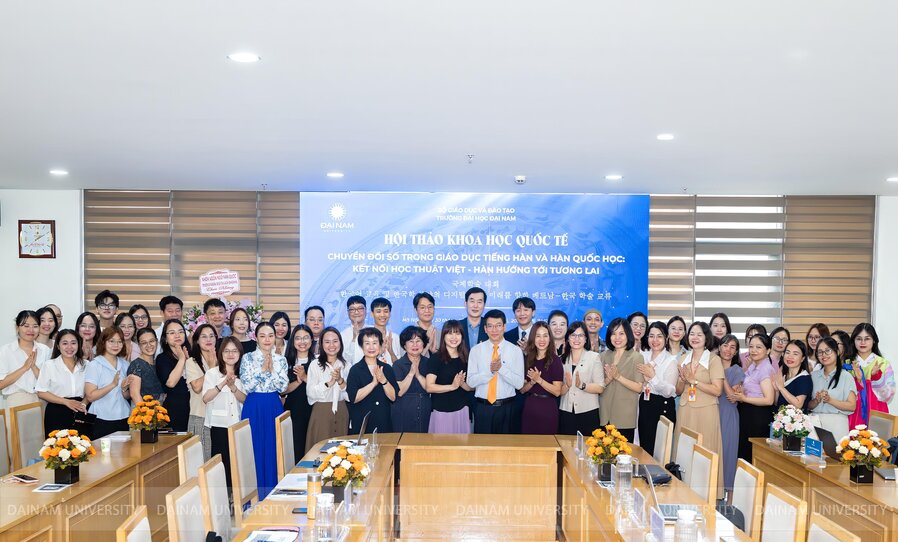
The workshop brought together scientists and education experts from Vietnam and South Korea, representatives from the Korea Foundation (KF), Sangmyung University, Hanbat National University, and leaders from many Korean language and Korean studies training institutions nationwide (Photo: DNU).
Beyond being a forum for academic exchange, the conference also addresses topical issues for higher education in the context of artificial intelligence transforming how people learn, work, and communicate.
Foreign language skills are no longer the only advantage.
For many years, foreign language proficiency has been considered one of the keys to expanding career opportunities and international integration for young people. However, the rapid development of AI is raising new questions for language education.
Current AI tools can support instant translation, create multilingual content, and handle many communication tasks that previously relied on humans.
According to Woo Hyung Min, Chief Representative of the Hanoi Office of the Korea Foundation (KF), the development of technology is creating major changes for both foreign language teachers and learners.
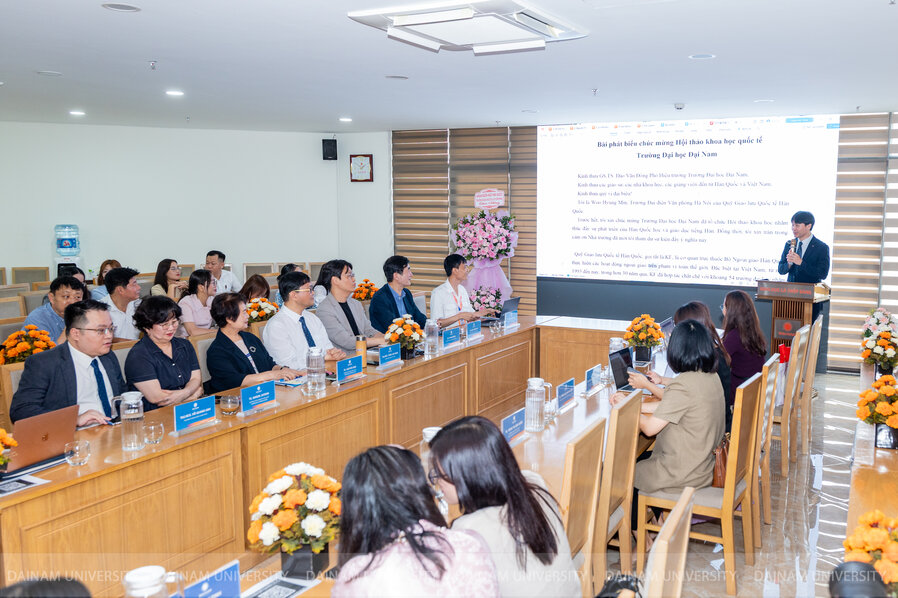
Mr. Woo Hyung Min speaking at the conference (Photo: DNU).
At the conference, many Vietnamese and Korean scientists shared the view that AI can support language use, but it is unlikely to replace inherent human abilities such as critical thinking, creativity, intercultural communication, and problem-solving in practice.
Professor Cho Hang Rok of Sangmyung University (South Korea) argues that language education is entering a period of significant transformation, where learners need to be equipped with more skills than just linguistic knowledge.
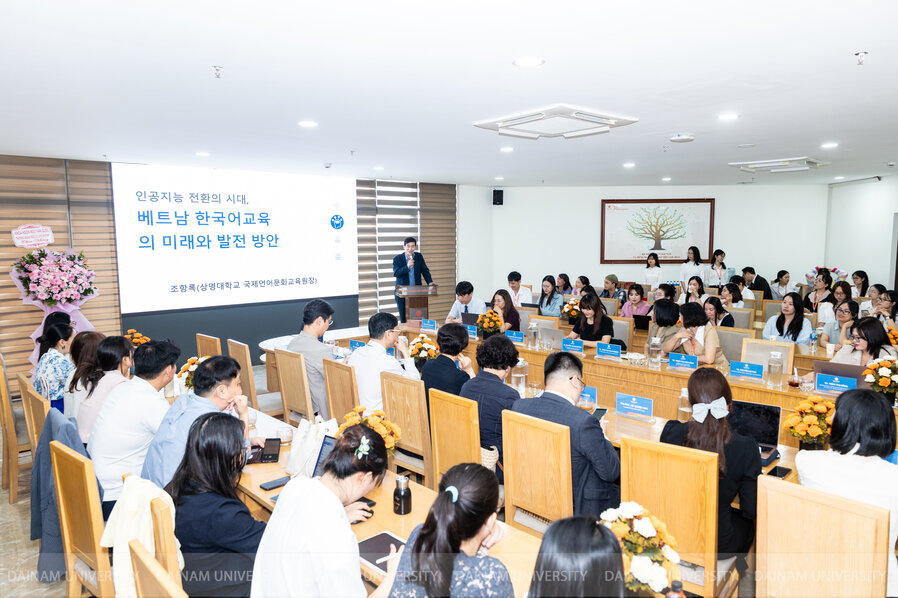
Professor Cho Hang Rok presenting at the conference (Photo: DNU).
Language training linked to professional competence.
According to experts, the current trend in language training is no longer focused on simply equipping learners with language knowledge, but is shifting towards developing professional skills and integration capabilities.
This requires training programs to be closely linked to practice, enhancing professional experience, digital skills, and the ability to apply technology. This is also the direction that the Korean Language Department of Dai Nam University has been pursuing in recent years.

A panoramic view of Dai Nam University.
Dr. Tran Hai Duong, Head of the Department of Korean Language and Culture, said that the school's goal is not only to train students to use Korean proficiently but also to help them be able to work immediately after graduation.
Accordingly, students can choose from two specialized areas: Korean translation and interpretation, and business/commercial Korean, helping to shape their career path early on. Alongside specialized knowledge, learners are exposed to simulated work environments, corporate projects, and professional experience activities throughout their studies.
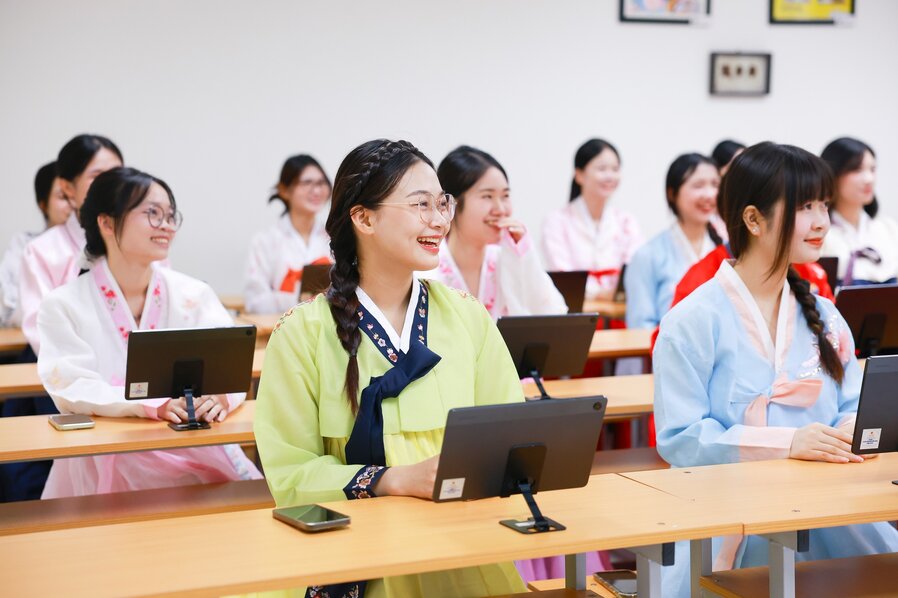
A Korean Language class at Dai Nam University (Photo: DNU).
Enhancing international experiences and business connections.
One of the increasingly evident demands of the job market is that students not only need to be professionally competent but also capable of adapting to a multicultural environment.
Therefore, in addition to classroom training, the Korean Language Department of Dai Nam University focuses on expanding cultural exchange activities, connecting with native-speaking experts, Korean businesses, and international cooperation programs.
Students have the opportunity to participate in internships at Korean companies operating in Vietnam, as well as experience international semester programs and academic exchanges with partner universities in Korea. These experiences help learners improve their foreign language skills, gain a deeper understanding of local culture, and accumulate work experience in an international environment.
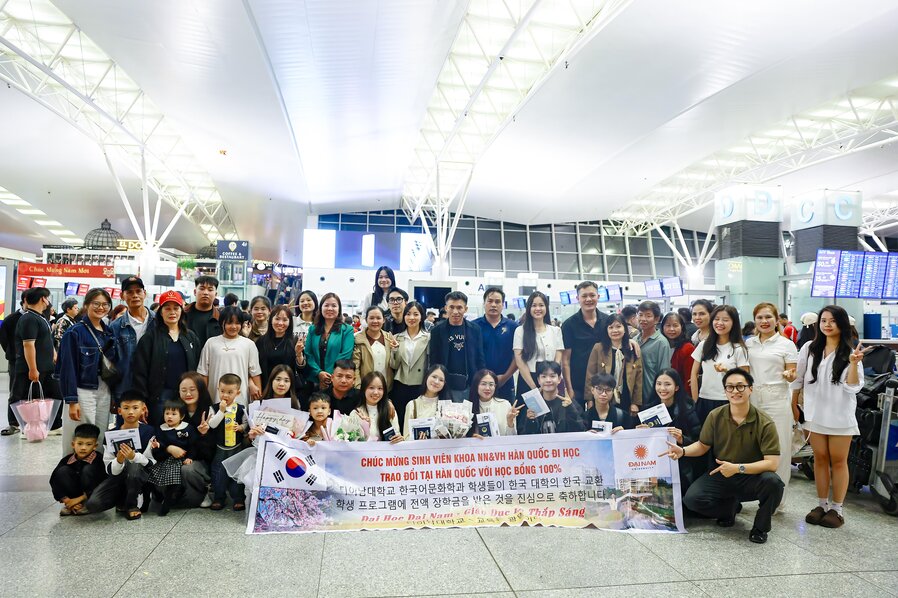
DNU Korean Language students participate in an exchange program in Korea with a 100% scholarship (Photo: DNU).
According to experts, these are also factors that businesses are increasingly valuing when recruiting personnel in the context of globalization and digital transformation.
In 2026, Dai Nam University will recruit students for the Korean Language major through five methods: considering high school graduation exam scores; considering high school academic transcripts; direct admission according to the regulations of the Ministry of Education and Training; considering the results of aptitude and thinking assessment exams (HSA, TSA, SPT, V-SAT); and admission based on the results of vocational school, college, or university graduation in the same field.
>>> Register for admission at https://xettuyen.dainam.edu.vn/
>>> Contact hotline 0961 595 599 - 0931 595 599 for advice.
Theo Báo Dân trí