English
 Tiếng Việt
Four brothers all chose Dai Nam University as their first choice: When belief creates a shared decision.



Having listed Dai Nam University as their first choice, enrolling on the same day, and becoming freshmen of the K20 cohort at the Faculty of Communication, Dai Nam University – for Nguyen Hoai Hai My, Phung Hua Ngoc Hung, Tran Van Hung, and Nguyen Thi Ngoc Anh, this wasn't a random decision or simply a case of "siblings deciding to study together." Instead, it was a choice formed after researching the field of study, the learning environment, practical opportunities, and reviews from previous students. When all four found what they needed in a university environment, choosing Dai Nam became a natural decision.
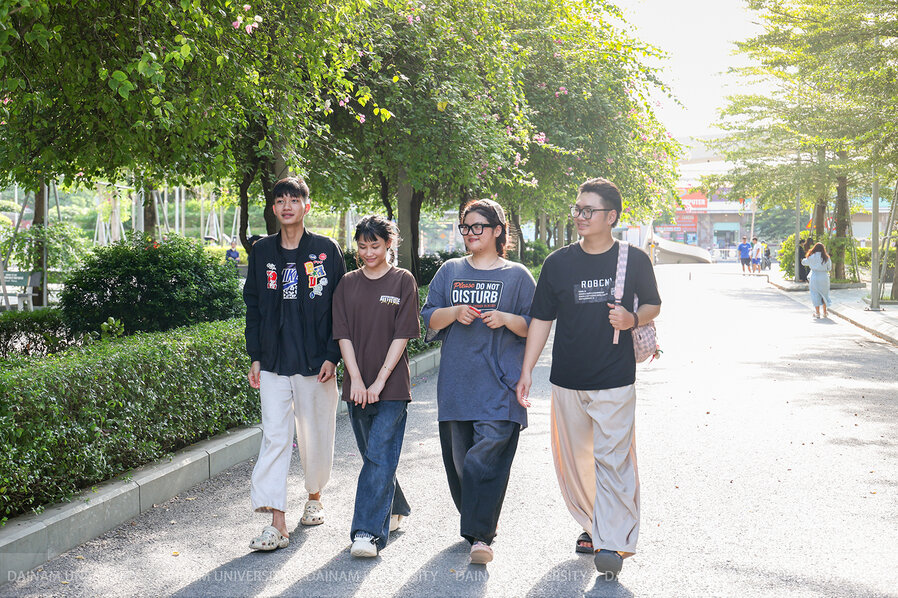
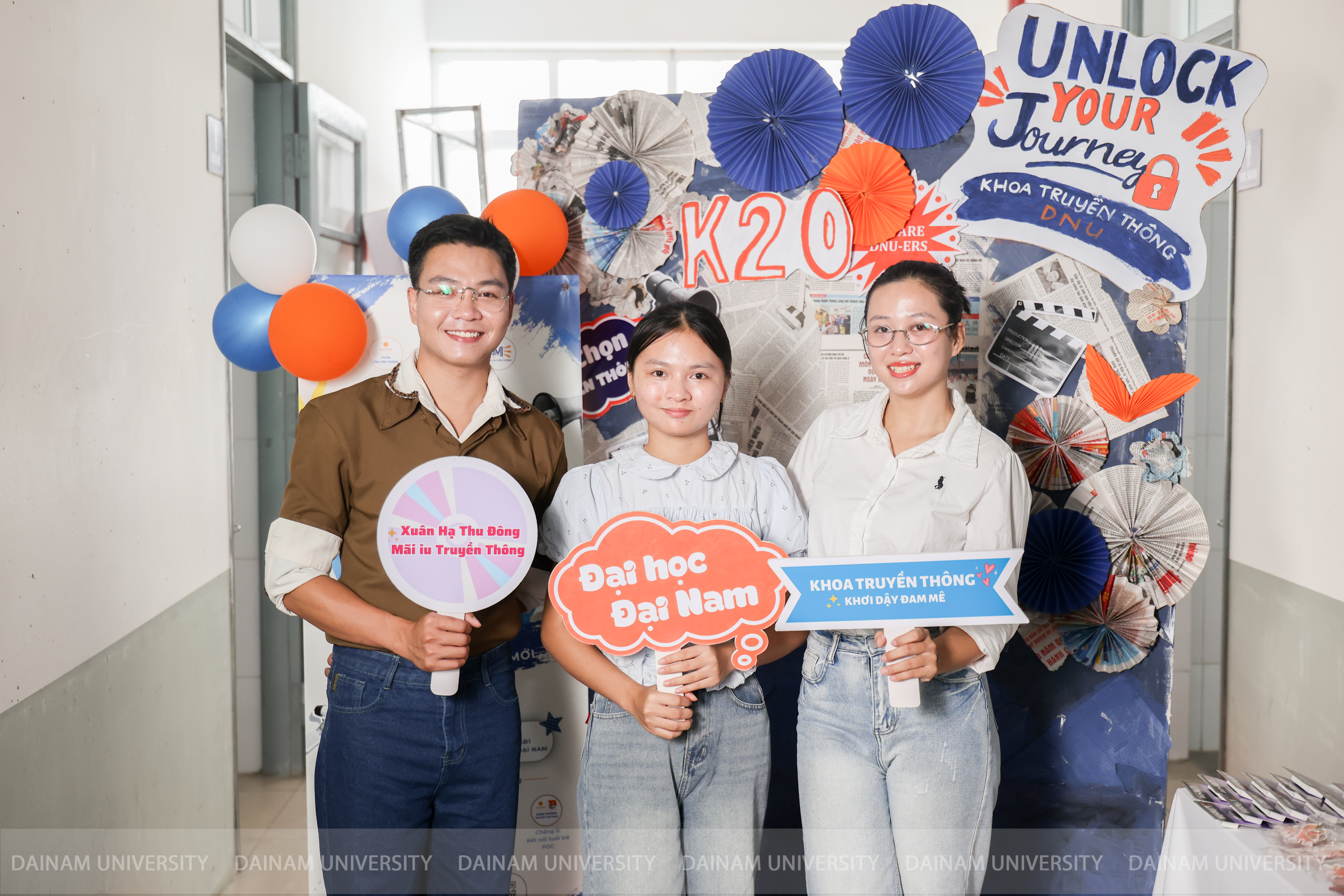
The four cousins all enrolled at Dai Nam University on the same day, and all chose the Faculty of Communication for their university studies.
From a suggestion on ChatGPT to a real-life proven choice.
Interestingly, Hai My's first encounter with Dai Nam University began with a question on ChatGPT. While searching for a suitable university for her Communication studies, Hai My used ChatGPT as a reference channel, and Dai Nam University appeared in the suggestions, catching her attention. However, instead of stopping at the AI's answer, My continued to research the program, facilities, faculty, and especially the experiences shared by current students.
“I was quite surprised when ChatGPT suggested Dai Nam University. After researching further, I found many things that matched what I was looking for, especially the learning environment, facilities, and feedback from previous students,” Hai My shared.
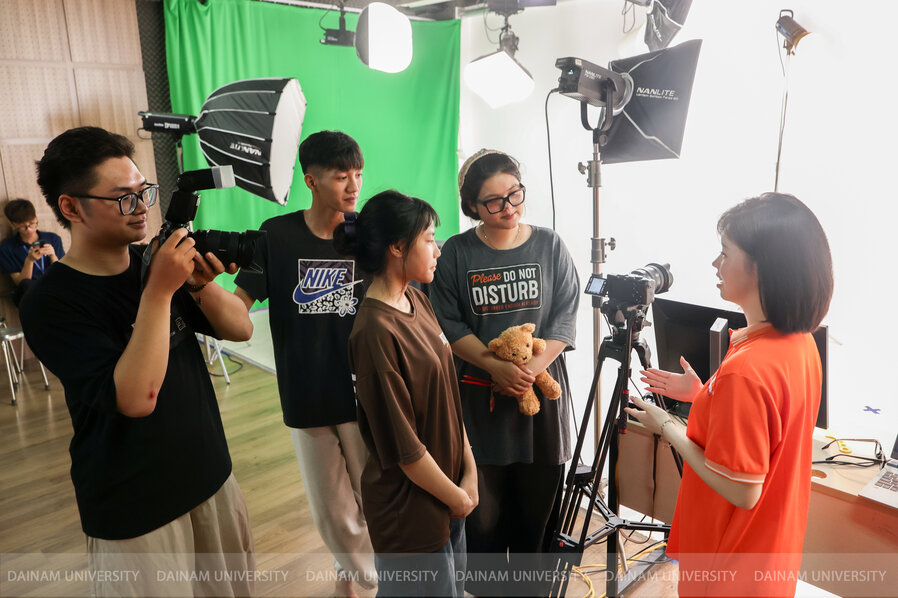
The studio space and hands-on activities help new students get a clearer picture of the experiential learning environment at the Faculty of Communication.
The first day of school is when the information on the screen is verified by real-life experience. Upon entering the Faculty of Communication, what caught the attention of the new students was not only the studio system and equipment for content production, but also the sight of senior students directly hosting programs, filming, and participating in professional activities.
"Even though they're still students, they host the show very professionally, energetically, and confidently. Watching them perform makes me very happy and I just want to go to school tomorrow," Hai My said.
What the children want to know is not just "What does the school have?" but "What will we get to do?"
That was also a question that four new students were very interested in when discussing with lecturers from the Faculty of Communication. Will studying Communication lead to practical work from an early age? When will they get to work in a studio? Will they get to host events, film and photograph events, produce content, and make short films? When will they get to interact with businesses and the real-world professional environment?
“What I like is that we don't just learn theory. We're introduced to activities we can participate in, such as being an MC, filming events, making short films, and later having the opportunity to intern at news agencies and media companies. Early experience helps us discover what we truly enjoy and what kind of work suits us,” Hai My shared.
The four brothers started in the same place, but each could have chosen a completely different path. What they were all looking for wasn't a single road, but an environment that offered enough opportunities for each of them to find their own way.
Initial trust must be repaid with actual competence.
According to Associate Professor Ngo Thi Hong Hanh, Deputy Head of the Communication Department, it is increasingly natural for young people to use AI, social media, and reviews from previous students as references when choosing a school. AI can offer suggestions, but students will continue to verify them through what they see, experience, and feel directly.
For the school, what matters most is how students live up to that choice, even more important than their students choosing it. Following an applied and OBE (Out of Business) training orientation, the Faculty of Communication aims to create a deeper connection between the classroom and the professional environment, so that students not only know but can also apply their knowledge, not waiting until graduation to begin interacting with the workplace.
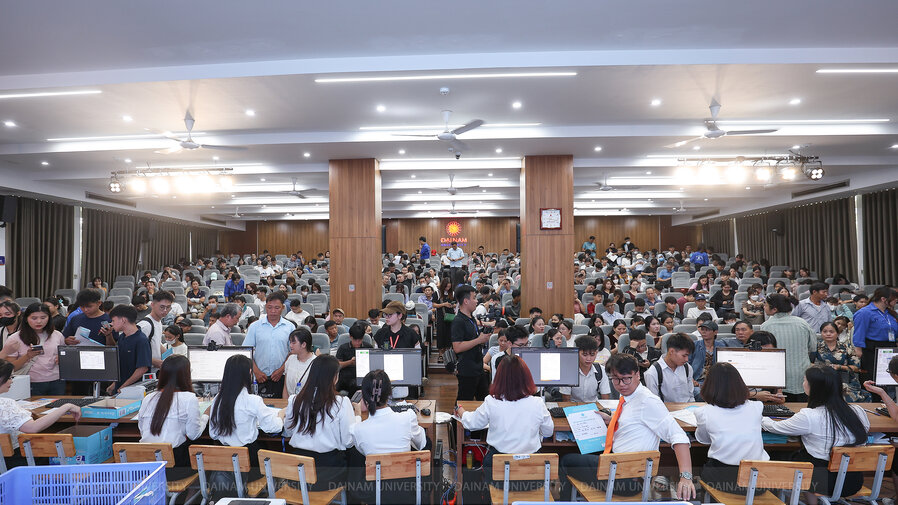
Students of cohort K20 at Dai Nam University officially began their studies on August 15th.
The Faculty is also utilizing study tours and exchanges with universities specializing in media studies in China, including Zhejiang Communication University, as a reference source to continuously update its curriculum, technology, and practice spaces in line with the rapidly changing field.
In the 2025-2026 academic year, the Department of Communication is training over 1,500 students. The Public Relations major completed its accreditation in 2023; the Multimedia Communication major is expected to complete its accreditation in 2026. The department is also promoting a program to send approximately 30 high-achieving students to Zhejiang Communication University to study specialized courses starting in March 2027.
But no matter how the curriculum changes, how advanced the technology becomes, or how extensive the international collaboration, the ultimate measure must still come back to the student: can the student do the job, can they adapt to the market, and do they have the competence to confidently enter the profession?
Four people - one starting point - four journeys ahead
Hai My, Ngoc Hung, Van Hung, and Ngoc Anh have only just begun their first day as university students. Ahead lie many courses, projects, competitions, trials and errors, and career experiences. ChatGPT might be where their first question is asked, where the evaluations of those who came before them can build confidence, and a day at school might make that confidence clearer, but the real answers will lie in the four years ahead.
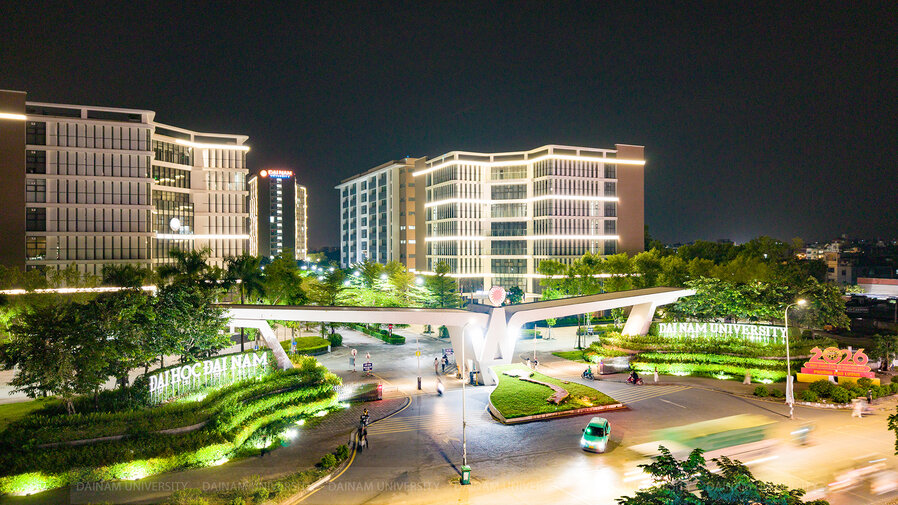
Dai Nam University has modern facilities.
Four brothers all chose Dai Nam University as their first choice, entering the Faculty of Communication on the same day, but they don't necessarily have to reach the same destination. Because the most valuable thing about a university environment is not creating identical people, but giving each person enough knowledge, experience, and opportunities to find the best version of themselves.
And for Dai Nam University, the joy of being chosen by students always comes with a very clear responsibility: to transform the belief they have on their enrollment day into real competence when they enter life.
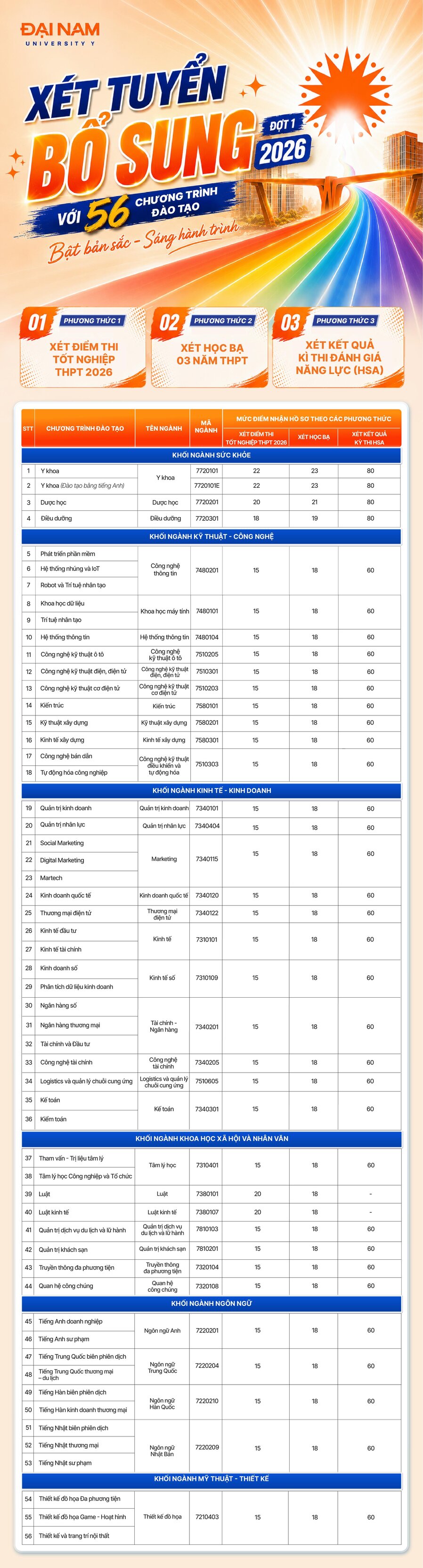
Dai Nam University (school code DDN) continues to accept applications for the first supplementary admission round of 2026 for 56 training programs, with minimum application scores ranging from 15 to 23 points.
Register for supplementary admissions for K20: HERE
BTT