English
 Tiếng Việt
Dai Nam University - Vietnam Post: Expanding the strategic university-enterprise cooperation ecosystem.



Following its strategic partnership with the Electricity sector, the signing of an agreement with Vietnam Post Corporation further expands the strategic partnership ecosystem that Dai Nam University is building. Beyond internships and recruitment, the two sides aim for a deep collaboration encompassing human resource training, research and development of technology, AI, big data, drones, autonomous robots, smart logistics, and the development of a Smart Campus model.
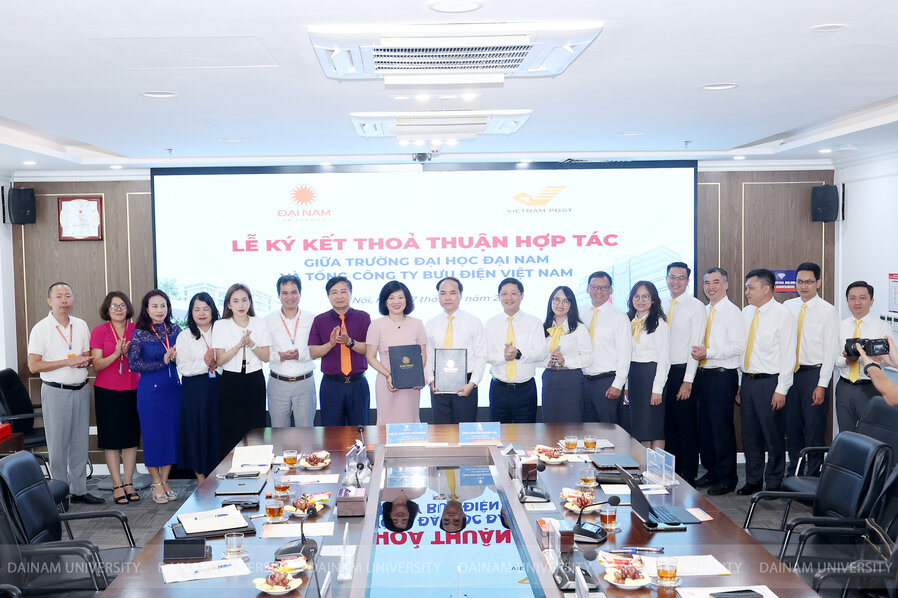
Representatives from Dai Nam University and Vietnam Post Corporation signed a cooperation agreement on September 17th.
Businesses are not just at the "output" of the training process.
On September 17th, Dai Nam University and Vietnam Post Corporation signed a cooperation agreement on training, scientific research, technology development, logistics, and high-quality human resources. The noteworthy aspect of the agreement lies not in the number of items signed, but in the way the two parties approach the relationship between the university and the enterprise.
Instead of businesses only appearing at the end of the training process to accept students for internships and recruitment, Dai Nam University aims to involve businesses earlier: jointly identifying job requirements, setting out practical problems, creating a practical and research environment, and providing feedback on students' abilities.
Based on the practical requirements of businesses, schools have more grounds to adjust training content, skills, and learning outcomes. Students also better understand what they need to learn, what skills they need to develop, and what level of competence they must achieve to be able to work after graduation.
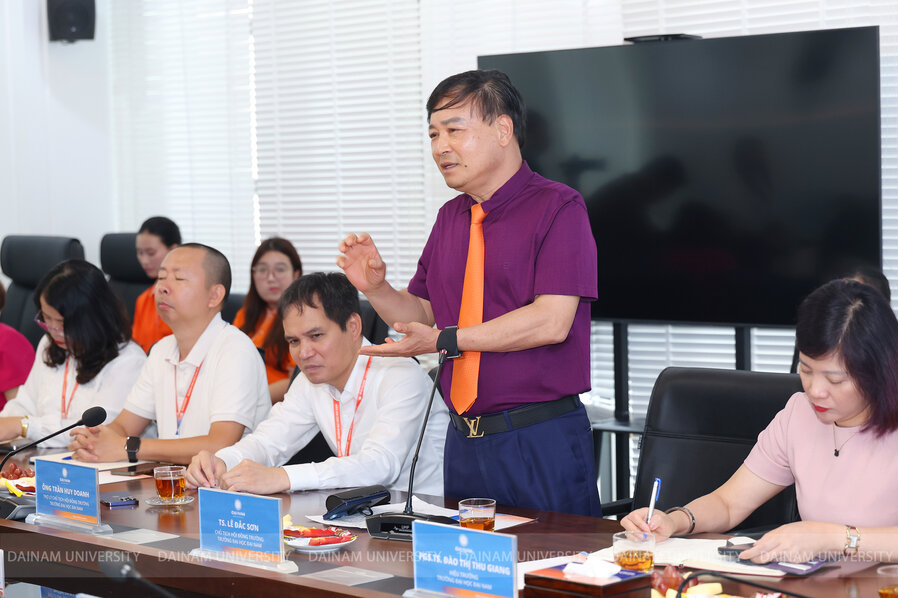
Dr. Le Dac Son, Chairman of the Board of Directors of Dai Nam University, delivered a speech at the signing ceremony.
Speaking at the signing ceremony, Dr. Le Dac Son, Chairman of the Board of Directors of Dai Nam University, emphasized that the important thing after signing is to translate the cooperation contents into concrete programs, creating real value for businesses, the university, and students alike.
"Students who have completed internships need to be given work experience and learn how to do the job," shared Dr. Le Dac Son.
According to the Chairman of the Board of Directors of Dai Nam University, internships should be part of a clear competency development process. Businesses define job requirements; the university translates those requirements into the training process; and students learn, practice, and gain experience in a real-world environment. "The quality of the workforce determines whether or not we can recruit them," he emphasized.
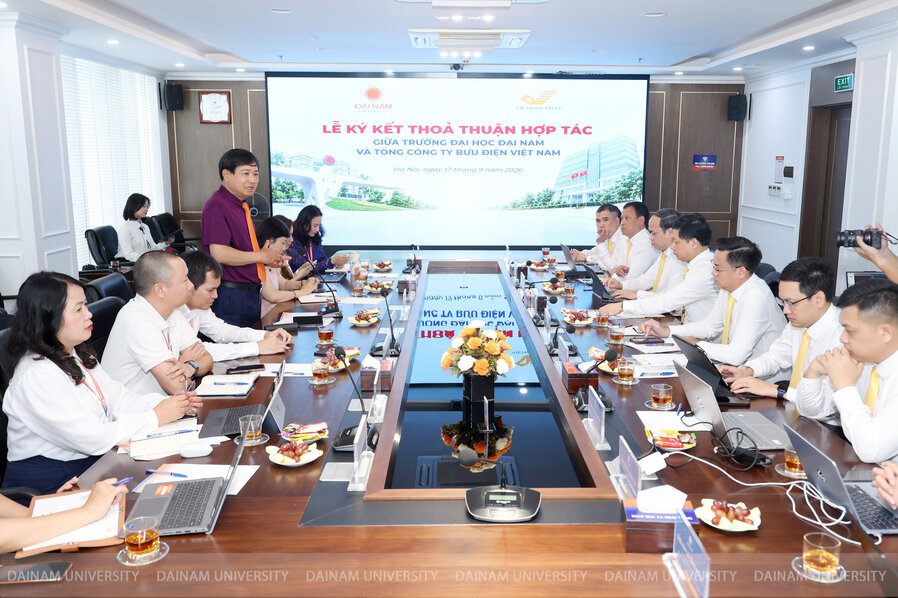
Dr. Le Dac Son emphasized the need to translate collaborative content into concrete programs, creating tangible value for schools, businesses, and learners.
This is also the direction that Dai Nam University is promoting: shifting from training primarily based on knowledge transmission to developing job-specific competencies. Graduates not only need to "know" but must also gradually develop the ability to apply knowledge and skills to solve practical tasks in their profession.
From internships and recruitment to collaborative human resource development.
In the collaborative partnership with Vietnam Post, training, internships, competency assessment, and recruitment are integrated into a cohesive system. Students from Dai Nam University will have additional opportunities to access the working environment within the Vietnam Post Corporation's network of units, particularly in the fields of information technology, logistics, business, postal services, and delivery.
Conversely, deeper involvement in the training process helps businesses access human resources early on, while also conveying technological changes, job requirements, and labor market demands to schools.
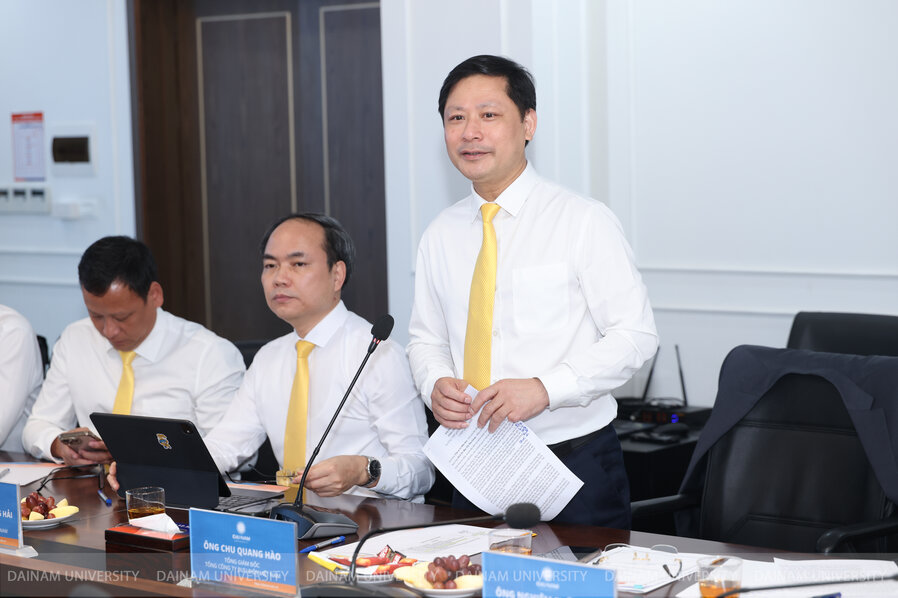
Mr. Chu Quang Hao, General Director of Vietnam Post Corporation, speaks at the signing ceremony of the cooperation agreement with Dai Nam University.
Mr. Chu Quang Hao, General Director of Vietnam Post Corporation, stated that the two sides share many similarities in scale, diversified operations, and human resource development needs. This forms the basis for expanding cooperation by leveraging each other's strengths and resources. With its nationwide network, Vietnam Post also has the opportunity to collaborate with Dai Nam University in career guidance activities, student support, and networking in many localities.
The ultimate goal is to form a chain of connections where businesses not only "receive" graduates after training, but also participate with schools in the process of developing students' professional skills.
Transform Smart Campus into a true technology testing ground.
One significant long-term area of cooperation between the two parties is the research, development, and application of technologies related to the Smart Campus model. According to the cooperation agreement, areas such as artificial intelligence (AI), big data, drones, autonomous robots, smart logistics, and digital services will be researched in a way that aligns with the practical needs of universities and businesses.
If technology education remains confined to classrooms and textbooks, the gap between knowledge and practice will always exist. But when the campus itself becomes the place to pose problems and test solutions, students can participate in a cycle closer to real-world research and development: problem identification - solution proposal - testing - measurement - evaluation - refinement.
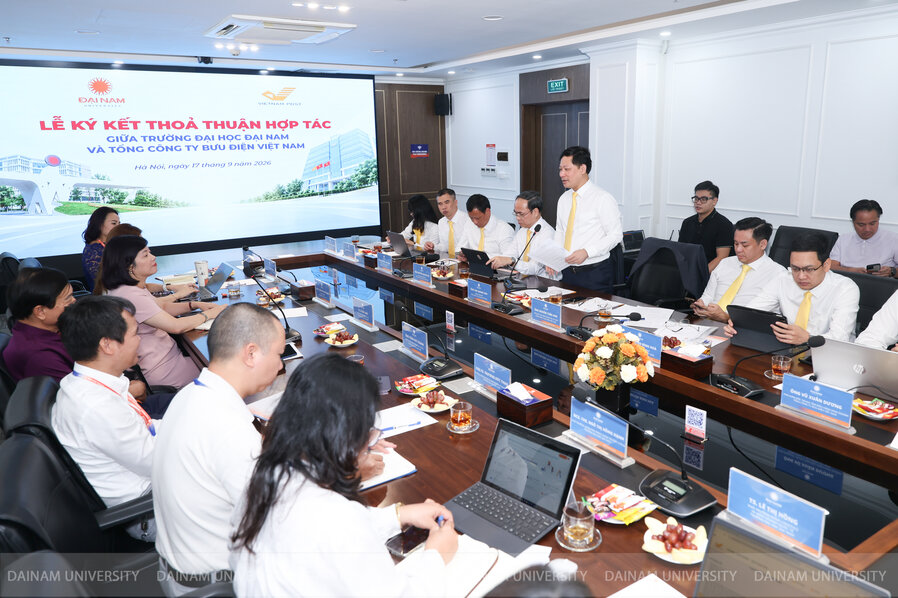
Representatives from both organizations discussed directions for cooperation in training, scientific research, technology development, and high-quality human resources.
In that context, a Smart Campus is not just about applying technology to make school operations more convenient, but can also become an "open laboratory" for faculty and students. A logistics problem on campus could become a research topic. A data-related need could become a problem for technology students. An AI solution, robot, or drone could be tested in real-world conditions before further refinement.
This is also a way for scientific research, innovation, and entrepreneurship in universities to get closer to the problems that businesses and society need to solve.
From Electricity to Post Office: Gradually Forming a Strategic Partner Ecosystem
The collaboration with Vietnam Post is not an isolated activity. Following the strategic partnership with Vietnam Electricity Corporation, this is the next step in Dai Nam University's orientation to build a network of partners consisting of large enterprises, corporations, and systems capable of deeply participating in training, research, technology development, and human resources.
Each partner has different strengths, and what Dai Nam University aims for is not to have many cooperation agreements, but to connect those resources into the training process and create measurable value for learners.
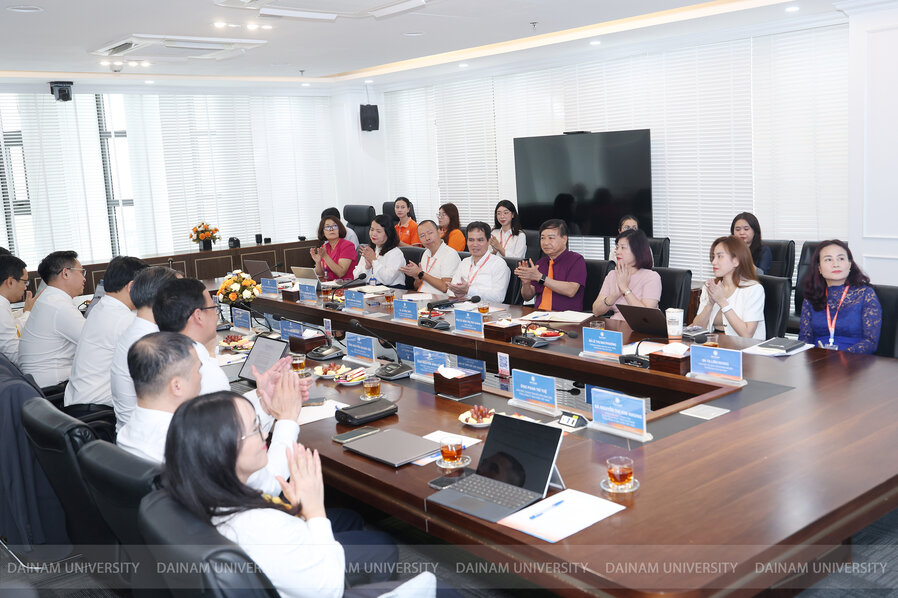
AI, big data, drones, autonomous robots, and smart logistics are the areas that both sides are focusing on for research, development, and application.
The model can be visualized as a chain of links: Businesses pose a problem → Schools transform it into competency requirements and training content → Students learn and practice on real-world problems → Schools and businesses collaborate on research and testing → Results are returned to serve training and practice.
Once this system is operational, the gap between the classroom and the business world will no longer be bridged by field trips or short-term internships, but by integrating professional practice directly into the training process.
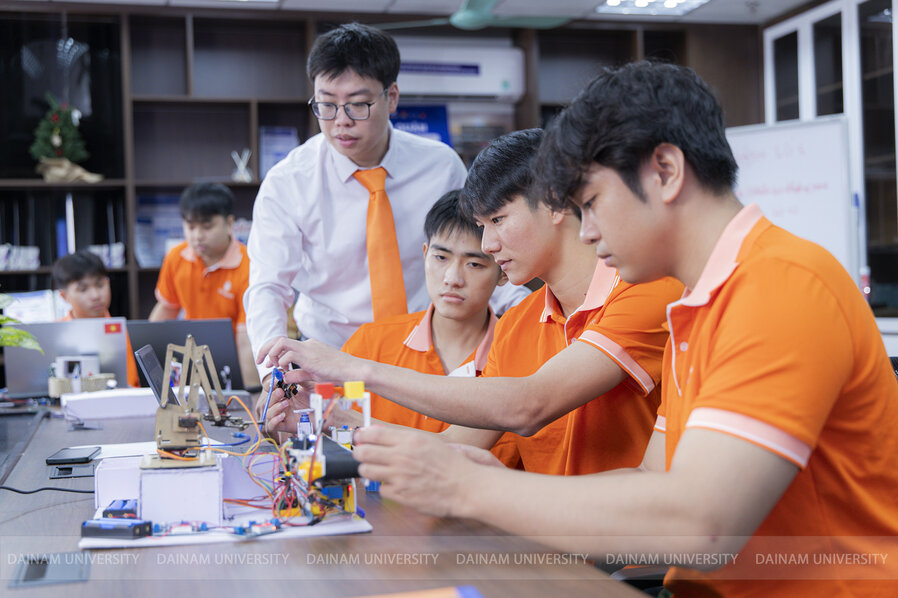
The cooperation agreement further strengthens the connection between the classrooms of Dai Nam University and business practices, aiming to develop professional capabilities for students.
The value of the agreement between Dai Nam University and Vietnam Post therefore lies not in the signing ceremony on September 17th, but in the specific programs implemented after the signing: what students will do, what research will be conducted jointly by lecturers and businesses, what technologies will be tested, what problems will be solved, and how many career opportunities will be created.
This is also how Dai Nam University concretizes its orientation of "Open classrooms - Partnering businesses - Accelerating technology": expanding the classroom beyond the lecture halls, integrating businesses deeper into the training process, and transforming technology into a tool for students to develop their capabilities, conduct research, innovate, and pursue their careers.
BTT