English
 Tiếng Việt
Cafebiz - No longer the "exclusive playground" of public schools: Is the trend in medical training in Vietnam changing?



What do students have to go through to earn a medical degree, and how long does the study period last?
For many years, medical training in Vietnam was almost exclusively confined to long-established public medical universities.
Given its direct connection to human health and life, the medical profession is always subject to strict regulations regarding admissions, training programs, faculty, and the system of practical training hospitals.
However, in recent years, this picture has been gradually changing as some private universities have met the regulatory requirements and begun successfully training their first cohorts of doctors.
Recently, the graduation ceremony of the first cohort of Medical Doctors at Dai Nam University attracted attention because it was one of the first cohorts of doctors from a private university to complete the entire 6-year training program.
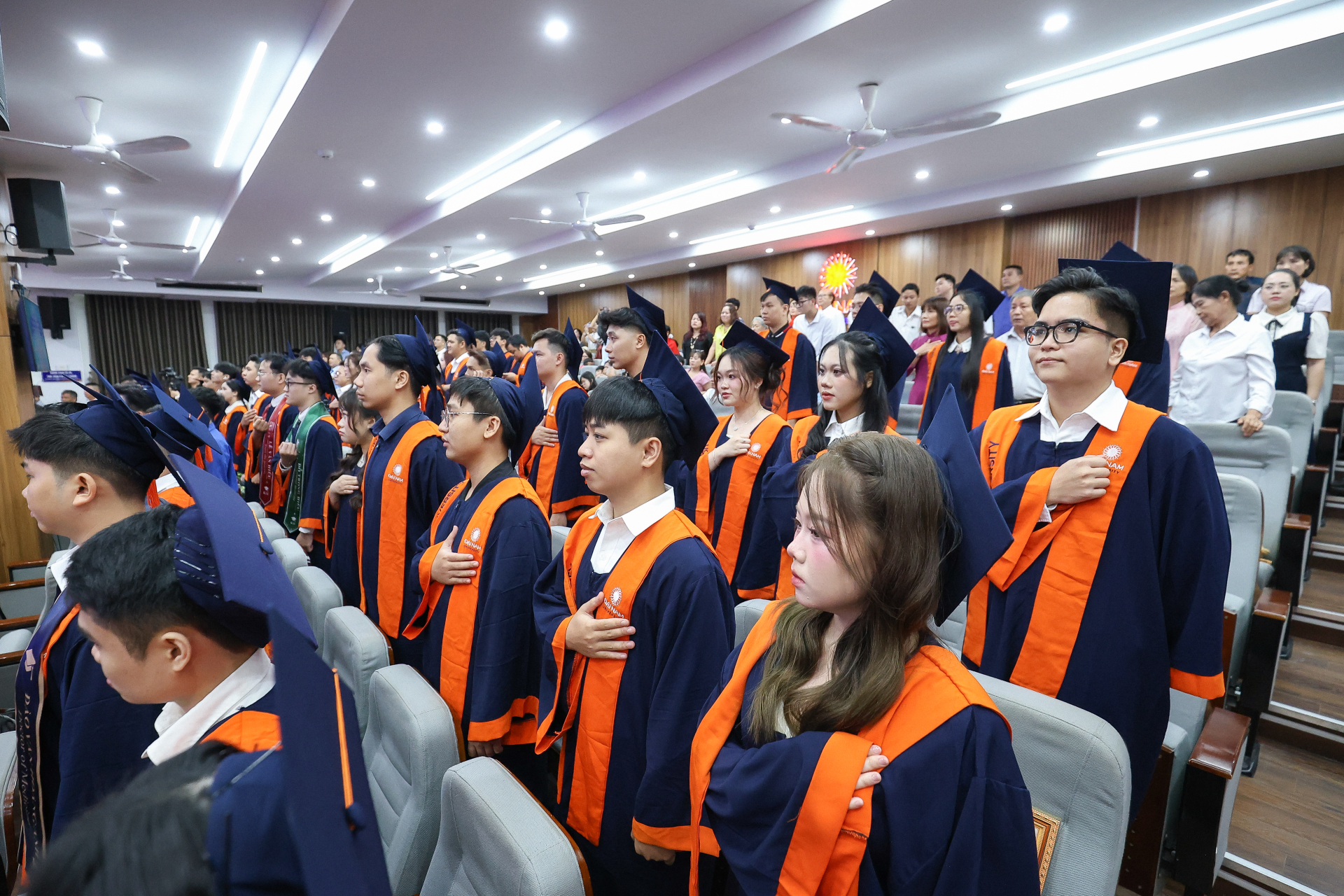
Graduation ceremony for the first cohort of Medical Doctors at Dai Nam University.
The course had 83 students who were recognized as graduates. Notably, just before receiving their diplomas, 7 out of 8 students who took the entrance exam were accepted into the residency program at Thai Nguyen University of Medicine and Pharmacy in popular specialties such as Internal Medicine, Surgery, and Obstetrics and Gynecology. This result partly reflects the trend of many young doctors continuing to pursue advanced training programs immediately after completing their undergraduate degrees.
In fact, the journey to becoming a doctor is significantly longer for students compared to most other fields of study.
While many undergraduate programs last around four years, medicine requires a minimum of six years of training with a large body of knowledge and practice.
Students not only study basic science, fundamental medicine, and clinical specialties, but also undergo thousands of hours of practical training at preclinical centers and hospitals, participate in on-call duties, learn bedside skills, and are continuously assessed through various forms such as objective clinical skills tests (OSCE), Mini-CEX, Logbook, and theoretical and practical exams.

The participation of multiple training institutions is opening up more options for learners and contributing to the supply of human resources for the medical field.
Even with a medical degree in hand, the training process is not yet complete. According to the Law on Medical Examination and Treatment, medical graduates must continue practicing at qualified medical facilities before being granted a license to practice. Therefore, for students, a diploma is merely a milestone marking the completion of their undergraduate training, while professional competence is accumulated through practical experience and specialized training in the following years.
The increasing number of educational institutions involved in training doctors is occurring against the backdrop of a constantly growing demand for high-quality medical personnel.
The aging population, the rise of non-communicable diseases, and the development of both public and private hospital systems have created a significant demand for well-trained doctors.
However, medical training remains one of the most rigorously regulated fields in higher education. To establish a program, universities must simultaneously meet numerous criteria regarding faculty, facilities, practice rooms, simulation centers, and especially a hospital system that meets the requirements for organizing clinical training.
Alongside the expansion of training programs, the trend of young doctors pursuing postgraduate studies is also becoming increasingly evident.
Among these, the residency program is considered one of the most competitive postgraduate training programs currently available.
According to statistics from the health sector, by 2025, Vietnam will only have trained approximately 8,400 resident doctors, equivalent to about 4% of the total number of doctors nationwide. Currently, only about 13 institutions are authorized to provide this type of training, and approximately 900 new resident doctors are added each year.
The graduation of the first cohort of medical doctors from Dai Nam University is one of the proofs of the trend towards diversifying medical training in Vietnam.
The increasing number of qualified private educational institutions participating in training not only expands choices for learners but also creates more opportunities for students to proactively pursue professional development, research, and postgraduate training.
However, in the field of medicine, where every professional decision is linked to human health and life, the ultimate measure is not whether the institution is public or private. What society expects is doctors with solid professional competence, proficient practice skills, and professional ethics.
As the demand for healthcare increases, the quality of the output becomes the decisive factor in determining the value of each training program.
Theo Cafebiz