English
 Tiếng Việt
A reenactment of "human chess" at the central square: A special chess match between teacher Le Dac Son and his close friend.



Amidst the vibrant atmosphere of the Dai Nam Village - Springtime in the Vietnamese Soul program, the reenactment of "human flags" held right in the central square became a captivating highlight, drawing viewers closer together through curiosity, enjoyment, and even very touching moments.
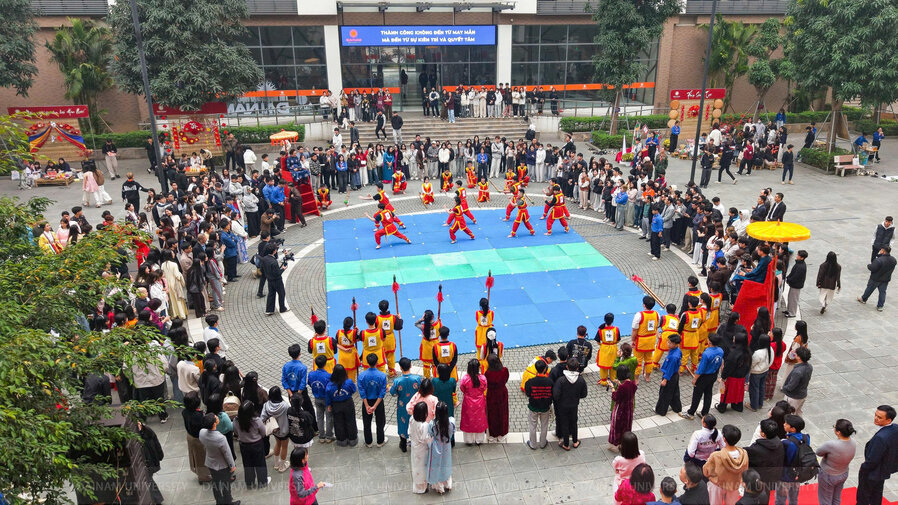
Human chess, one of the most anticipated highlights of Dai Nam Village - Springtime in the Vietnamese spirit.
More than just a folk activity, "human chess" is also a slice of Vietnamese culture: where intelligence, courage, composure, and chivalry are put into each move.
A space steeped in tradition, with a vibrant, festive atmosphere.
From the moment the "chess pieces" appeared in their matching uniforms, stepping onto the field in formation, the central square seemed to burst into a truly festive atmosphere: solemn yet approachable, disciplined yet filled with laughter.
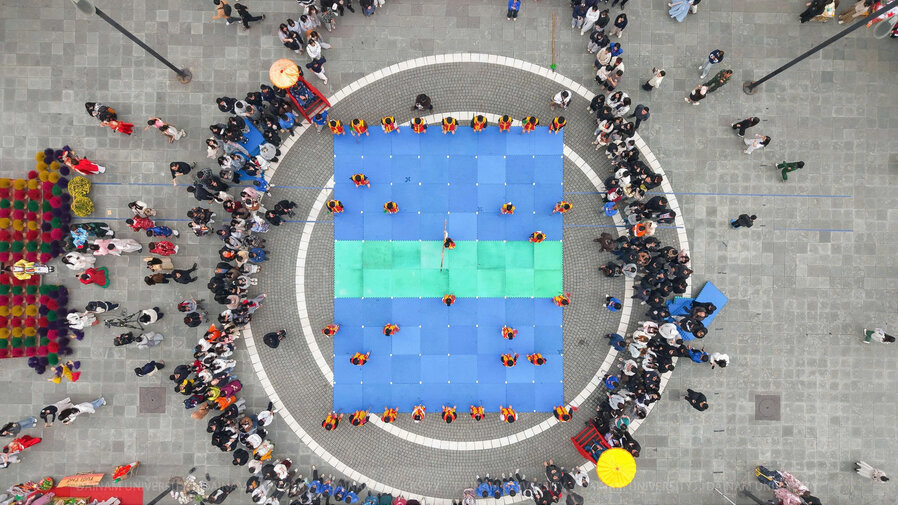
A folk game with multiple layers of cultural, historical, and educational meaning.
Every move of the chess pieces is a performance, every change in the game is a moment of breathless anticipation for the audience. Viewers are not just "watching chess," but also "watching culture" come alive in everyday life.
Two extraordinary chess players - a battle of intellect and friendship.
The most special aspect of the reenactment lies in the two chess players on the board: Mr. Le Dac Son – Chairman of the School Board, and his close friend, a guest attending the program.
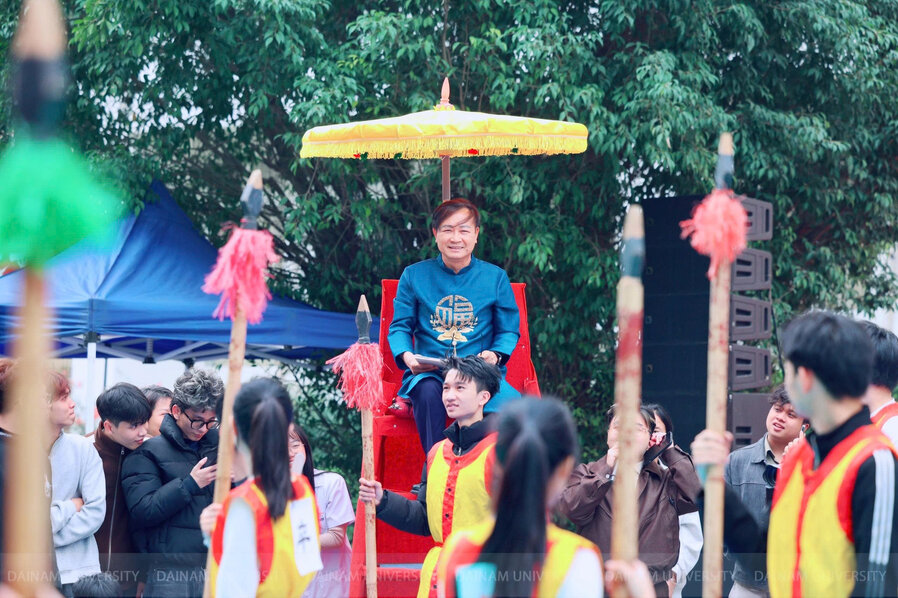
In the central square, a game of chess, two friends. Formal yet warm, just like how Dai Nam tells the story of friendship.
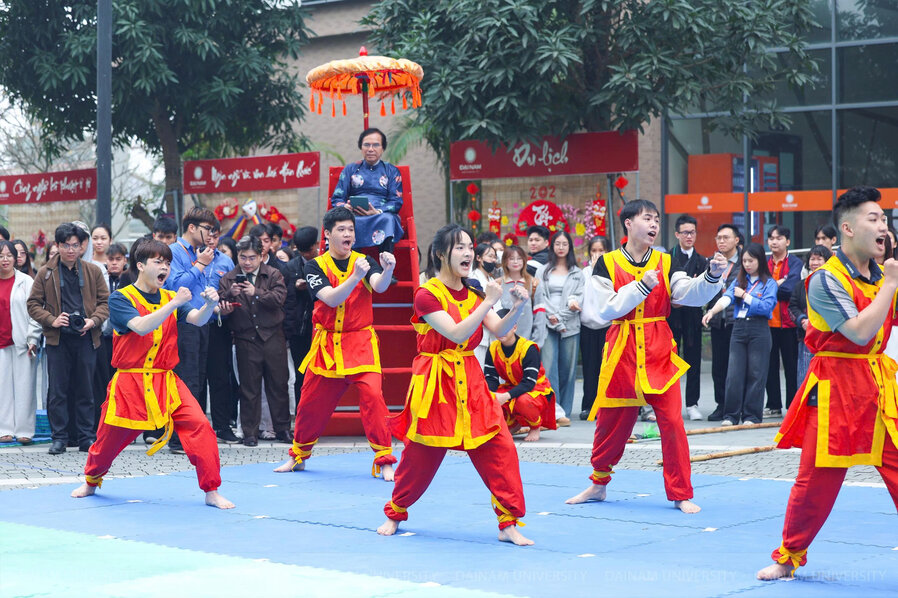
While Mr. Son exudes the calm, sharp demeanor of someone accustomed to strategic decision-making, his "close friend" presents an interesting counterpoint: calm, subtle, and highly experienced.
The game of chess, therefore, is not just about winning or losing, but evokes a more beautiful feeling: respect, understanding, and a strong friendship expressed through each move.
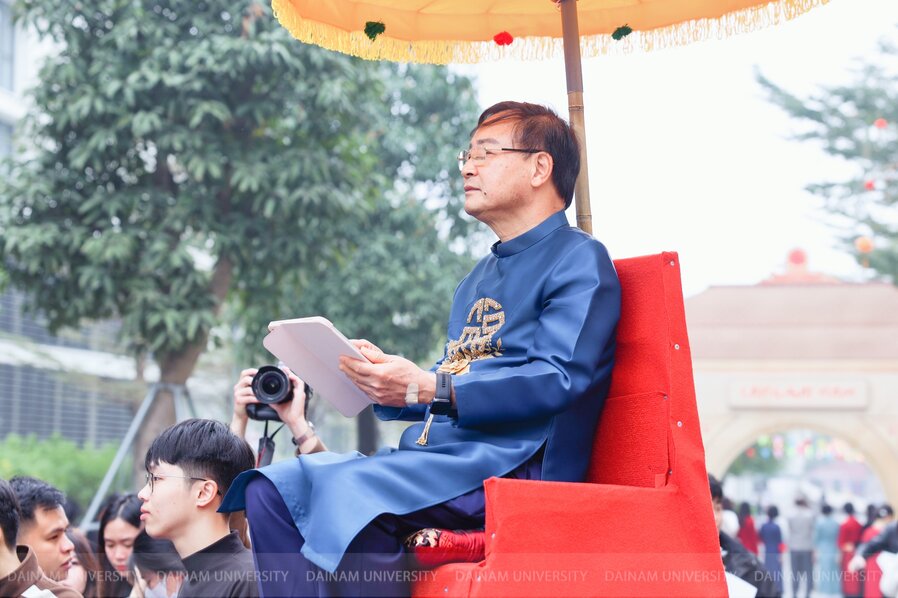
It's not just a folk game, but a way for Dai Nam to tell the story of culture in a very "university-like" manner.
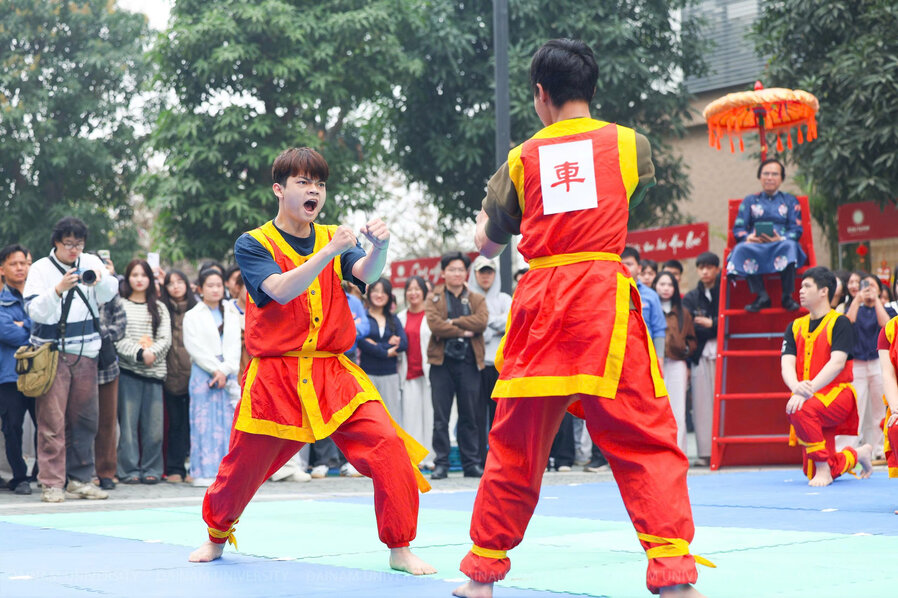
Study to go far, but always remember where you come from.
When a game becomes iconic
In "human chess," every move is a choice. Sometimes you attack, sometimes you defend. Sometimes you need to take risks, and sometimes you need to patiently wait for the right moment.
And that's what led many to see a broader message in the game: To go far, you need a strategy; to go far, you need courage; to go together, you need faith and unity.
A beautiful impression in the hearts of viewers.
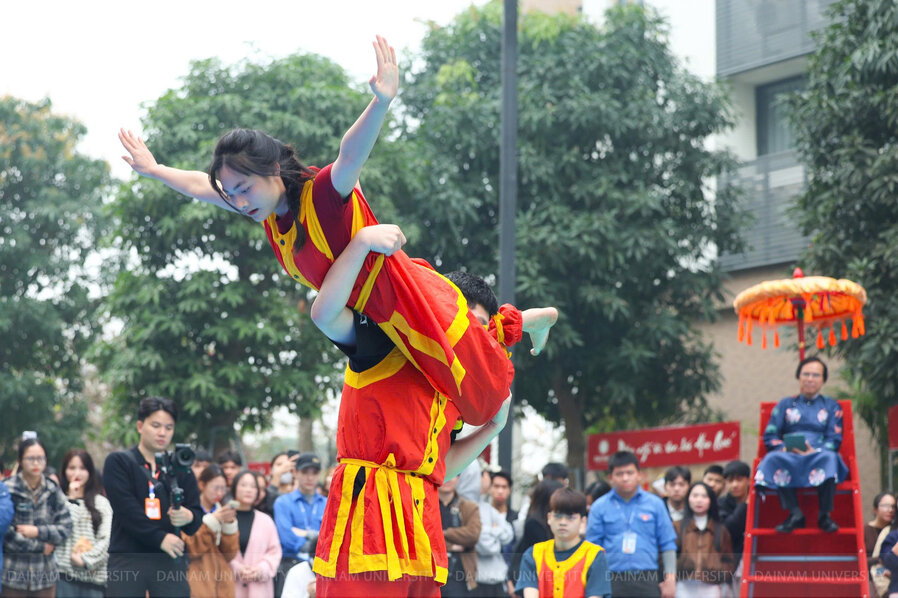
It's not just an event, but a rendezvous between "the past" and "tomorrow."
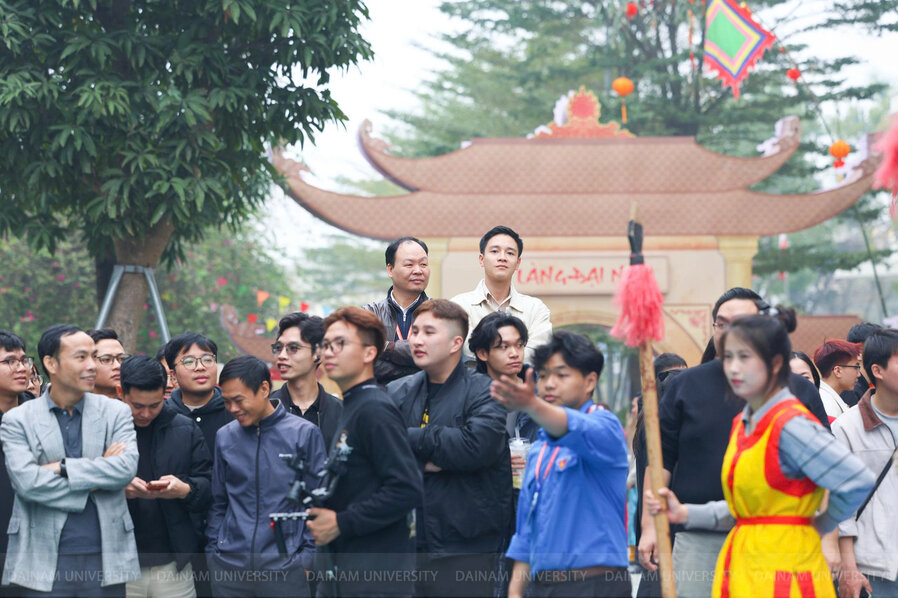
When the game concludes, what remains is not just the position or the result, but the warm atmosphere of the festival: the cheers, the smiles, the watchful eyes, and the pride as traditional values are vividly recreated.
An activity that seems "old-fashioned" yet delights young people and evokes nostalgia in adults – that's when culture touches emotions, and the festival comes alive.
HTC