English
 Tiếng Việt
A female medical student burst into tears on her first night in the highlands, but what happened the next morning changed her mind.



"I cried on the first night..." , Pham Hoang Phuong Linh, a second-year medical student at Dai Nam University, still vividly remembers that feeling.
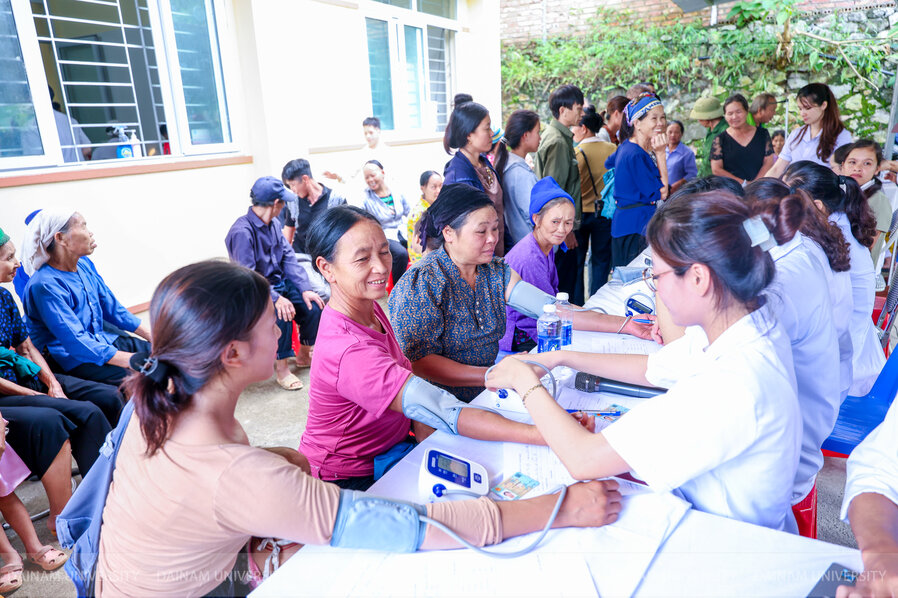
Participating in their first medical mission to the highlands, many medical students from Dai Nam University had memorable experiences on their journey to becoming professionals in the medical field.
After traveling nearly 300 km for over 12 hours to reach Can Yen commune (Cao Bang province), standing in front of a simple dormitory room in the highlands, the young student, away from home for many days for the first time, suddenly felt incredibly small. She missed her family, felt anxious about the completely new environment, and constantly wondered if she was capable enough to complete the trip.
However, just one day later, that same girl smiled amidst hundreds of people braving the rain to get medical treatment and shared: "I realized I wasn't just going there to learn a trade, but also to learn how to grow."
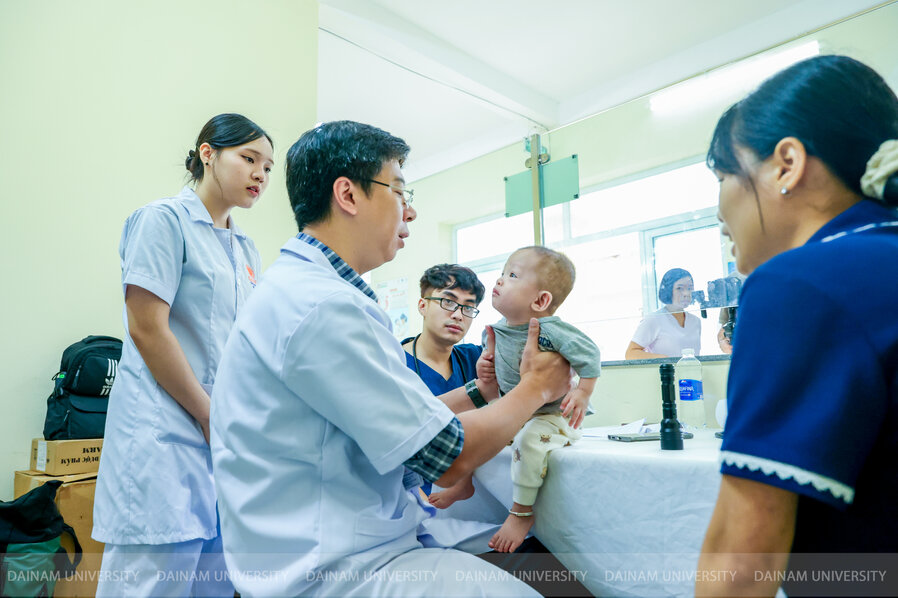
Pham Hoang Phuong Linh said the trip helped her understand that a good doctor not only needs professional knowledge but also needs to know how to listen, share, and instill confidence in patients.
That was also the lasting impression after the medical examination, health consultation, clinical testing, and free medication distribution for 303 people in Can Yen commune, organized by the Faculty of Medicine, Dai Nam University on July 24th. Besides medical services, the delegation also presented 350 gifts to families of policy beneficiaries, war invalids, sick soldiers, those who contributed to the revolution, and poor households, and provided medical equipment to the commune's health station, with a total program value of nearly 200 million VND.
But behind those significant numbers lies another journey, quieter yet more memorable: the journey of growth for future doctors.
The first lesson is not in the textbook.
Before the trip, Phuong Linh proactively sought out senior students to ask for advice and prepare herself both academically and mentally. However, all her preparations seemed insufficient, as she broke down in tears on her first night in the highlands.
Those tears didn't stem from the long journey or the lack of comfortable living conditions, but from the bewilderment of a student stepping out of her comfort zone for the first time to face a completely new environment. However, the next morning, witnessing people braving the rain to arrive at the examination site very early, all worries gradually gave way to a sense of responsibility.
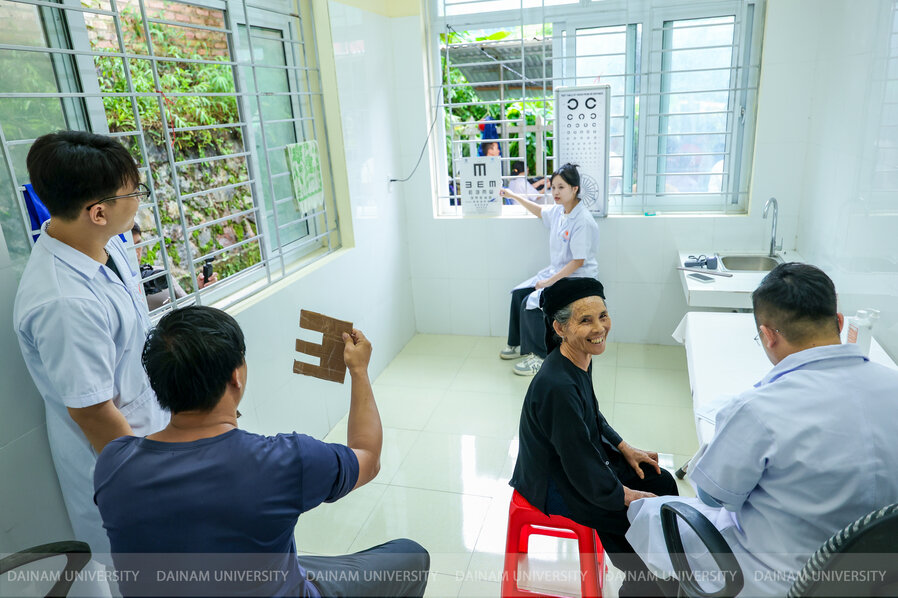
Medical students assisted doctors in examining, advising on health, and performing clinical tests for residents of Can Yen commune (Cao Bang province).
Among hundreds of patients, the case of a young child with Down syndrome left the strongest impression on Linh. For the first time, the knowledge she had learned in the classroom came to life through a real person, a real family, and a real story. More importantly, she witnessed how the lecturers gently conversed with, patiently listened to, and reassured each patient.
"At that moment, I understood that a good doctor not only needs knowledge but also needs to know how to listen, empathize, and instill confidence in patients."
By the end of the day, the heartfelt thanks from the locals made the student realize that the tears of the first night were completely worth it.
No one returns the same way they set off.
For Phuong Linh, the trip was her first time overcoming her own limitations, while for Le Tung Lam, a student from class YK17-02, it was the culmination of three attempts to finally get the chance to participate.
His family was worried because this was the first time the student had been away from home for many days, but what he gained exceeded all expectations. With the support of ultrasound doctors, observation of many typical cases, and direct guidance from lecturers, Lam understood that there are lessons that textbooks cannot teach.
"By directly participating in assisting with medical examinations, I realized I learned so much that the classroom could hardly convey."
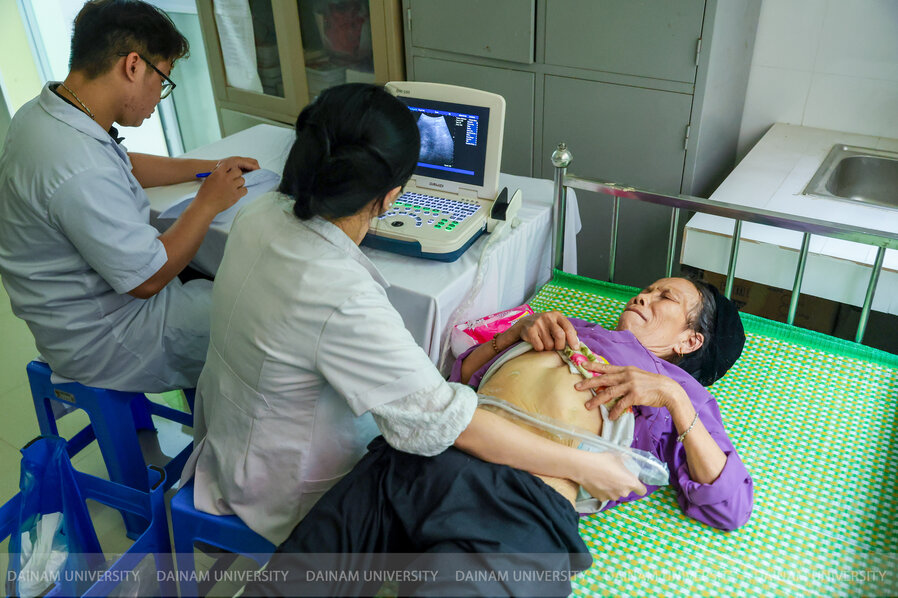
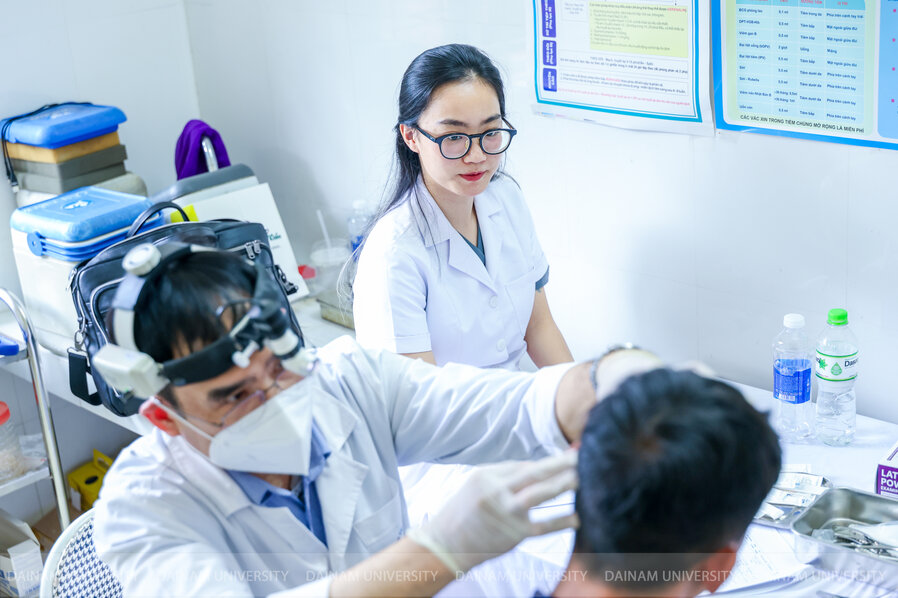
Le Tung Lam, a student in class YK17-02, assists doctors during ultrasound examinations and consultations for patients, gaining valuable practical experience outside of the classroom.
What the male student remembers most is not the patient cases, but the first meal in the highlands, where teachers, senior students, and volunteer members cared for each other after the long journey. It is these small things that made the trip a beautiful memory of the medical profession.
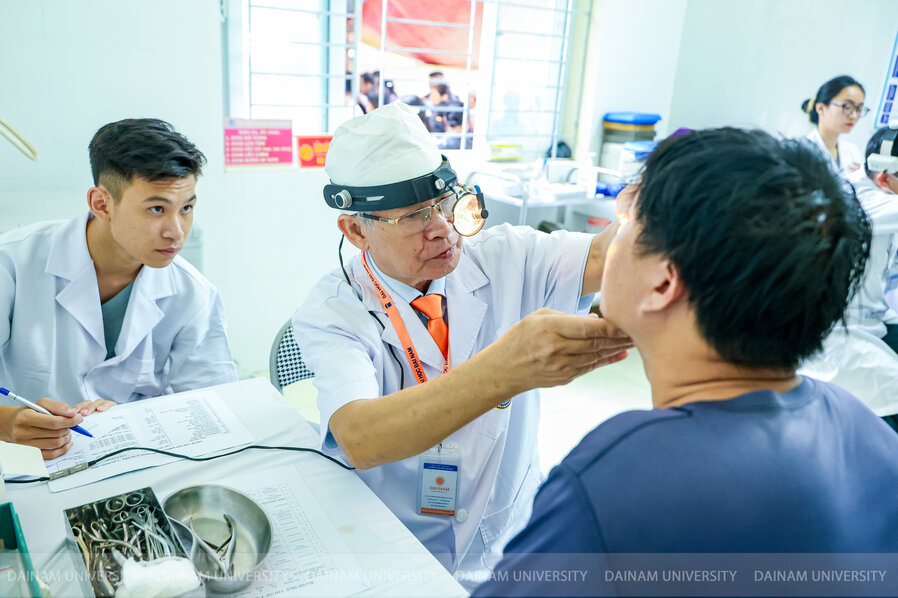
According to Cao Tung Lam, directly observing doctors examining, diagnosing, and talking to patients is a valuable lesson that helps students shape their career paths.
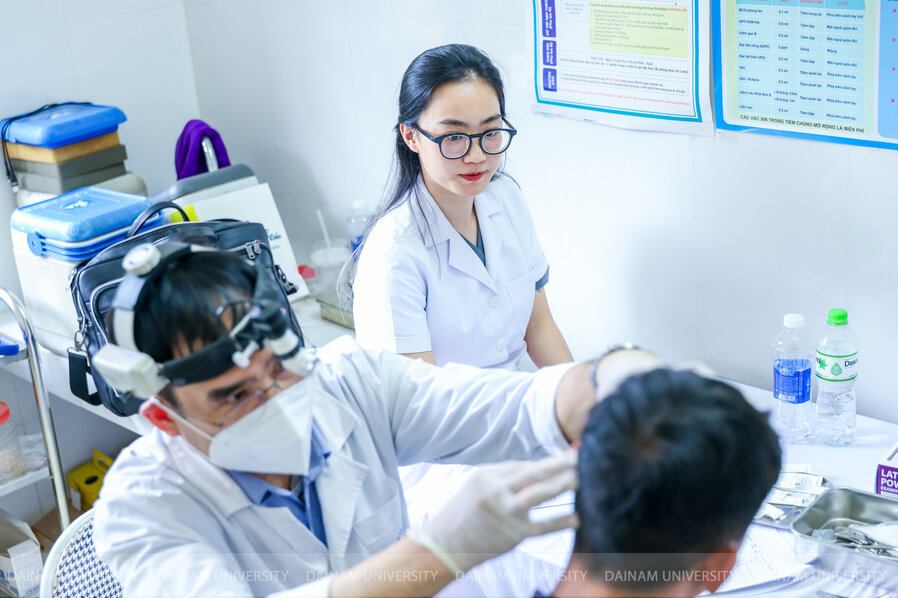
For Cao Tung Lam, a student in class YK15-02, this is the third consecutive year he has participated in the Faculty of Medicine's charitable medical missions in Ha Giang, Lao Cai, and Cao Bang. Each region has left a different mark, but the most valuable thing remains the opportunity to sit alongside experienced doctors, observing how they examine, diagnose, and talk to patients.
"These trips help us understand which specialty suits us best and what kind of doctor we want to become."
Practice is the greatest classroom.
According to People's Physician, Associate Professor Dr. Hoang Duc Hanh - Head of the Faculty of Medicine, former Deputy Director of the Hanoi Department of Health, community health care is not only a charitable activity but also an integral part of Dai Nam University's training philosophy.
"We want students to gain practical experience, better understand patients, better understand life, and become more mature in their careers."
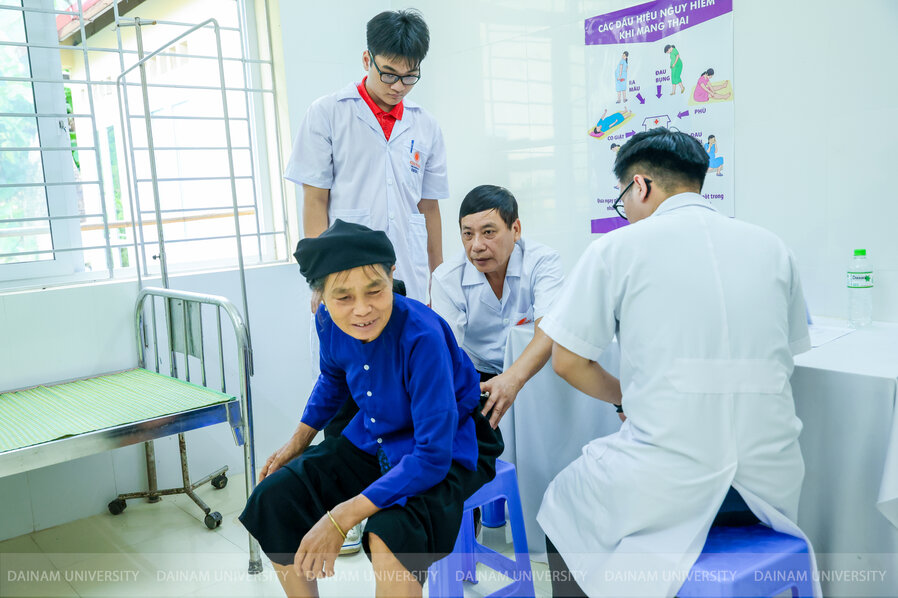
Medical students from Dai Nam University, along with their lecturers, collaborated to provide free medical examinations, health consultations, and medication to residents of Can Yen commune.
Dr. Nguyen Dinh Quyen, a lecturer at the Faculty of Medicine, believes that mobile medical examinations create a learning environment that no classroom can replace. Working among hundreds of patients, students learn to remain calm under pressure, hone their problem-solving skills, apply their professional knowledge, and most importantly, learn to put the patient at the center of their treatment.
"Future doctors are not judged solely by their grades, but by what they can do for patients and the community."
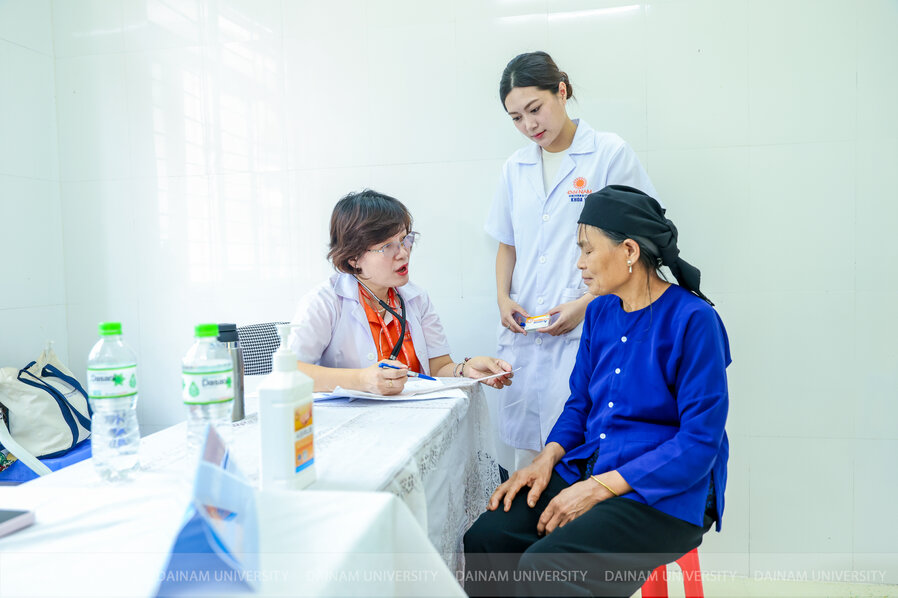
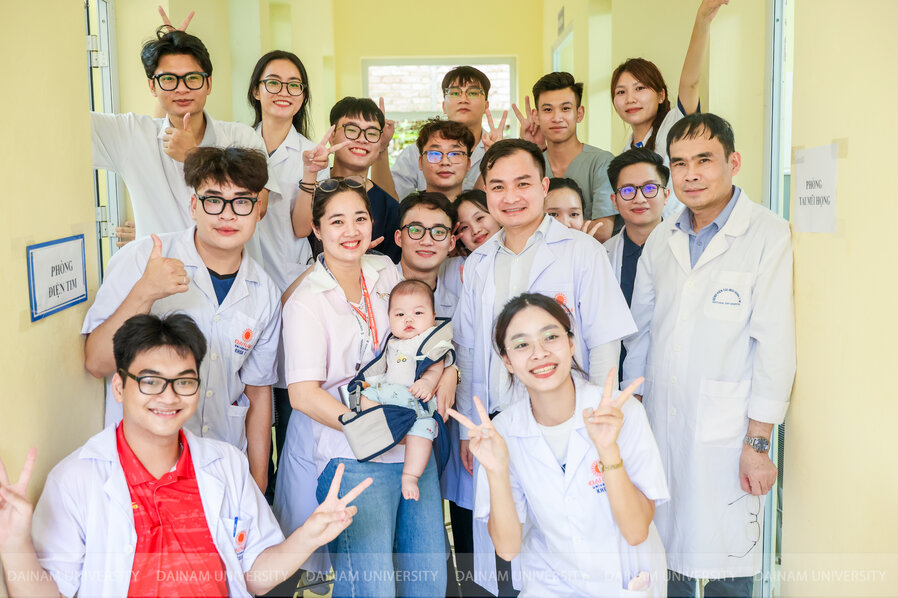
Concluding their volunteer trip to Cao Bang, Pham Hoang Phuong Linh, Le Tung Lam, Cao Tung Lam, and other students all took home valuable lessons about professional skills, empathy, and the responsibility of future doctors.
Perhaps that's why, after the trip to Can Yen, the students brought back not only professional lessons. They also gained confidence after overcoming their fears for the first time, empathy from listening to the stories of patients, and a maturity that no textbook could fully teach.
Because there are lessons that future doctors can only truly learn when they put on a white coat and face real life.
BTT