English
 Tiếng Việt
From fall-detection watches to brainwave robotic arms: Technological ideas emerging from the lab.



No longer confined to blueprints or science fiction films, fall-detecting watches, brainwave-controlled robotic arms, and many other technological solutions have been transformed into functional products by young students. Behind each product are dozens of days, even years, of testing, with one common thread: technology is only truly meaningful when it solves human problems.
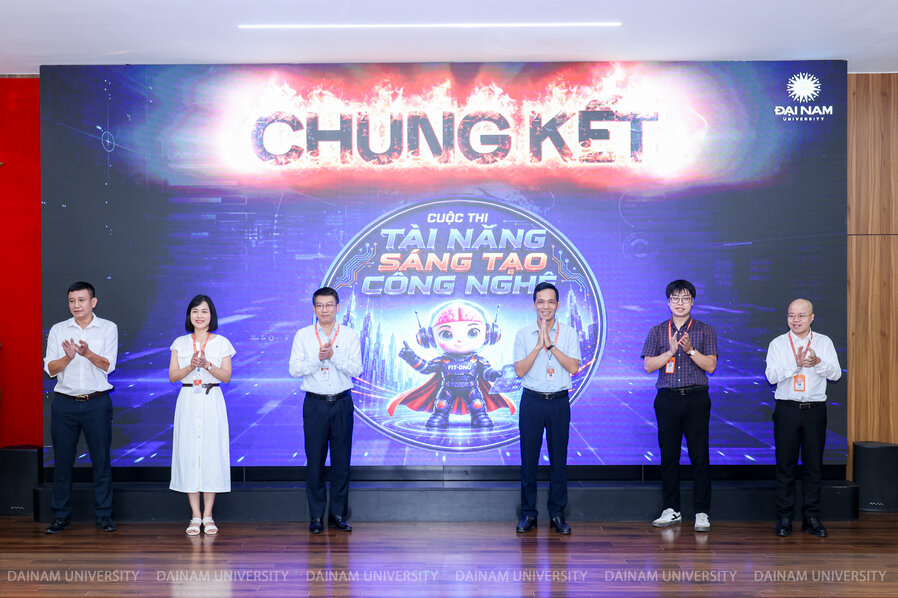
Teams participating in the "Technology Innovation Talent 2026" competition presented technological products that combine hardware and software, aiming to solve real-world problems.
On August 7th, at Dai Nam University (Hanoi), the final round of the "Technology Innovation Talent 2026" competition took place, featuring 15 student teams from Dai Nam University and Dong A University of Technology. Instead of simply presenting ideas on paper, the teams brought products combining hardware and software, focusing on solving real-world problems in healthcare, elderly support, automation, and artificial intelligence applications.
Speaking at the final round, Professor Dr. Dao Van Dong, Vice Rector of Dai Nam University, highly appreciated the students' proactive approach in integrating technology into various fields and closely following global development trends.
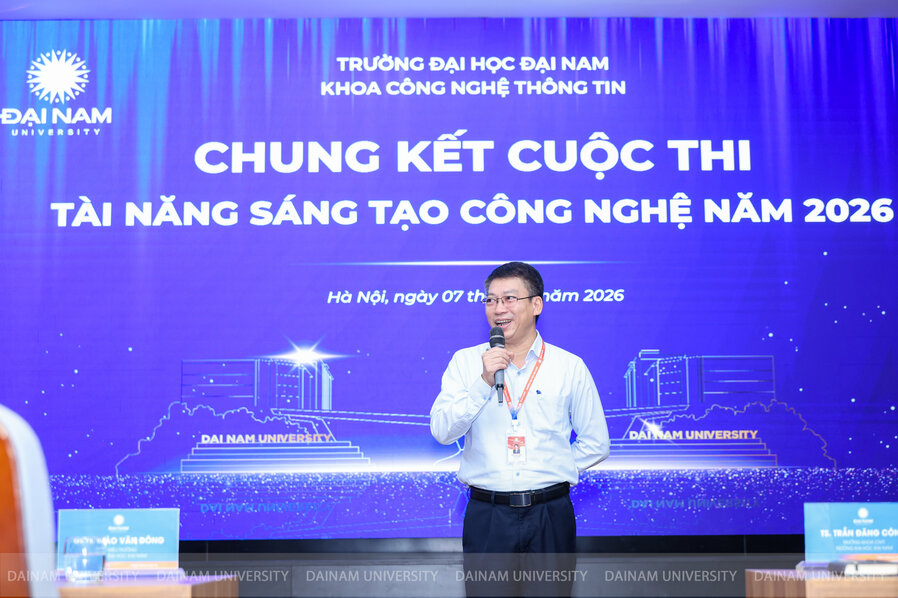
Professor Dr. Dao Van Dong, Vice Rector of Dai Nam University, speaking at the final round, expressed his hope that the competition would continue to expand to national and international levels.
"The Faculty of Information Technology has confidently 'embedded' technology into other fields, closely following global trends. Today's competing teams are on a mission to use technology to change the world. There's no reason why we shouldn't transform this competition into a national and global arena, because today's students have remarkable networking abilities and passion," shared Professor Dr. Dao Van Dong.
That spirit was also present in many of the entries at the competition, where technology went beyond lines of code or technical drawings, and students used it as a tool to solve specific real-life problems.
45-day "sprint" and the fall warning watch.
One of the standout products in the final round was the smart health-tracking and fall-detection smartwatch for the elderly, developed by the FutureCare team from Dai Nam University, which won the Special Prize. The team had 45 days from the initial idea to the final product.
Nguyen Quang Vinh, a student from IT class 17-01 and representative of FutureCare, said the biggest challenge wasn't putting as many features as possible into the watch, but rather ensuring the device was stable enough to accurately detect a real fall.
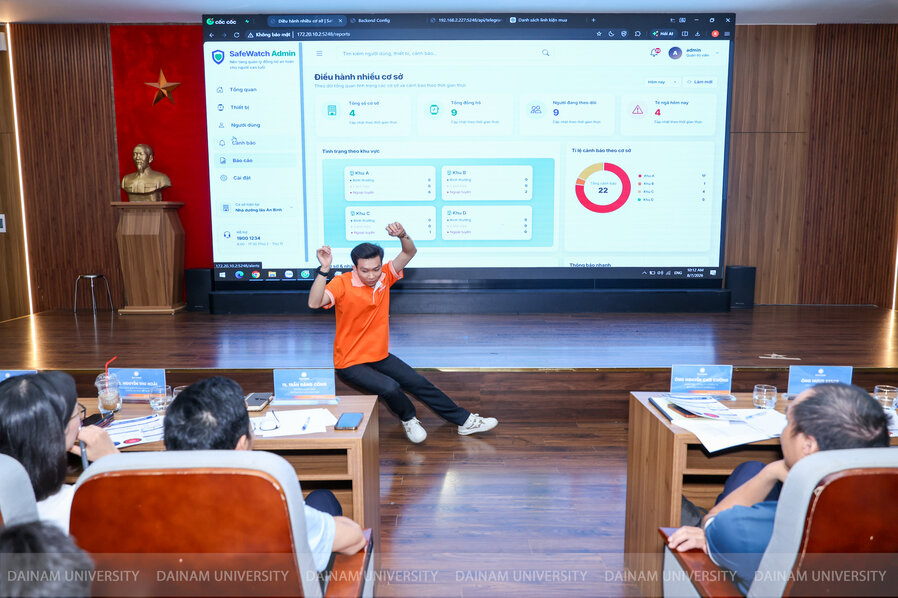
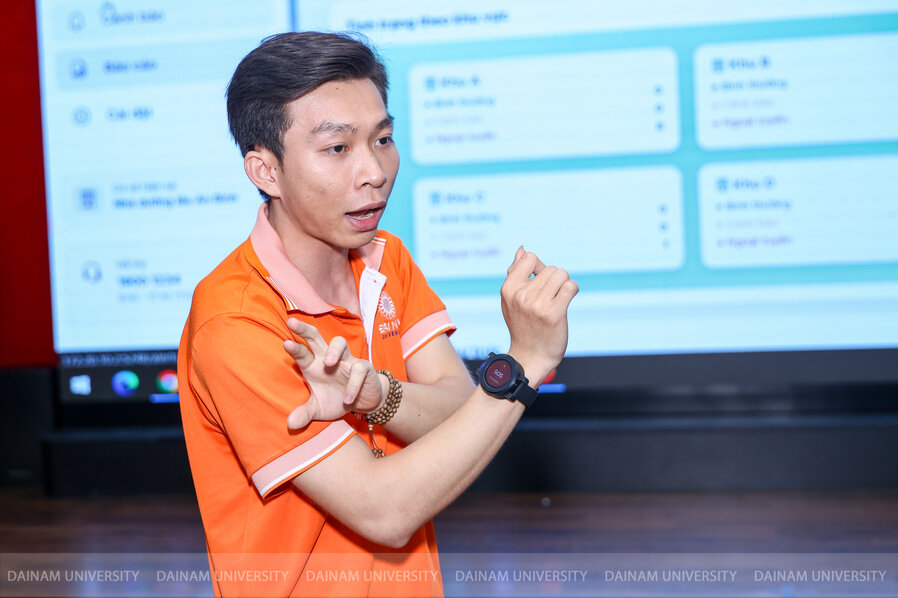
The FutureCare team from Dai Nam University introduced a smart watch that monitors health and alerts the elderly to falls. Demonstrating its effectiveness on stage, the team received high praise from the judges.
"It was extremely difficult to accurately detect when elderly people fell in order to provide timely warnings. The team had to rely on two elderly volunteers to wear the devices continuously and collect real-world data," Vinh recounted.
This meant the team couldn't just sit in a lab and simulate data; the device had to be worn, tested, errors recorded, and then further adjusted. Standing before the judging panel and representatives from technology companies, the student's initial confusion gradually gave way to confidence as the product operated stably.
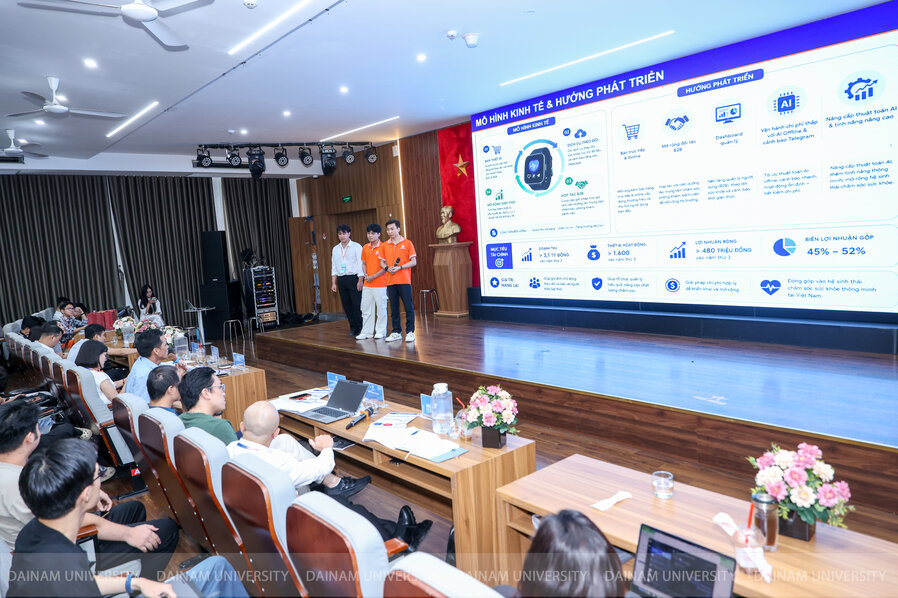
Nguyen Quang Vinh, a member of the FutureCare team, shared the 45-day process he and his teammates went through to perfect their fall detection watch.
But for Vinh, the competition is not the end; the team plans to continue upgrading the product to be "tailor-made" for each individual user, while also building a reliable database to support doctors in monitoring and evaluating patients' health status.
“I am very happy and want to thank the teachers for guiding me on this topic. Above all, the fact that the school has a lab with modern equipment has created a professional playground for us to have the opportunity to test our skills and experiment with big ideas,” Vinh shared.
Four years pursuing an idea from a science fiction movie.
If FutureCare had a 45-day sprint, Trinh Cong Tuan, a fourth-year student at Dong A University of Technology, brought to the competition an idea he had been working on for about four years: a brainwave-controlled robotic arm. The idea initially came to Tuan from a detail in a science fiction movie he watched in middle school, which led him to question whether humans could use signals from the brain to control a device outside the body. That question stayed with Tuan throughout his university years and gradually evolved into a real product.
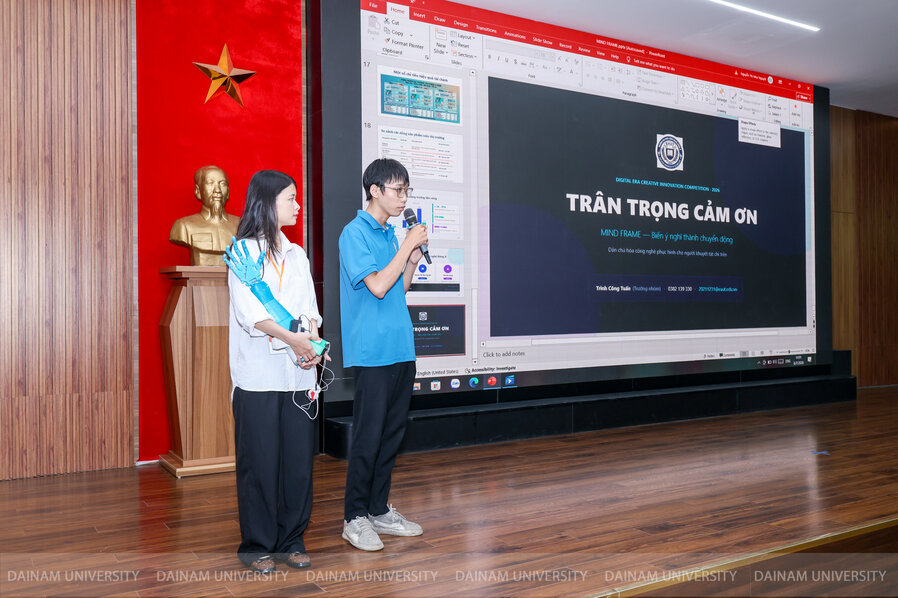
Student Trinh Cong Tuan's brainwave-controlled robotic arm has attracted attention because the idea originated from a science fiction film and was researched for about four years.
With electrodes attached to its head, the signal is transmitted to a computer for processing, then converted into commands to control the robotic arm to perform tasks such as lifting, lowering, and grasping objects. To verify its applicability, Tuan and his team tested the device on a disabled friend. This process involved a series of adjustments to increase the accuracy and stability of the device.
Bringing his product to the "Technology Innovation Talent 2026" competition, Tuan said that what impressed him was not only the competition results but also the opportunity to see how students from other universities solved the same technological problem. "The students were very good; many teams presented products combining both hardware and software that worked quite stably and had high applicability. This really taught me a lot," Tuan commented on the student teams from Dai Nam University.
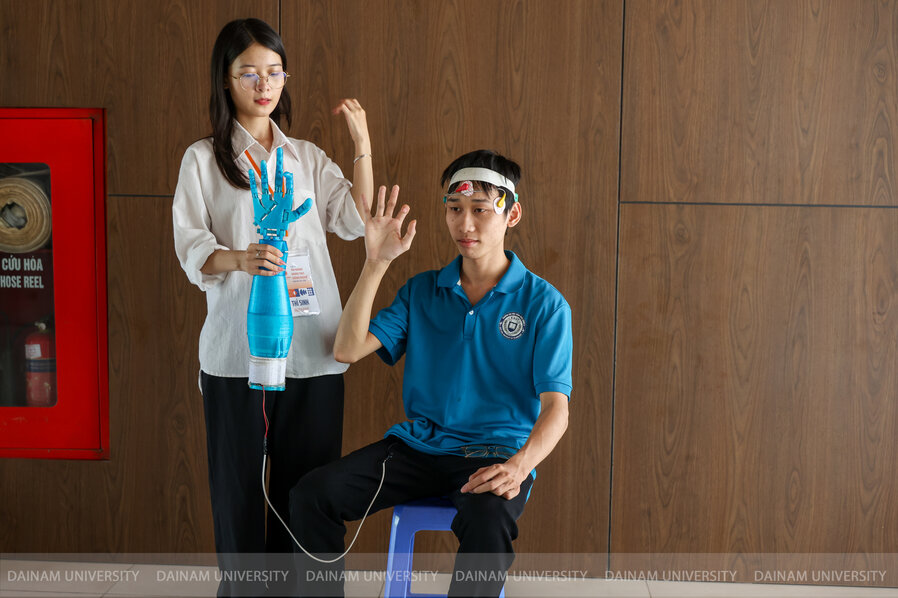
In a technology playground for students, competition is not just about rankings, but more importantly, about the opportunity for young people to see a different way of doing things, a different idea, and realize how far their product can go.
When the lab becomes a place where students can "try, make mistakes, and try again."
Behind every successful product in the final round lies numerous unsuccessful trials, which is why hands-on experience is a crucial part of technology student training. At Dai Nam University, the system of labs, computer practice rooms, and equipment is invested in to provide students with space to develop ideas, test products, identify errors, and rework them.
Instead of waiting until their final year to tackle real-world problems, students are encouraged to participate in projects, competitions, and research activities throughout their studies.
In addition, the collaboration with businesses such as Healthchain, KesFlow, and the Surveying and Mining Joint Stock Company... helps students gain more opportunities to experience the real demands of the market, understand what businesses need from an engineer, and what skills must be prepared right from the classroom.
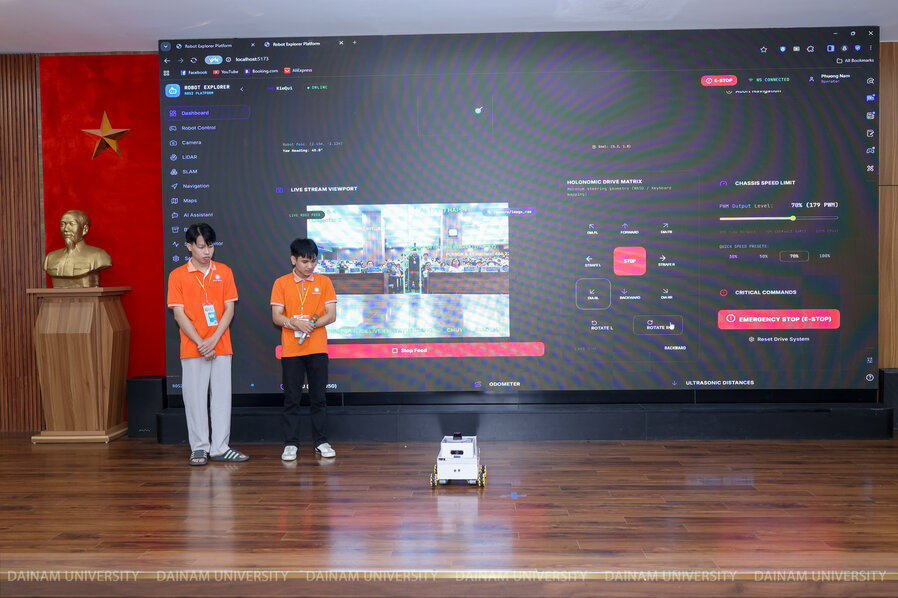
The lab and practice space is where students experiment, discover errors, and gradually refine their technological ideas.
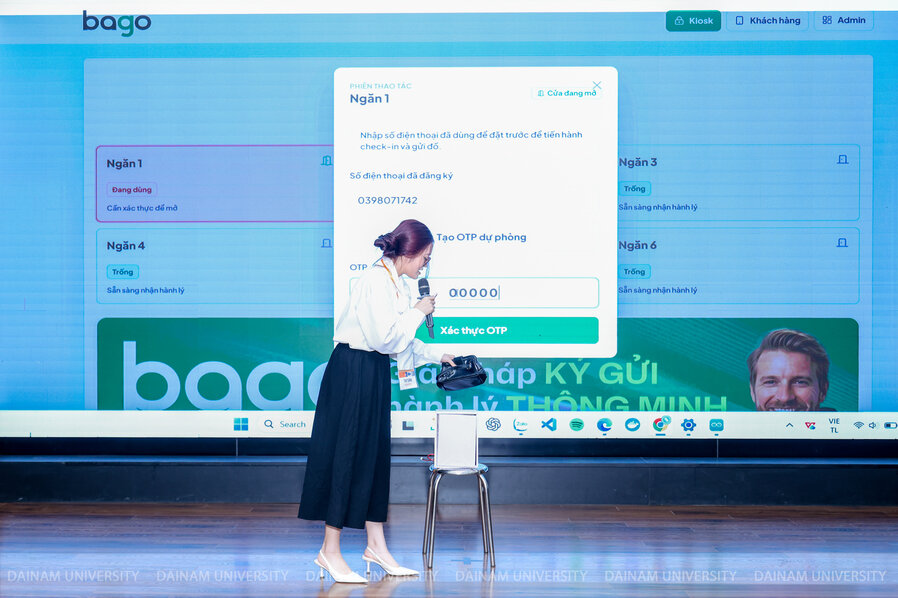
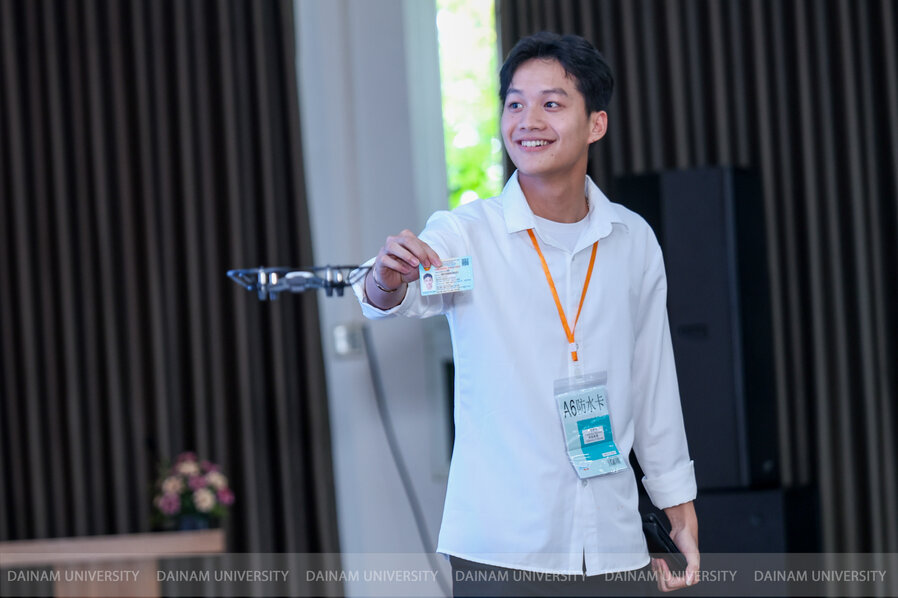
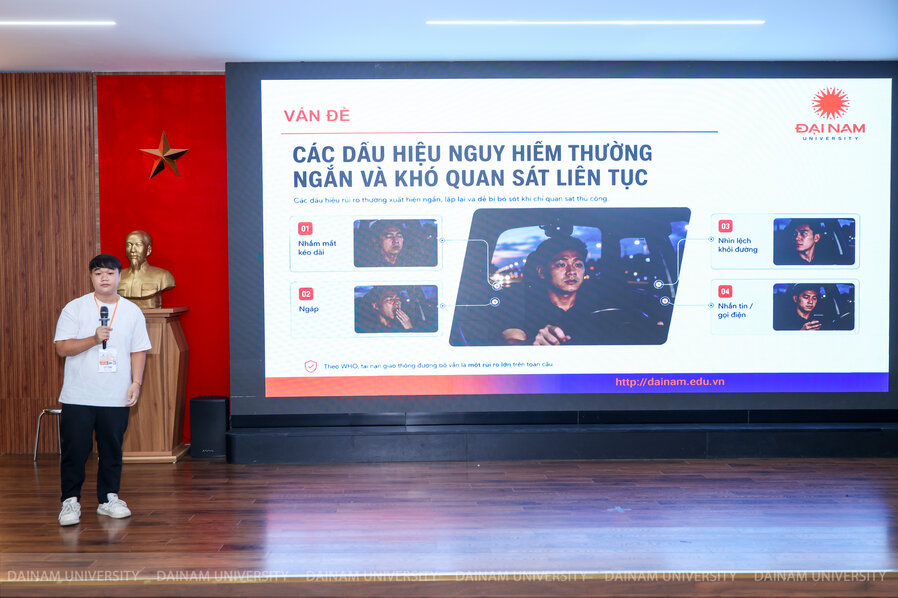
Judging from the products showcased at the competition, the value of a hands-on learning environment lies not only in the number of machines or labs, but more importantly, in providing students with enough space to transform knowledge into products, allowing them to experiment, make mistakes, and persevere until the product works. This is precisely the process of developing professional competence.
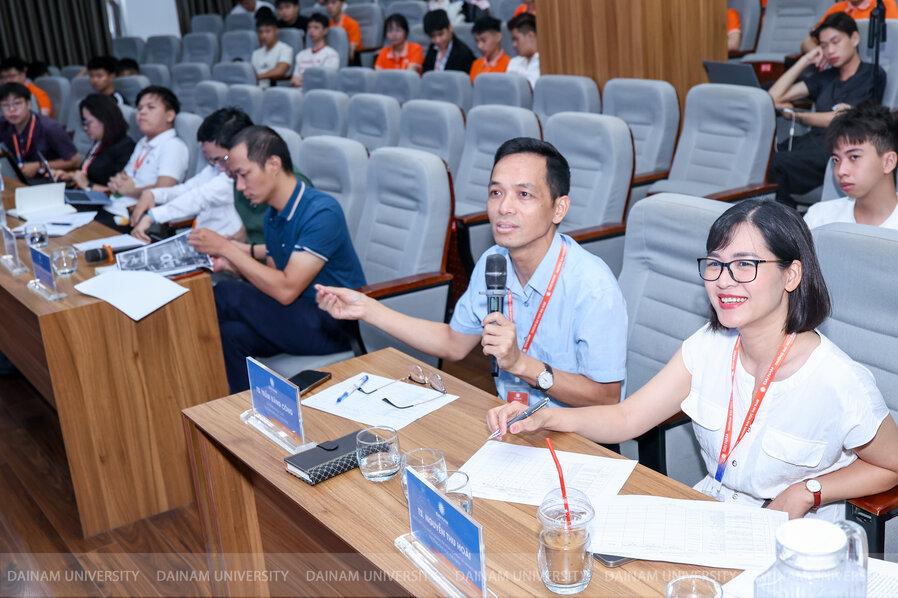
Beyond simply presenting their ideas, contestants also had to answer challenging questions from the judges, requiring students to possess strong professional knowledge and the ability to apply their products to real-world situations.
Because when entering the job market, besides a university degree, a product they have created themselves, a project they have implemented, or a real-world problem they have solved can be the most visual way for a young engineer to answer the employer's question: What can you really do?
From a competition to an aspiration to go further.
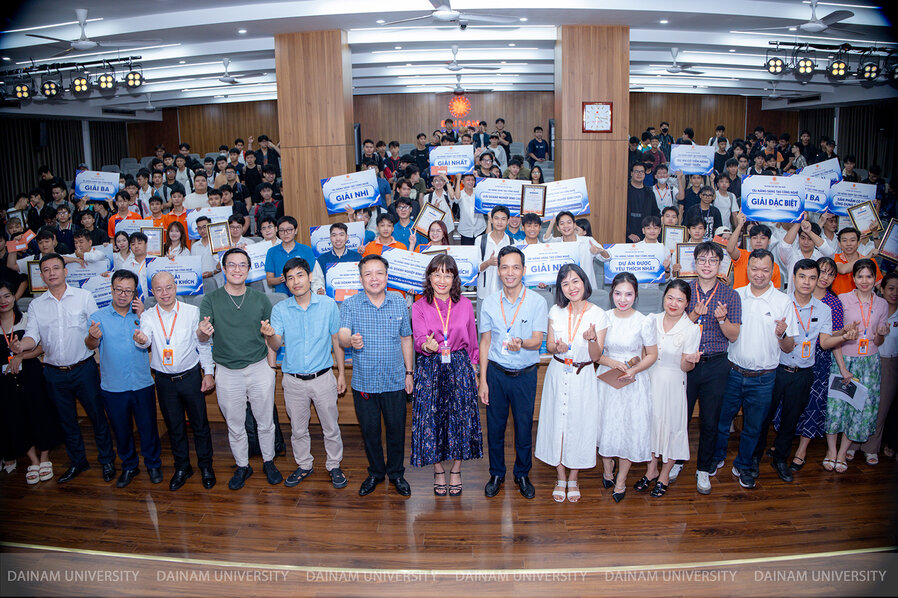
The final round of the "Technology Innovation Talent 2026" competition brought together 15 teams with diverse approaches, ranging from healthcare and elderly support to artificial intelligence, automation, and hardware-software integrated solutions.
The FutureCare team from Dai Nam University won the Special Prize; the InnoVoice Challenge team from Dai Nam University won the First Prize.
Two second prizes were awarded to Winning Logic from Dai Nam University and 9Lives from Dong A University of Technology.
The Cydora Systems, BABY SHARK, and CodeApdat AI teams from Dai Nam University won Third Prize.
But beyond the awards, perhaps what is more noteworthy is what each student takes with them when they leave the competition.
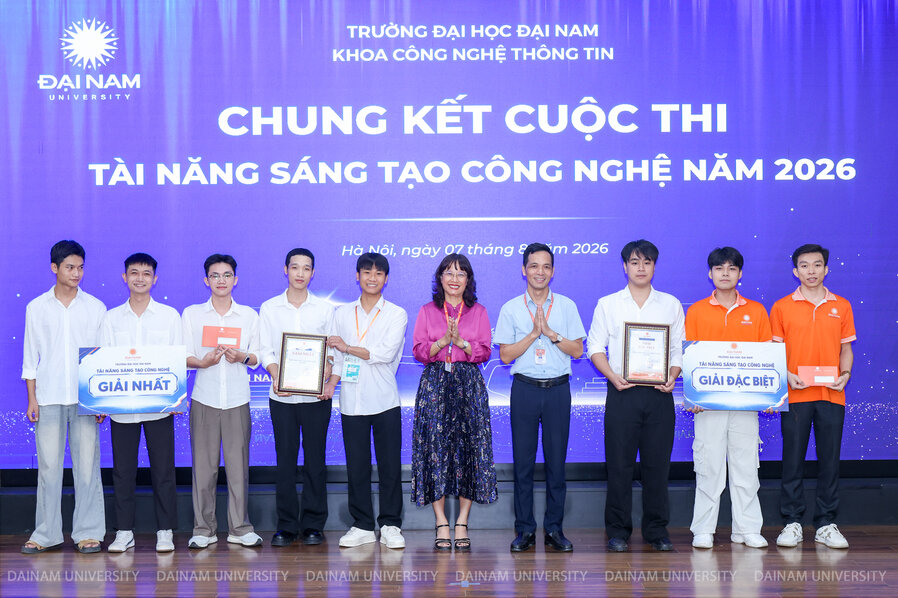
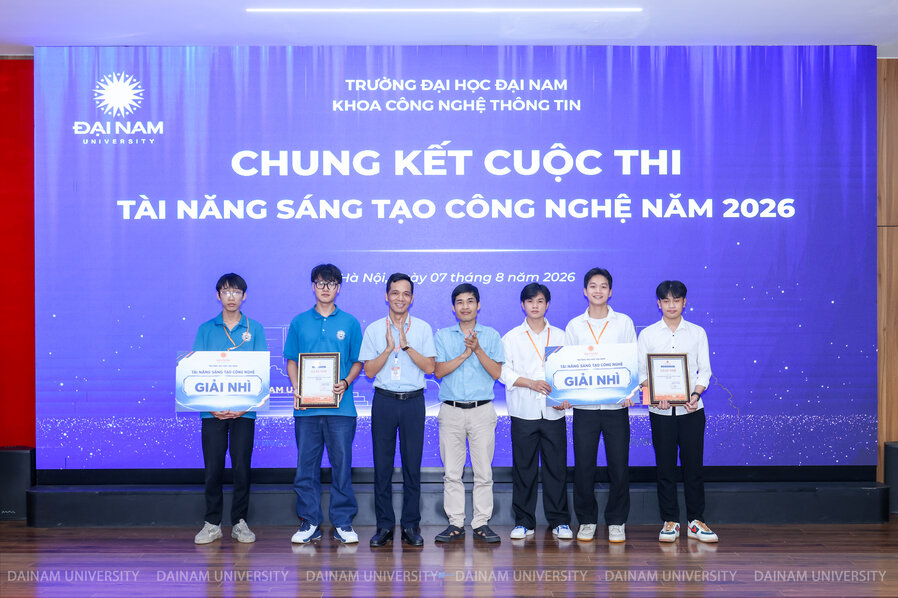
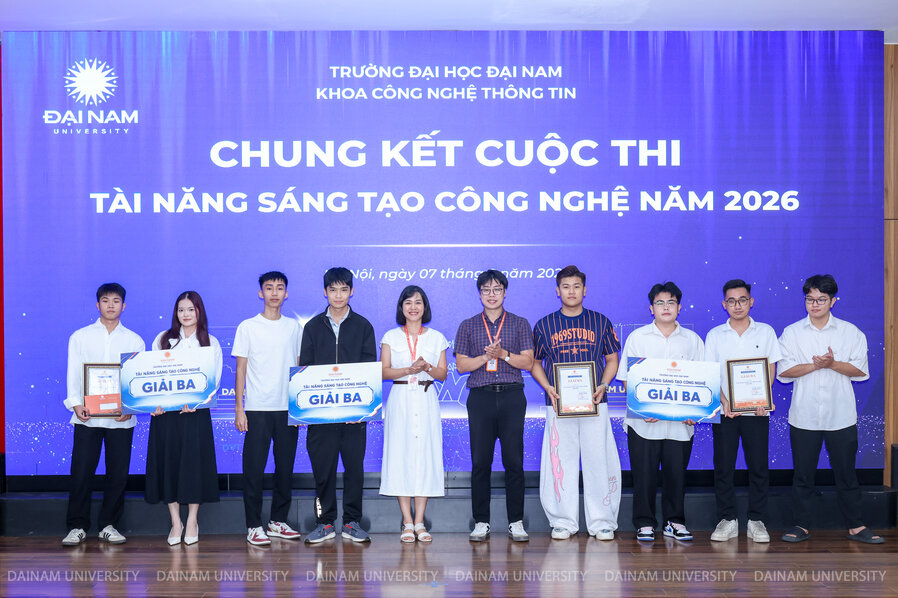
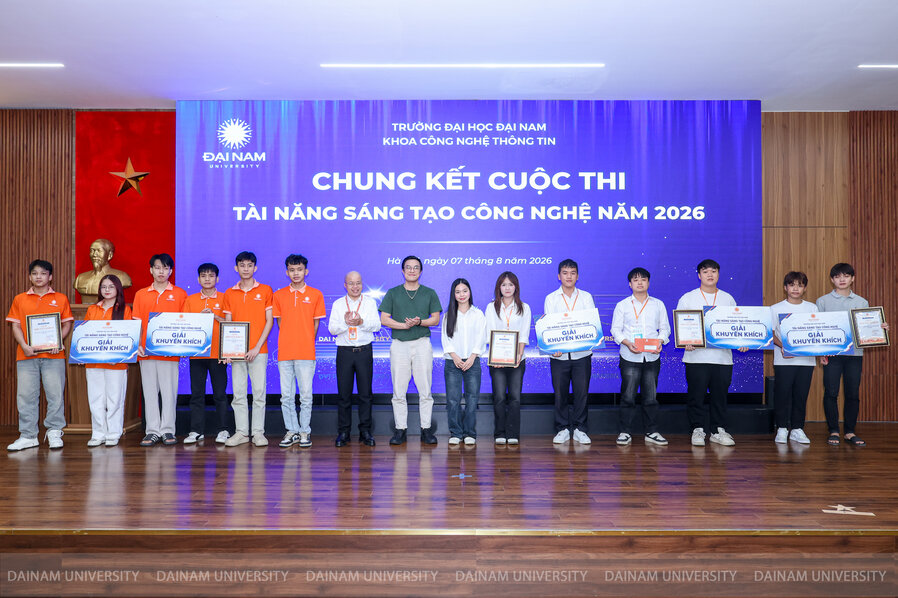
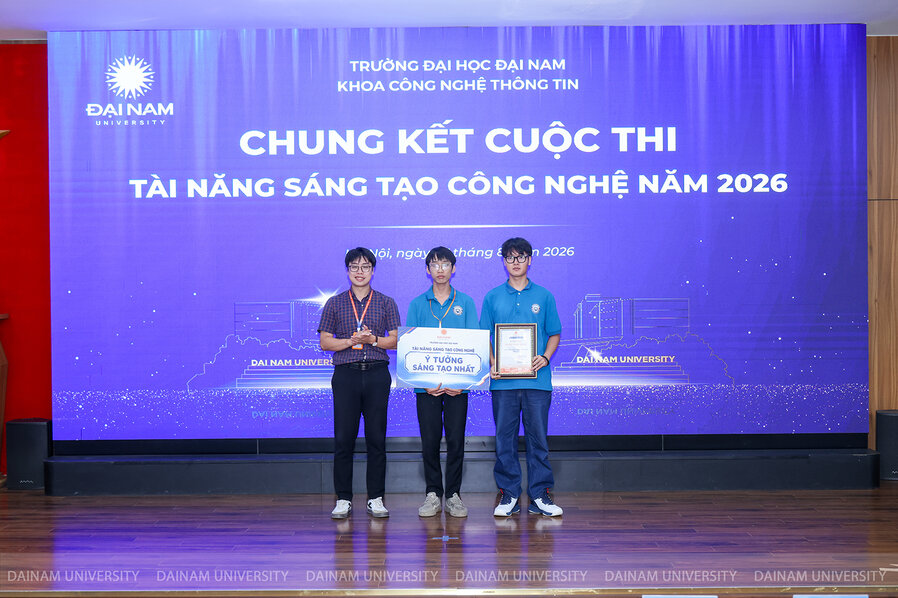
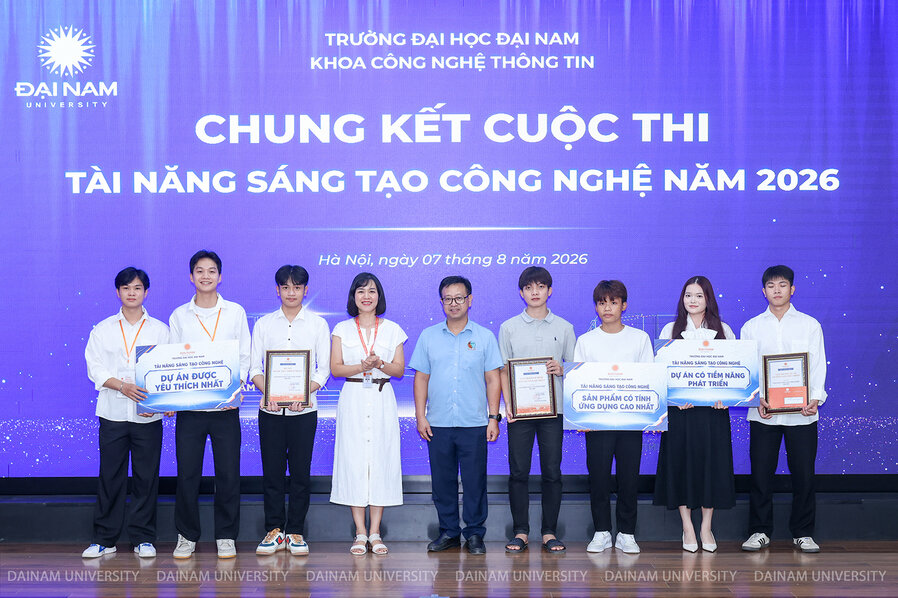
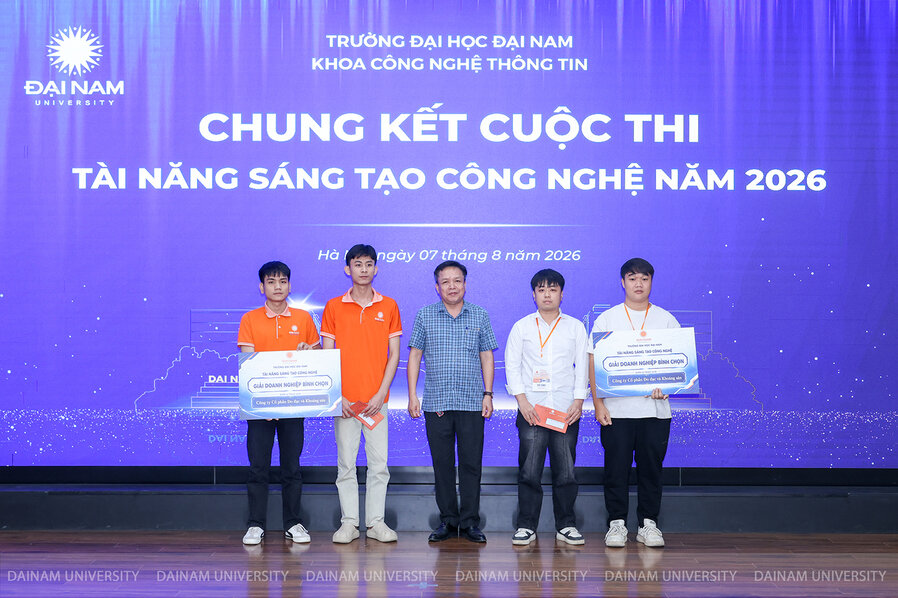
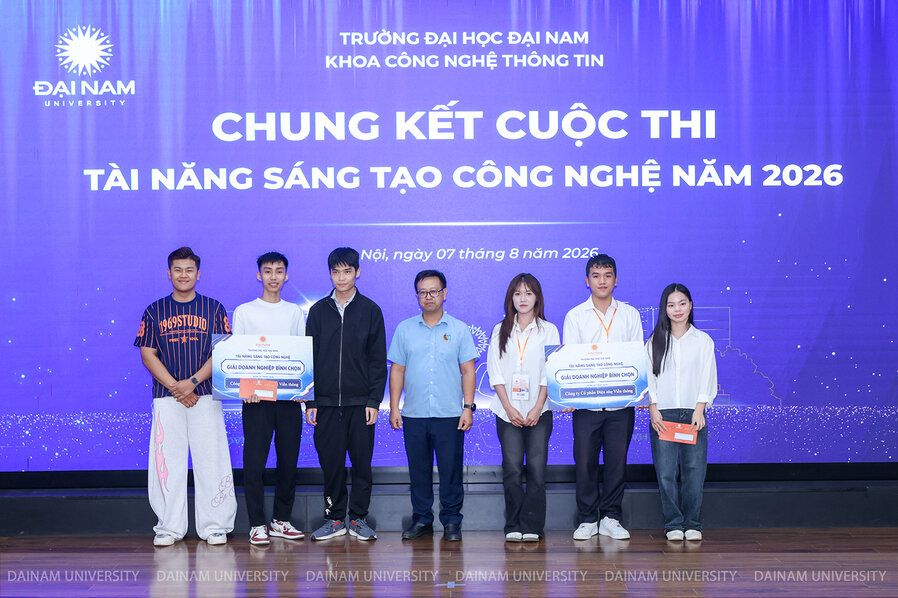
For Nguyen Quang Vinh, it was a watch that needed further refinement so that one day it could better assist the elderly; for Trinh Cong Tuan, it was a robotic arm that started from a science fiction film and four years of persistent effort to transform imagination into a product; and for many other students, it could be an imperfect version of the product, a failed experiment, or simply a new question that arose after seeing another team's product.
Each young person enters the competition with a unique idea, strength, and way of thinking. When given the opportunity to test themselves, these unique qualities can become products, skills, and, further, valuable contributions to the community.
Perhaps that's also how a young person can express their identity: not by saying they're different, but by doing something useful and daring to see their choices through to the end.
A competition may end after the awards ceremony, but the journey for an idea to be tested, a talent to be proven, and a young person to truly shine is still ahead. Unleashing one's unique identity to illuminate one's own journey —perhaps it all begins with such daring and proactive actions.
BTT