English
 Tiếng Việt
24-hour "Build" until the last minute and the championship trophy for DNU students.



From an idea for a wearable device to monitor the health of the elderly, three students from Dai Nam University had only 24 hours to turn what they had learned into a working prototype: programming, assembling, testing, debugging, and securing the product. As a result, the Record of Ragnarok team won first place in the University category at Build@HUB Hackathon 2026 - Build Beyond Limits, a competition that brought together over 600 contestants from 87 schools.
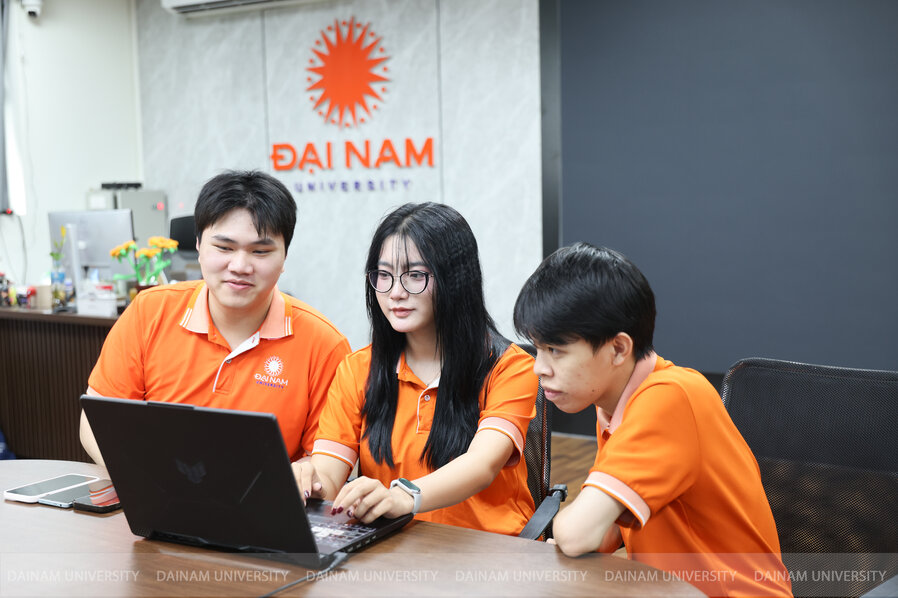
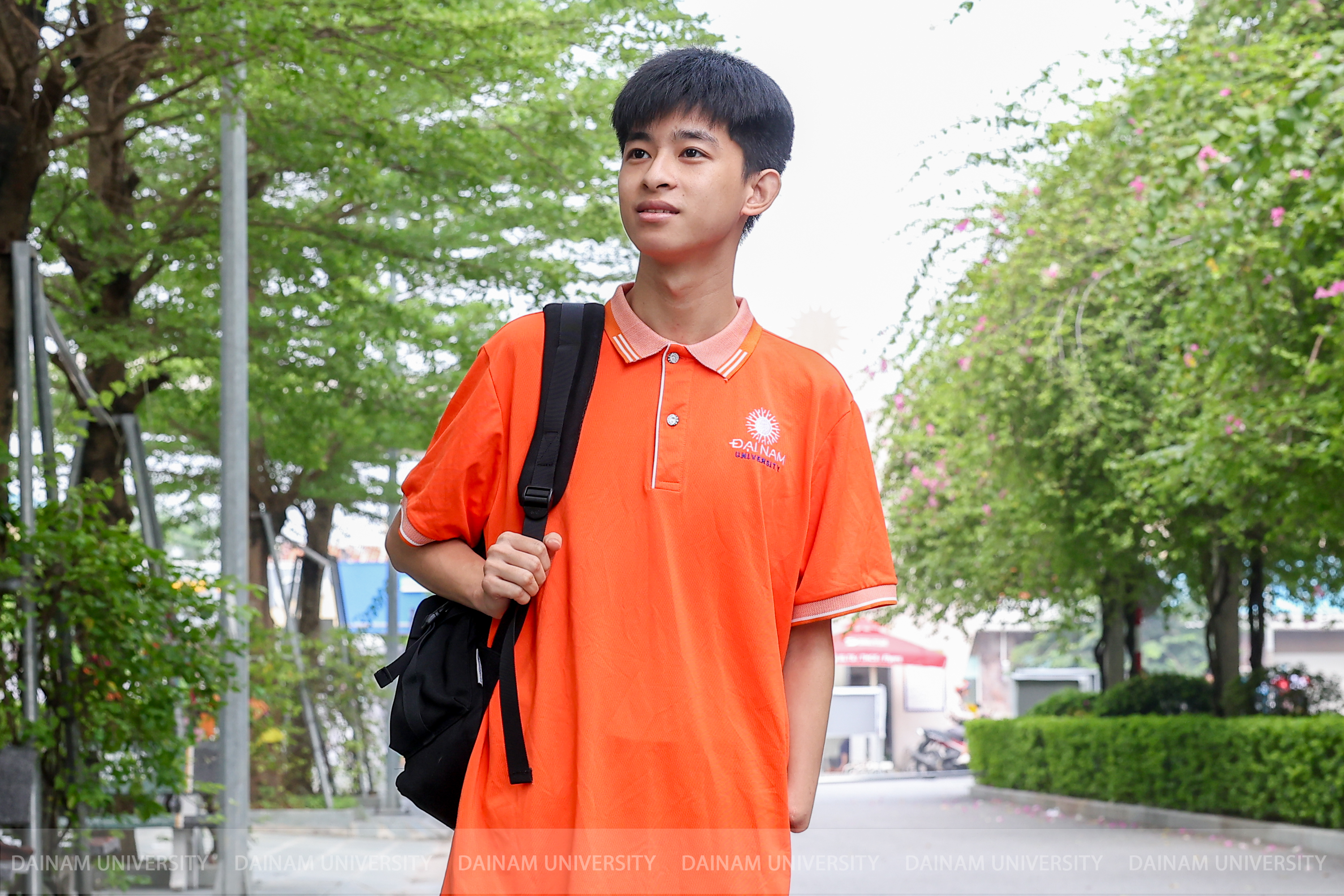
Nguyen Phuc Bang, Dinh Ngoc Chinh, and Doan Mai Lan received high praise from the judges of the Build@HUB Hackathon competition for their project on a wearable device for monitoring the health of the elderly.
A 24-hour race against time to "save" the product.
The idea for Record of Ragnarok stems from a relatable problem: elderly people may be home alone for extended periods, while family members cannot always be there to monitor their health.
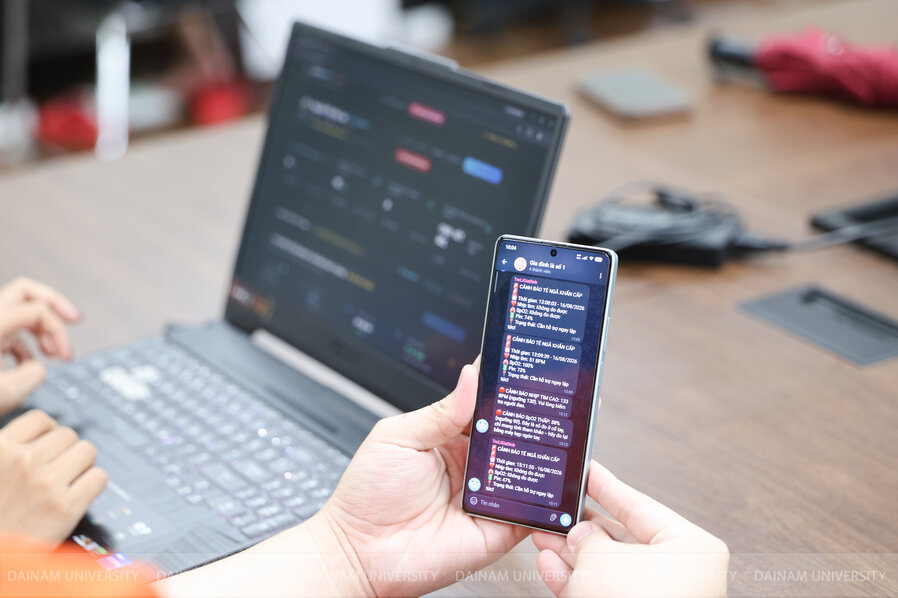
The team developed a smartwatch-like device that integrates heart rate and SpO2 monitoring, fall detection, and sends alerts to loved ones in case of an incident.
"The initial idea was relatively clear, but when we started implementing it, we realized there were many problems to solve. With an AIoT product, the hardware, software, and algorithms must work together for the prototype to function," Doan Mai Lan explained.
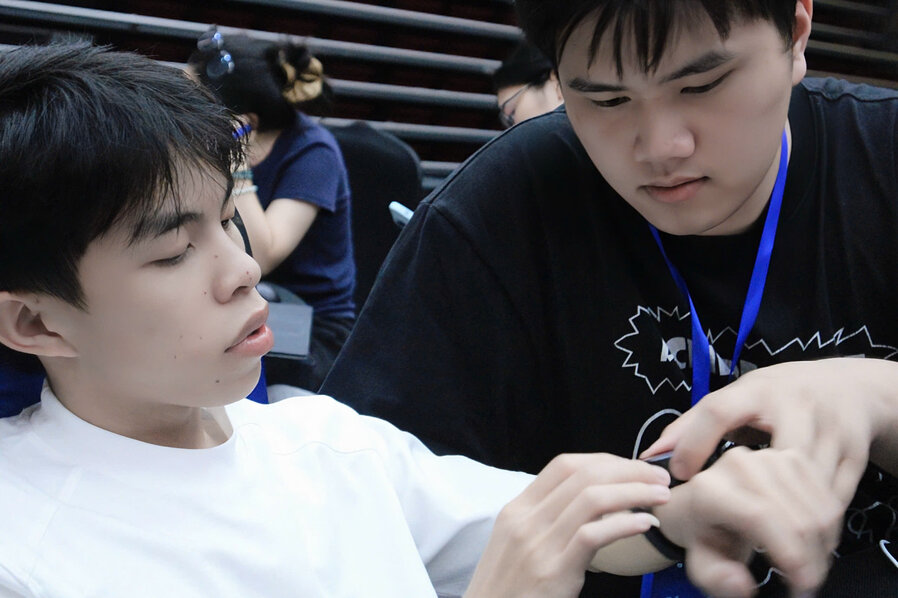
The group of students from Dai Nam University focused on checking and testing the elderly health monitoring device before their presentation.
24 hours a day: programming, assembling, testing, commissioning, and debugging.
As the process progressed, the pressure intensified. The team had to choose between continuing to add features or maintaining a stable, functional version. At one point, a seemingly better version, after adjustments, proved unstable.
"Ultimately, we decided to revert to the more stable, older version instead of continuing to take risks when time was running out," Dinh Ngoc Chinh recalled.
That decision also brought a very practical lesson: "Participating in a Hackathon isn't always about trying to cram in as many features as possible. The important thing is knowing when to omit features, choosing a version that works stably and demonstrates the value of the idea," Chinh shared.
When submitting the project, the entire team was nearly exhausted. But before the judges was a working prototype – the result of 24 hours of transforming knowledge into a product.
AI support is provided, but students must take ownership of the product.
One of the most challenging tasks is helping the system distinguish between a real fall and normal movement, while also identifying abnormal heart rhythms instead of changes caused by exercise.
The team combined data from heart rate sensors, SpO2 sensors, and accelerometers with an AI algorithm. According to the team's test results, the recognition accuracy was over 85%.
The University category championship trophy marks the result of 24 hours of continuous programming, testing, and processing by a team of students from the Faculty of Information Technology - Dai Nam University.
AI is also used to assist in information retrieval, suggest solutions, and write some parts of the source code. However, the members determined that the tool cannot replace fundamental knowledge.
"AI is a supporting tool, but the final decision and the ability to master the product still have to come from one's own knowledge," Chinh said.
This is clearly demonstrated when defending a product: members not only need to state what the product can do, but also explain how the system operates, why that particular technology was chosen, and what limitations need further improvement.
AI can be used to assist in writing code, but to protect the product, the creator must truly understand what they have done.
The trophy started with those times when I "dared to compete".
According to Doan Mai Lan, composure at a competition with over 600 participants doesn't just appear naturally during a 24-hour Hackathon.
Prior to this, all three had participated in numerous competitions, practical activities, and technology playgrounds at school. Each time, they learned how to work in a team, present ideas, receive feedback, and improve their weaknesses.
"School competitions serve as a stepping stone for students to test their abilities before entering larger competitions. Without that experience, we probably wouldn't have the composure and confidence we have this time," Lan shared.
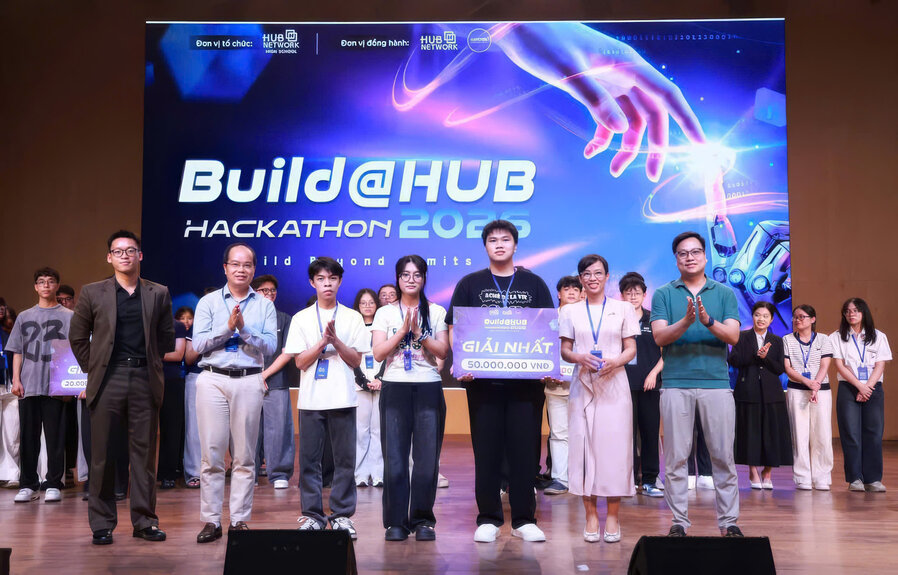
Record of Ragnarok - A group of students from the Faculty of Information Technology, Dai Nam University, proudly won first place at the Build@HUB Hackathon 2026.
The three members are divided according to their strengths: Bang focuses on hardware and AIoT devices, Chinh handles software, and Lan develops ideas and presentation content.
“There were times when we were tired, and times when the test results weren’t as expected, but the whole team was determined to solve the problem together instead of blaming each other. When time was running out, coordination became even more crucial,” Bang said.
Therefore, the trophy wasn't just created during the 24-hour Hackathon. Behind it are the times when students dared to compete, dared to try, dared to fail, and dared to try again.
From the lab to the big playground
According to Dr. Tran Trung Hieu, Deputy Head of the Faculty of Information Technology, what is noteworthy about Record of Ragnarok is not just the championship title, but the ability to apply knowledge to solve a real-world problem.
Specifically, the team didn't start with the question "Should we use AI or IoT?", but rather began with "What is the problem that needs to be solved?", and only then chose the appropriate technology.
"This is the mindset that the Faculty of Information Technology wants to instill in its students: not just knowing about technology, but knowing how to use that technology to solve problems," said Professor Hieu.
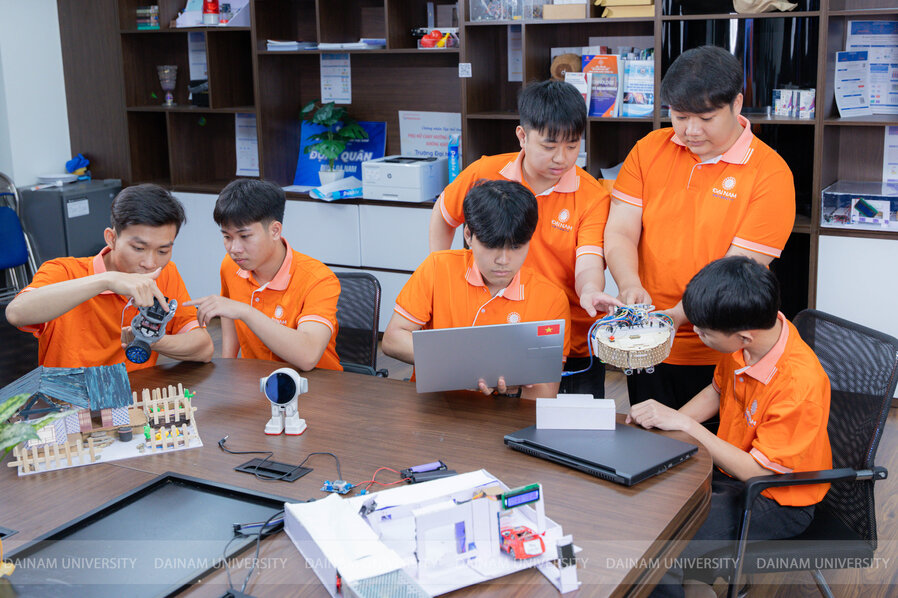
The IT Department's practice space provides students with the opportunity to experiment with and refine technological ideas from assignments and projects.
To provide students with a space for experimentation and learning, the Faculty of Information Technology currently has two hardware and networking workshops, an AI & IoT Lab, and a network of nearly 30 ICT businesses and research facilities. Ideas from assignments and projects can be further tested, refined into products, and brought to larger platforms.
For Record of Ragnarok, the championship trophy was a milestone. But behind that trophy were the skills developed: problem-solving, working under pressure, teamwork, making choices, and taking responsibility for one's decisions.
And the question following an award, as Dr. Tran Trung Hieu emphasized, should not stop at what has been won: "What I hope for after each competition is not to ask the students what award they have won, but rather, what greater things can they achieve after this award?"
BTT