English
 Tiếng Việt
The National Defense Magazine - Dai Nam University innovates and improves the quality of national defense and security education for students.



Recognizing the importance of national defense and security education for students – the future leaders of the country – Dai Nam University has been implementing a comprehensive range of innovative solutions to improve the quality of this crucial work.
Dai Nam University is an applied university offering multi-disciplinary training, with the mission of "Educating graduates to have good lives and be good citizens; contributing to the strong promotion of national education." Over the years, the university has always focused on building a comprehensive educational environment; in particular, innovating and improving the quality of national defense and security education has been identified as one of the important contents to cultivate political fortitude, organizational discipline, and civic responsibility in students, meeting the requirements of building and defending the Fatherland in the new situation.
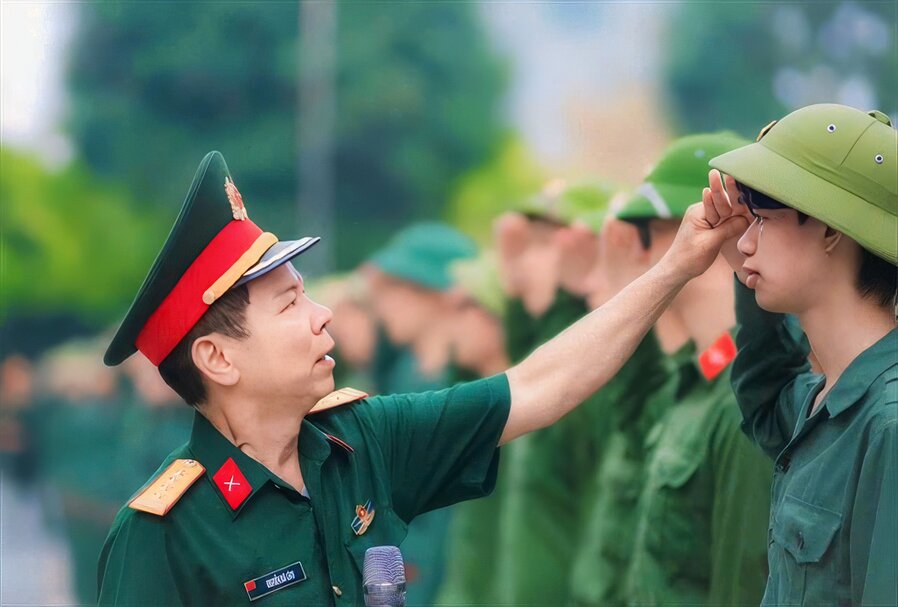
Inspect and guide students in performing drill and formation movements.
Innovation from leadership thinking to awareness and action in the implementation of national defense and security education tasks.
For all higher education institutions, the quality of education and training in general, and national defense and security education in particular, always depends first and foremost on the awareness and responsibility of all stakeholders, from the Party committee, the board of directors, the staff and lecturers to the students.
Recognizing this, over the years, Dai Nam University has always focused on promoting the core role of the Faculty of Politics - National Defense - Physical Education in advising the Board of Directors on building and implementing annual training programs and plans suitable to the characteristics and conditions; in particular, focusing on innovating teaching methods; organizing and managing student training; and ensuring support. Based on the Faculty's advice, in recent years, instead of teaching in the middle or at the end of the course, the University has adjusted the organization of the subject from the first semester, aiming to train students to have a formal, disciplined, and rigorous study and living style, creating a foundation for improving the quality of other subjects - this is a new development in leadership thinking regarding this subject.
In addition, the school is stepping up efforts to educate and instill in all students a full understanding of the meaning and importance of the subject, building motivation and a spirit of self-awareness and proactiveness in teaching, learning, and self-cultivation, thoroughly overcoming the tendency towards simplistic, formalistic approaches, treating it as merely a "minor subject," or cutting short the content and time allocated to it; at the same time, linking responsibility and performance results to the quality of teaching and student management.
Building a team of highly qualified, dedicated, and creative lecturers.
The school's development strategy until 2027, with a vision to 2037, identifies: "Focus on building a team of excellent lecturers who love their profession, love the school, cherish and are dedicated to students, and are always creative in their work." To implement this strategic direction, the school has deployed many solutions to build a team of subject lecturers that is sufficient in number, standardized in quality, has continuity and development, and possesses a spirit of innovation, creativity, enthusiasm, and dedication to students.
Currently, the Faculty has 30 lecturers teaching the subject of National Defense and Security Education; including 2 PhDs and 10 Master's degree holders, 100% of whom are trained in the relevant field and basically meet the immediate requirements. However, to meet the requirements of expanding the training scale, the School continues to recruit lecturers, prioritizing those with postgraduate qualifications, retired military officers, and those who have transferred to other fields with practical experience and technological application skills; with a focus on recruiting seconded officers, in order to implement the roadmap for developing the Faculty of Politics - National Defense - Physical Education into a Center for National Defense and Security Education in the near future.
Along with strengthening the faculty, the School focuses on improving the quality of lecturers in a comprehensive, in-depth manner and adapting to the requirements of educational and training reform. Accordingly, in addition to selecting and sending staff and lecturers to participate in postgraduate training, professional training courses, pedagogical skills training, digital transformation and the application of artificial intelligence (AI) in teaching, the School directs the Faculty to strictly maintain the practice of excellent lecturer competitions, class observation, and experience sharing; encourages lecturers to promote scientific research, compile textbooks, digital learning materials, improve models, teaching aids, etc.
At the same time, we prioritize training and fostering the sense of responsibility, dedication, and creativity of our faculty, ensuring they are truly approachable, inspiring, and supportive of students throughout their learning and development. This contributes to building a modern, humane, disciplined, and creative educational environment in line with Dai Nam University's development orientation.
Comprehensive reform of teaching and learning content and methods.
One of the outstanding new features in the school's national defense and security education in recent years is the innovation of teaching and learning content and methods towards a practical and modern approach, focusing on the learner to comprehensively develop students' qualities and abilities. Adhering closely to the framework program and guidelines of the Ministry of Education and Training and the higher-level National Defense and Security Education Council, the school regularly reviews, updates, and supplements new content in the Party's guidelines and policies, the State's laws and regulations on national defense and security; non-traditional security issues; the global and regional situation; and the requirements for national defense in the new context. At the same time, extracurricular learning and practical research at the Vietnam Military History Museum are added, creating a practical environment and conditions to help students gain a more comprehensive understanding of the task of building and defending the Fatherland.
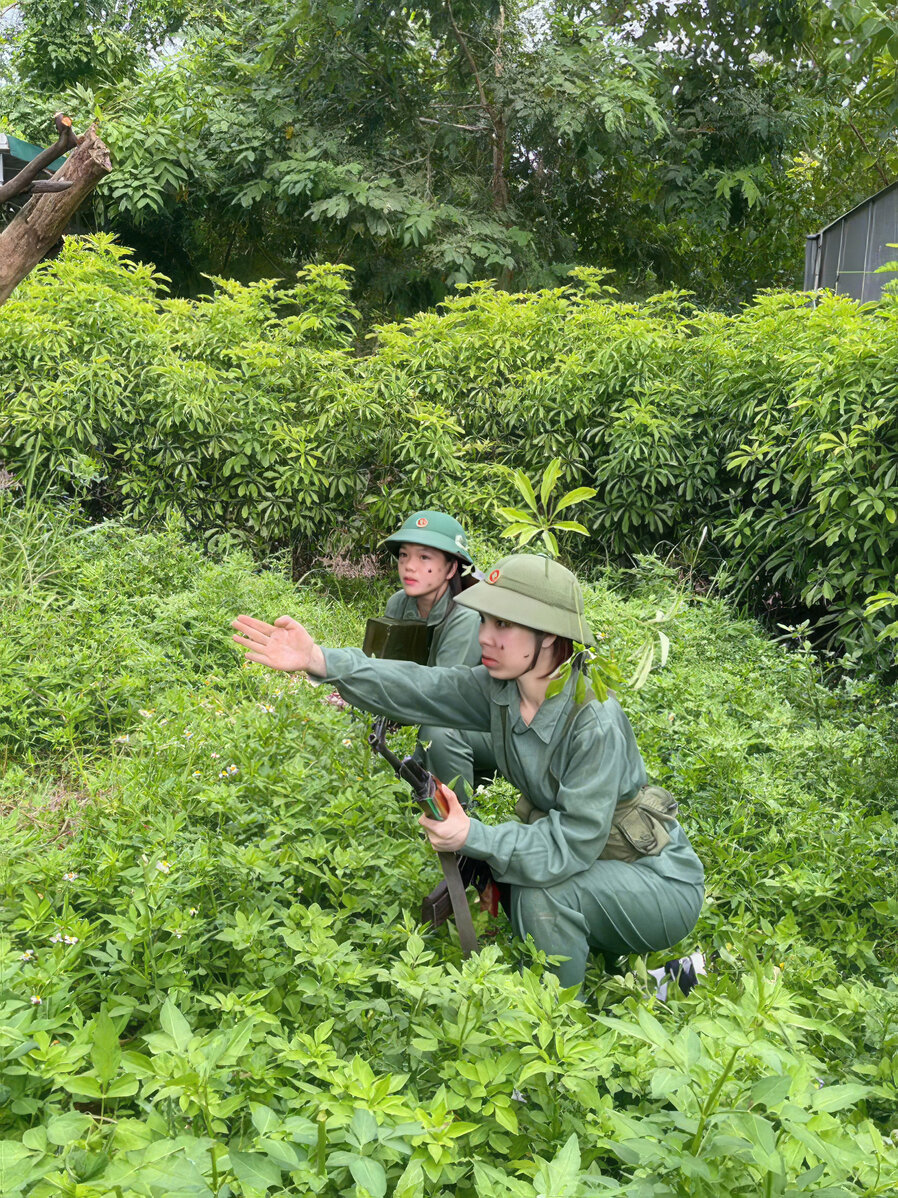
Students practice tactical scenarios.
Along with content innovation, the school focuses on innovating teaching methods, shifting strongly from knowledge transmission to developing learners' competencies; promoting students' initiative, creativity, and self-learning abilities. Notably, in recent times, the school has promoted the implementation of the "flipped classroom" model, linked with the application of AI in teaching and learning.
Accordingly, 100% of lecturers must apply information technology and AI, and enhance the use of images and practical examples to "videoize" lecture content. Students are expected to proactively research provided materials beforehand to create presentations in the form of videos or short clips based on assigned content. During the teaching and learning process, each group of students presents the topic, other groups provide supplementary information, and the lecturer guides, prompts, and concludes the discussion. This helps to stimulate proactive and self-directed learning, teamwork skills, and the ability to adapt to a modern learning environment.
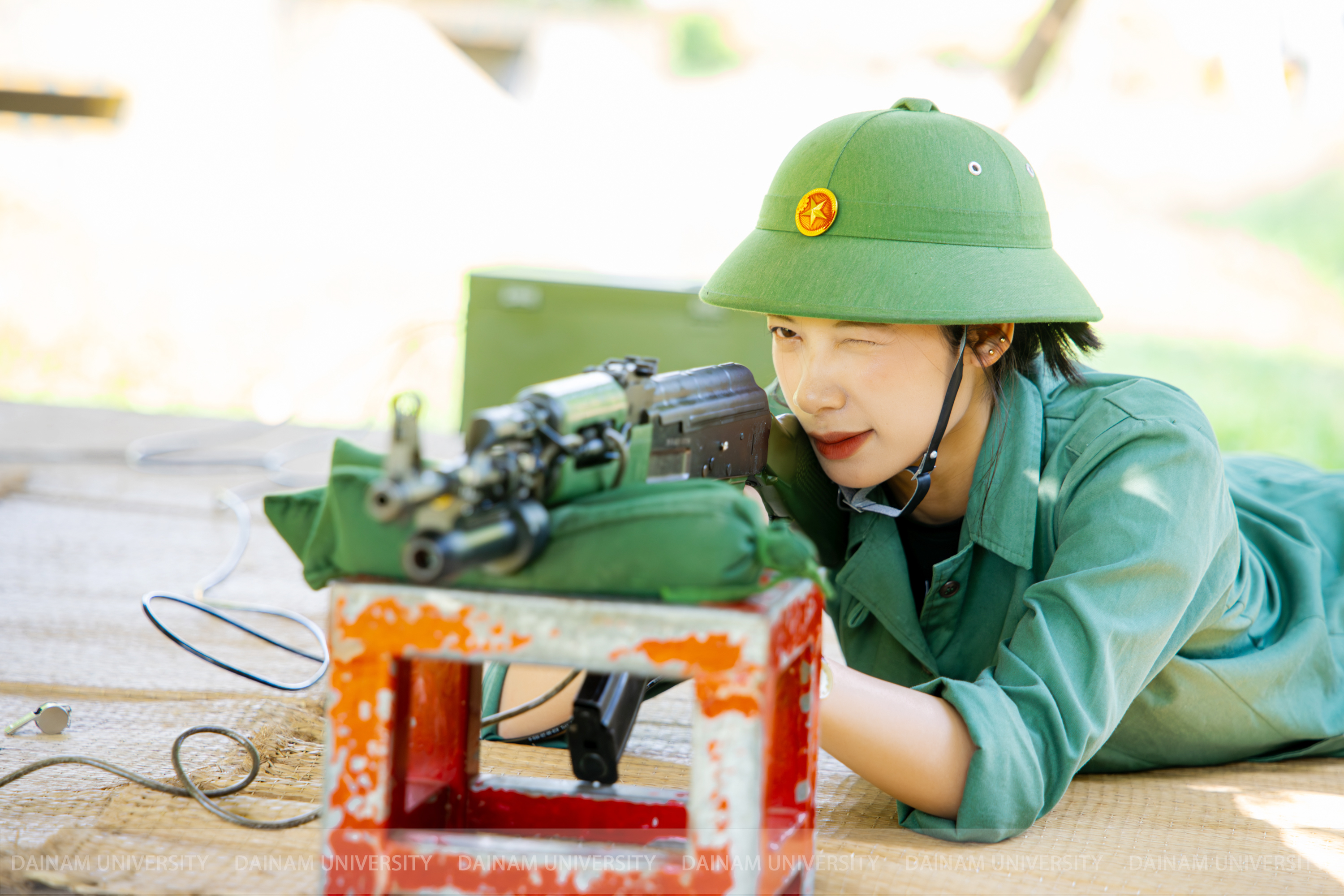
For practical training, the school emphasizes a progressive approach, moving from easy to difficult, from simple to complex. Content such as drill regulations, infantry combat techniques, and marksmanship are organized scientifically and rigorously, ensuring that students master the fundamentals and movements, practice correctly, and simultaneously cultivate a disciplined demeanor, organizational awareness, and team spirit in the students.
Furthermore, the school has reformed its assessment methods to be more substantive, objective, and transparent. In addition to traditional methods such as essays, multiple-choice tests, and oral examinations, the school is promoting competitions and sports events in the form of military-style games, such as: "Wise Soldier," "Beautiful Internal Affairs, Standard Teamwork," "Military Arena," etc., aiming not only to accurately assess students' abilities and thoroughly overcome the problem of focusing solely on achievements, but also to create a vibrant competitive environment, strengthen solidarity, and enhance students' enthusiasm for learning the subject.
Building a healthy military cultural environment is linked to investing in modernizing infrastructure and digital transformation.
To ensure that each course provides students with a genuine "military experience," the school prioritizes building a healthy, formal, and disciplined military culture. Accordingly, in addition to organizing students into companies, platoons, and squads according to regulations, the school directs the assignment of officers and lecturers to directly manage and maintain their studies, daily life, and training; strictly maintaining daily and weekly routines; and promoting the application of technology in student management, such as: smart attendance tracking, dormitory access control using magnetic cards, etc.
Furthermore, the school prioritizes building a welcoming educational environment that suits the psychology of students; requiring the management staff and lecturers to be truly exemplary, responsible, and dedicated, using their role models to educate and train students. At the same time, it strengthens the organization of cultural and artistic exchange activities, community service, etc., creating a vibrant, united, and humane learning and training environment.
To meet the requirements of national defense and security education in the new situation, the School pays special attention to investing in facilities and equipment in a synchronized and modern manner. Accordingly, along with using the general lecture hall system, the School prioritizes the arrangement of modern specialized classrooms; specialized training grounds with complete models, weapons, equipment, and materials, such as: modified guns, MTB-3 training machines, training grenades, various models, drawings, and dormitory areas, dining halls, etc., to best meet the requirements of concentrated learning and living for students.
However, to meet the requirements of expanding training scale, in the coming time, the School will actively mobilize resources to implement the project of building a separate national defense and security education training area in Luong Son commune, Phu Tho province, with a system of training grounds and practice areas that meet standards and have synchronized, modern facilities, capable of meeting the training needs of over 1,000 students per course.
Simultaneously, the school is promoting the application of information technology and digital transformation in management, administration, and the organization of teaching and learning. Currently, the school has completed a comprehensive digital student management system: from admission, class placement, student management, discipline maintenance to evaluating academic and training results. At the same time, it is focusing on digitizing documents, textbooks, electronic lecture systems, digital learning materials, question banks, 3D simulations, building a shared electronic library, a teaching data repository, and creating a modern and flexible learning environment.
With strong determination and comprehensive, appropriate solutions, from 2021 to the present, Dai Nam University has taught and certified over 11,700 students in the subject of national defense and security education. The results show that 100% met the requirements, with over 75% achieving good or excellent grades; it is considered one of the leading institutions in national defense and security education among academies and universities nationwide.
Building on the achievements, the School strives to develop the Faculty of Politics - National Defense - Physical Education into a Center for National Defense and Security Education, creating a foundation for better implementation of national defense and security education, contributing to the training of high-quality human resources to serve the cause of national construction and defense in the new era.
Colonel, Dr. Nguyen Ba Lam, Head of the Department of Politics - National Defense - Physical Education
Tạp chí Quốc Phòng Toàn Dân