English
 Tiếng Việt
Medical program at Dai Nam University: Understanding correctly to make the right choice.



In the context of the ever-increasing healthcare needs of society, Medicine continues to be a key field of training, playing a core role in the healthcare system and attracting a strong following of prospective students during each university admissions season. However, choosing a medical training institution is not just about selecting a major, but about choosing a serious, humane academic environment, closely linked to professional practice and medical ethics. For the 2026 admissions, the Medical program at Dai Nam University (DNU) attracts students and parents with its focus on training general practitioners based on a solid scientific foundation, practical professional skills, and a spirit of community service.
Medicine - the foundation of the healthcare system.
What is Medicine? Medicine is a field of study that trains general practitioners – the core force of the healthcare system. The training program equips students with fundamental scientific knowledge, basic medical knowledge, and clinical medicine; while also developing skills in examining, diagnosing, treating, caring for patients, and practicing medical ethics. This field demands high discipline, professional competence, strong expertise, and high ethical standards in the medical profession.
Demand for general practitioners
The trend of an aging population, the increase in chronic diseases, and the ever-growing demand for high-quality healthcare services have resulted in a consistently high demand for well-trained general practitioners. The healthcare labor market requires doctors with strong practical skills, clinical thinking, the ability to work under pressure, and a sense of responsibility towards patients. This forms the foundation for stable and long-term career opportunities for medical students.
Medical training orientation at Dai Nam University
Associate Professor, Doctor of Medicine Hoang Duc Hanh - Head of the Faculty of Medicine, former Deputy Director of the Hanoi Department of Health, emphasized: Training doctors is not just about imparting knowledge, but the core is to form medical ethics, professional competence, and practical practice skills; students need to quickly gain clinical experience, understand patients, and mature in the hospital environment.
In that spirit, the Medical Faculty of Dai Nam University is built on a patient-centered and student-centered approach, linking training with clinical practice, and emphasizing clinical thinking and professional competence from the very beginning.
>>> Learn more about the Faculty of Medicine, Dai Nam University: HERE
Integrated training program, modern modular approach.
The program is designed to be integrated, closely linking basic science - fundamental medicine - clinical practice - public health - medical ethics. The teaching methodology combines lectures, practical exercises, case analysis, and competency assessment based on learning outcomes. The modular training model helps learners access knowledge systematically and logically, enhancing their ability to apply it in practice.
“The program is built according to modern standards, focusing on professional competence and adaptability, aiming to train doctors with a solid professional foundation, good clinical thinking, and readiness for integration…” said Associate Professor, Doctor of Medicine Hoang Duc Hanh.
Facilities and Preclinical Center
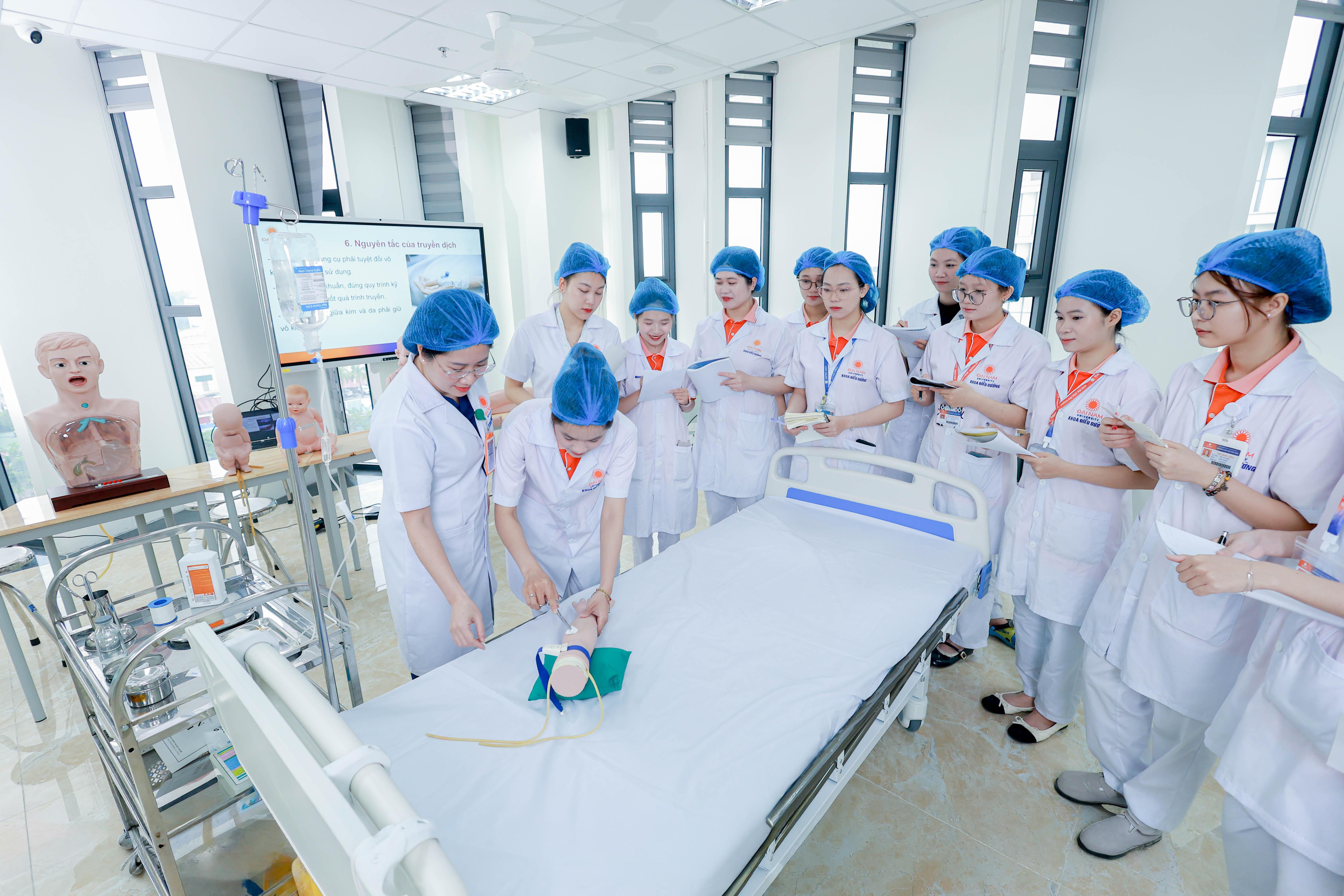
The school invests in modern lecture halls, practice rooms, and laboratories; especially the Pre-clinical Center with simulation models and equipment, helping students practice basic medical skills right at the school before entering the hospital. This approach helps reduce confusion, increase safety, and improve learning effectiveness.
Clinical practice at major hospitals
Dai Nam University collaborates with reputable hospitals to provide clinical practice facilities. Students study using a "stationing" model at hospitals, participating in clinical activities, on-call shifts, and gaining exposure to a real-world professional environment. This process helps develop a doctor's demeanor, situational handling skills, and the ability to work in a high-pressure environment.
>>> Learn more about the Medical program at Dai Nam University: HERE
Enhancing medical English skills for international integration.
The program places a strong emphasis on specialized English language training with significant investment, enabling students to access international medical literature, expand their academic and research capabilities, and gain opportunities to work in an integrated healthcare environment. This forms the foundation for the university's international medical orientation.
Reputable teaching staff
The quality of training is guaranteed by a team of experienced full-time and visiting lecturers: 6 associate professors, 12 PhDs, 17 masters, and nearly 200 visiting lecturers who are professors, associate professors, PhDs, and senior doctors from medical universities and central hospitals in Hanoi. The teaching staff possesses both strong academic backgrounds and a deep connection to clinical practice.
Career opportunities
After graduation, students can work in public hospitals, private hospitals, clinics, medical centers, and healthcare facilities both domestically and internationally. Upon meeting the required conditions, students can continue their postgraduate studies and specialize in other fields to further their professional development and career.
2026 Admissions – The Distinctive Value of Dai Nam University's Medical Program
The Medical program at Dai Nam University aims to train doctors with solid professional expertise, impeccable medical ethics, practical skills, and the ability to integrate internationally. With its scientific curriculum, modern facilities, early clinical practice, reputable faculty, and humanistic orientation, the Medical program at Dai Nam University is the choice for candidates who aspire to serve and wish to pursue a serious and sustainable career in medicine.
>>> REGISTER FOR ADMISSION: HERE
BTT