English
 Tiếng Việt
"Learning from peers is better than learning from teachers" - especially since the professors at Dai Nam University are also students of each other.



(Feedback from Ms. Cao Thi Hoa - Vice Chairperson of the School Board after the sharing session by two young lecturers during the Opening Week of the 2026-2027 academic year)
At Dai Nam University, each new academic year doesn't rush into setting plans and targets, but instead dedicates the entire first week to fostering open thinking.
The opening week of 2026 begins with two classic films by director and People's Artist Tran Van Thuy: "A Story of Decency" and "Hanoi Through the Eyes of Others."
It's not just about watching the film, but also about giving every educator a moment of reflection; to remind each other that before imparting knowledge, teachers need to uphold their conscience, responsibility, and kindness.
Following this was a presentation by Dr. Le Dac Son - Chairman of the University Council - on the strategic vision of Dai Nam University in the context of artificial intelligence fundamentally changing higher education; along with presentations by the Rector, Vice Rectors, and faculty members. Each presentation offered a different perspective, but all shared one common theme: for students to grow and mature, Dai Nam University staff must first continuously learn and grow.
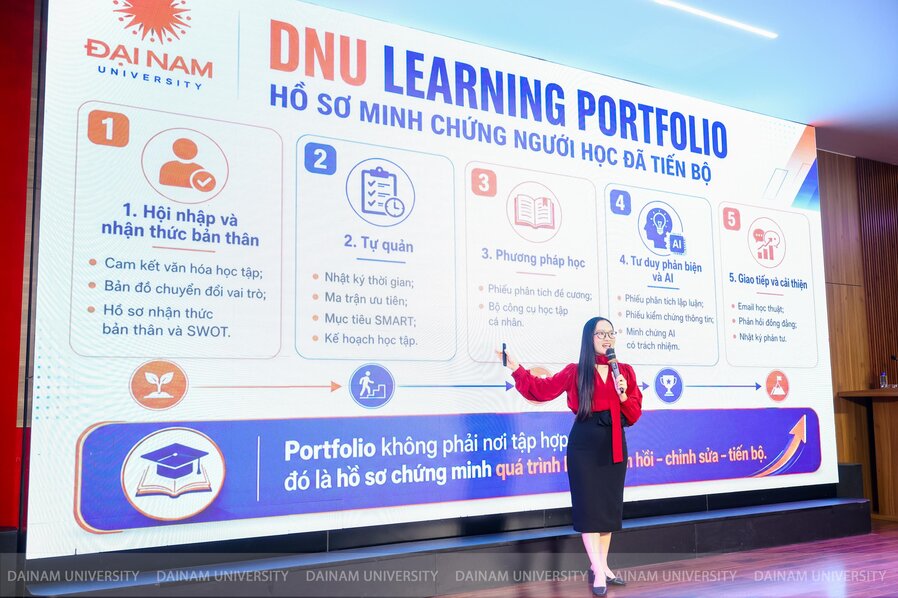
And then, the stage was handed over to the young lecturers. They shared about OBE (Output-Based Education) training, flipped classrooms, the application of AI in teaching, and experiences gained from their own classes.
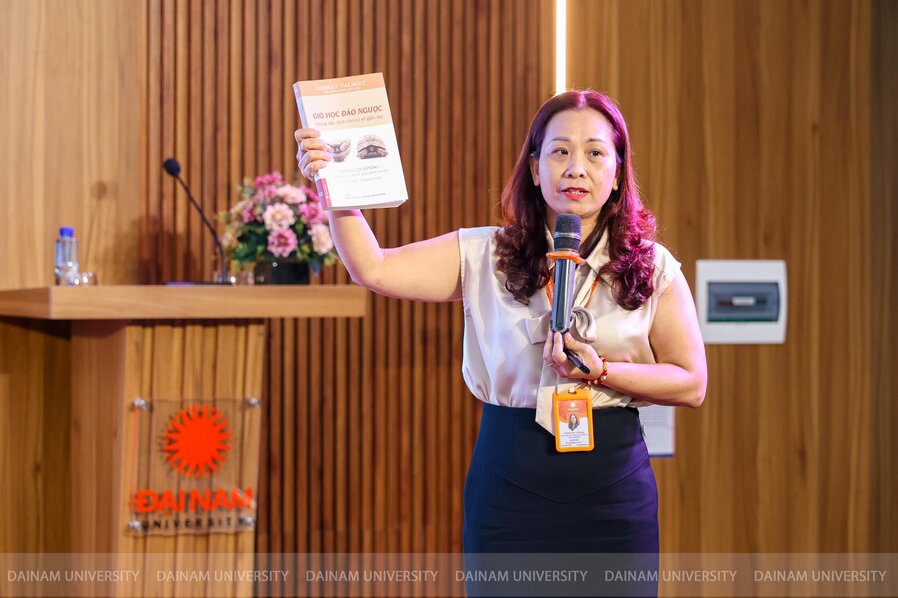
Dr. Pham Thi To Nga - Lecturer in the Faculty of Information Technology, shared technological solutions to support innovation in training activities.
When the program ended, what lingered in my mind wasn't just the slideshows, or the new models or methods. It was a truly beautiful image.
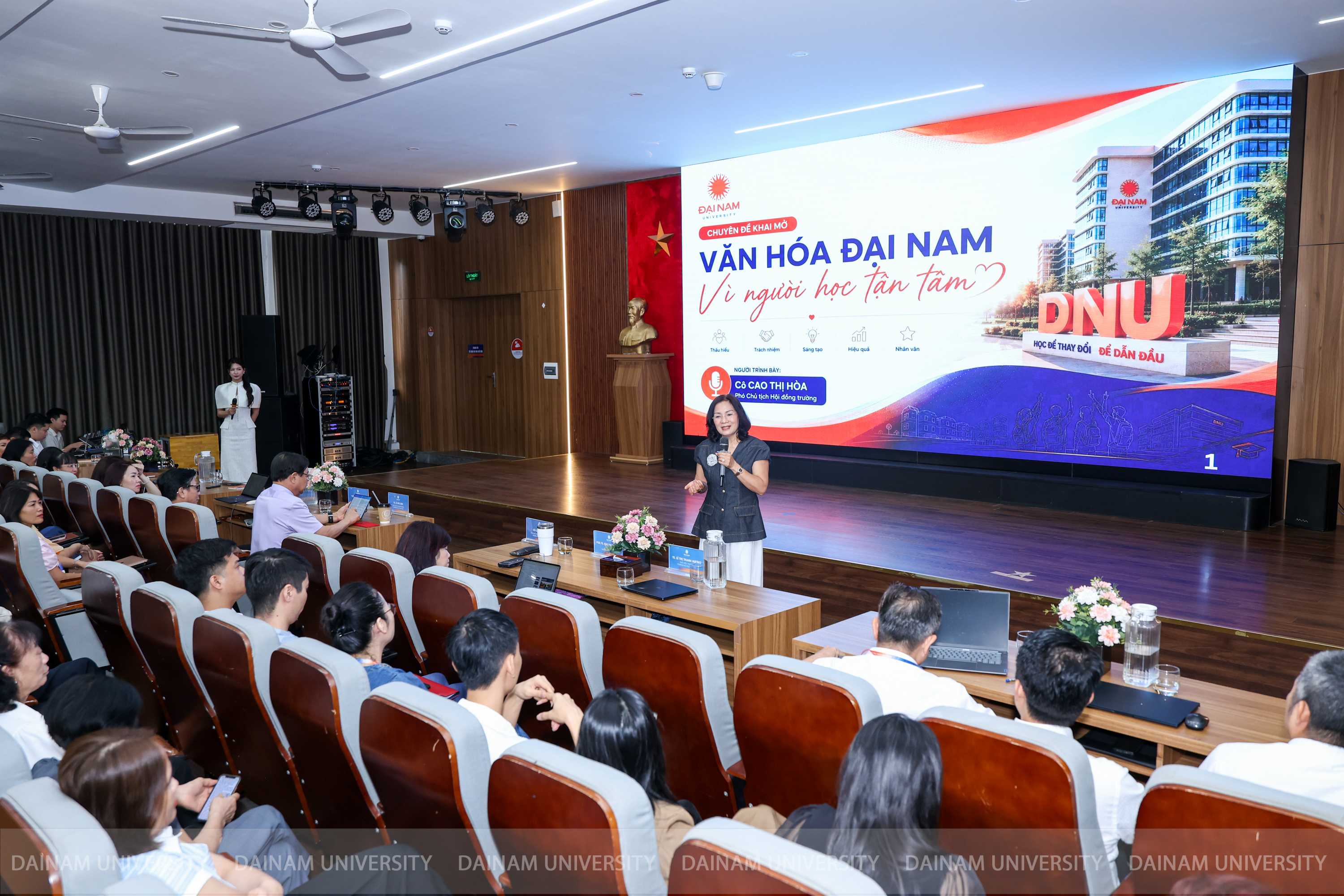
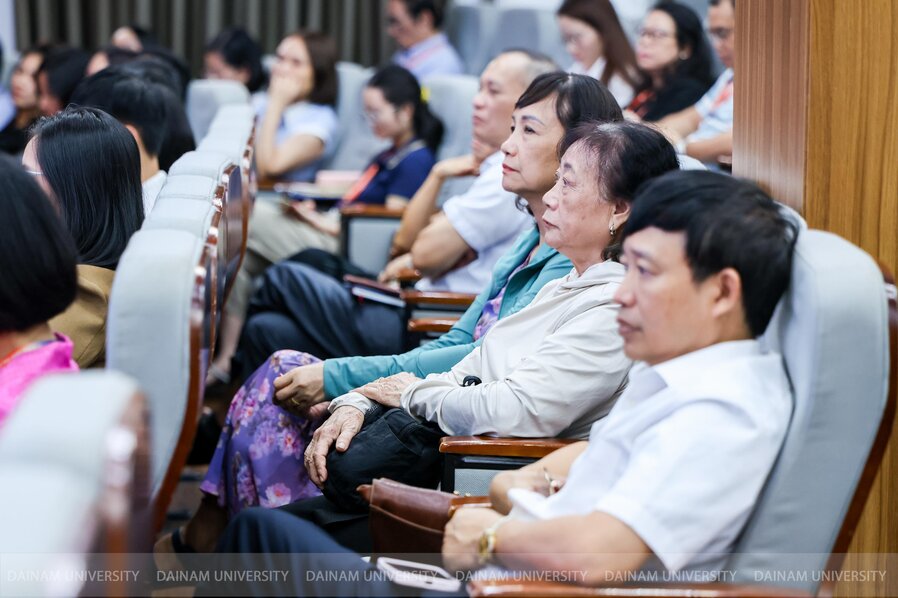
It's a scene of professors, doctors, department heads, and lecturers with decades of teaching experience quietly sitting, listening, taking notes, and exchanging ideas with younger colleagues.
Some of the presenters are old enough to be the father or uncle of the person giving the presentation. Some hold higher academic titles and degrees. Others possess a wealth of experience that younger lecturers are still striving to emulate.
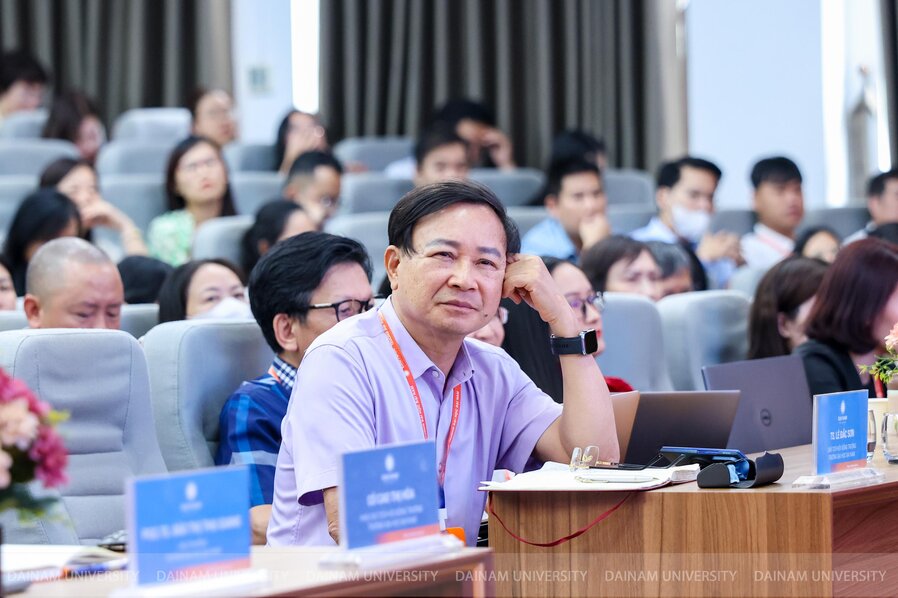
The Chairman listened attentively.
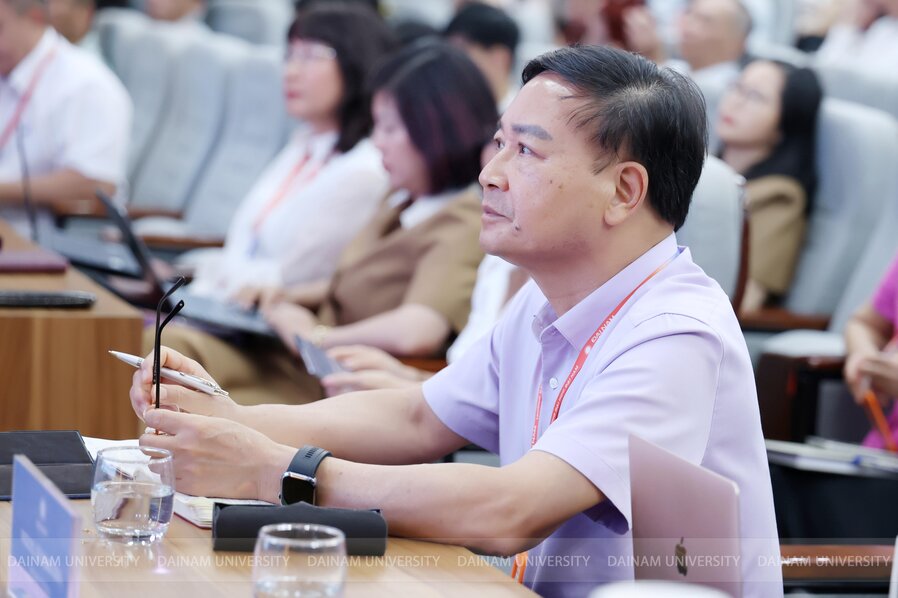
In a lecture hall where people came and went for various reasons, the complete presence of experienced teachers was what I appreciated most. Because that day, everyone sat with the mindset of a learner. For me, that was the most beautiful thing.
Our ancestors had a saying: "Learning from a teacher is not as good as learning from a friend." We often repeat this saying to students. But the more I reflect on it, the more I realize that it also holds true for those of us in the teaching profession.
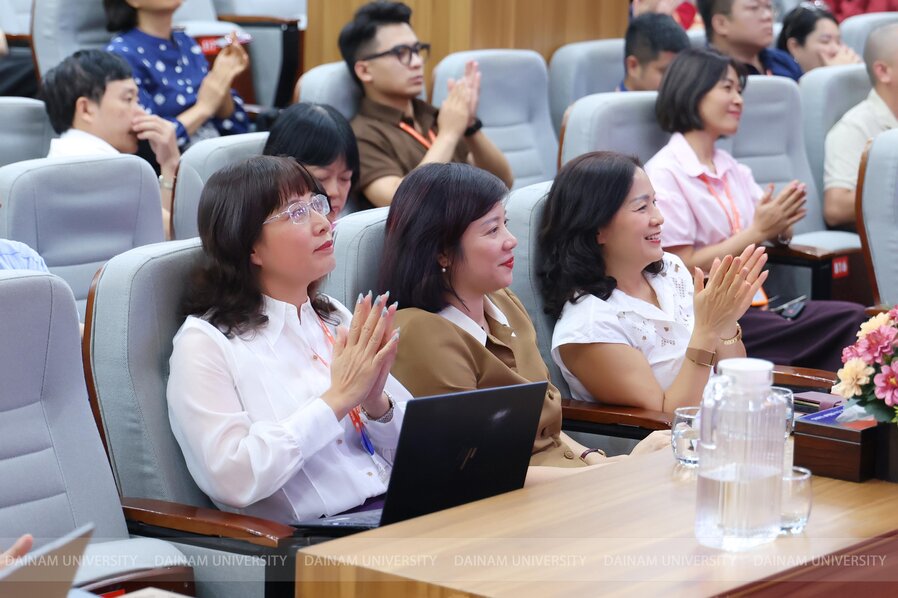
The school administration kept a close eye on them.
In a university, knowledge is not limited by age, academic title, or position.
A young lecturer can bring modern teaching methods that previous generations have never encountered.
A new colleague might be more proficient in using AI than someone with decades of experience. A homeroom teacher might find ways to engage students in a way that prompts collective reflection. An academic specialist might see touchpoints in the learning journey that the lecturer might not have noticed. Each person has strengths, experiences, and something valuable to learn from.
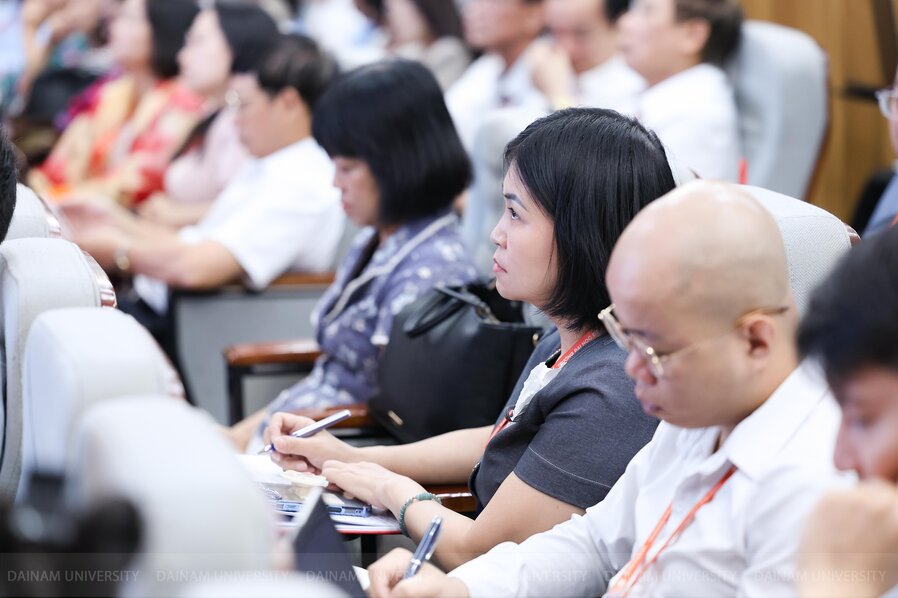
The teachers listened attentively and took notes.
What makes a university a learning institution is not how many famous experts we can invite, but whether each faculty member and staff member is willing to recognize the value in their colleagues.
The image of the "tall and majestic" figures of Dai Nam University humbly listening to young people not only shows respect for those sharing their thoughts, but also reflects the culture of cultured individuals. Truly great people are not those who are always listened to, but those who never lose the ability to listen to others.
Perhaps, the higher the academic degree, the deeper the humility needed. Because only with sufficient humility can we still see the true teachers around us. I've always believed that an intellectual doesn't learn for titles. They learn for values. They don't ask, "Who is speaking?" They ask, "What is worth listening to?" That's also the difference between someone with a lot of knowledge and someone who is truly cultured.
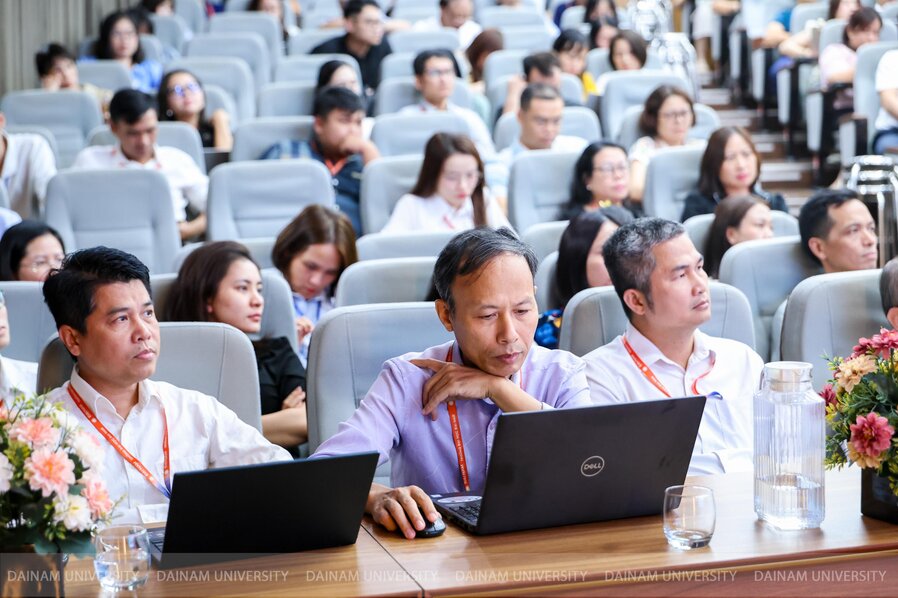
A group is only truly strong when each person enters a sharing session with an open notebook, not with a closed ego.
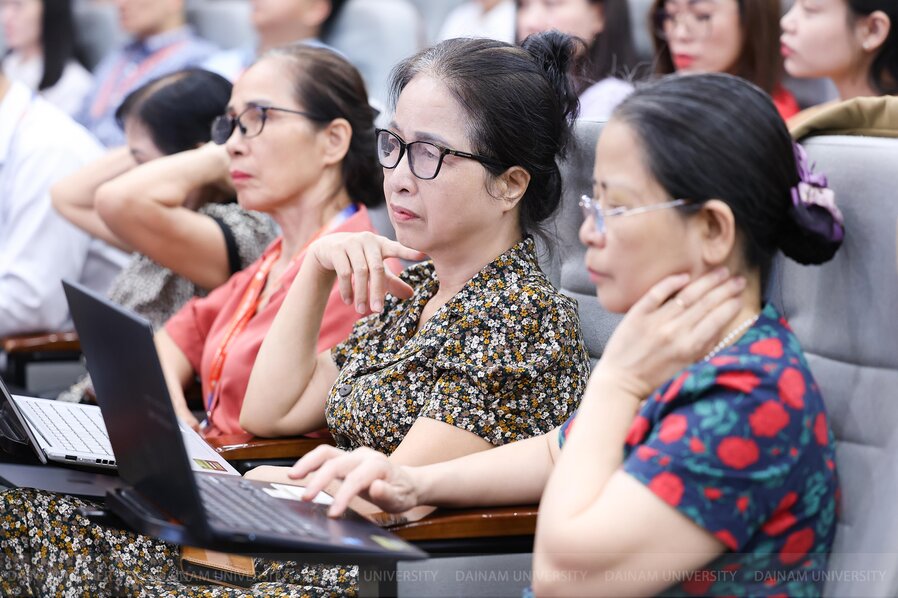
We still hope that students will learn from each other, respect their classmates, and listen to those who have different opinions. But these lessons are only truly convincing when students see that their teachers are also learning, respecting, and listening to each other.
Universities are not just places for imparting knowledge. They are also places for nurturing a spirit of lifelong learning. And that spirit doesn't begin with the students, but with the teachers themselves.
A university is only truly great when no one within it thinks they know enough. A group is only truly strong when each person enters a sharing session with an open notebook, not with a closed ego.
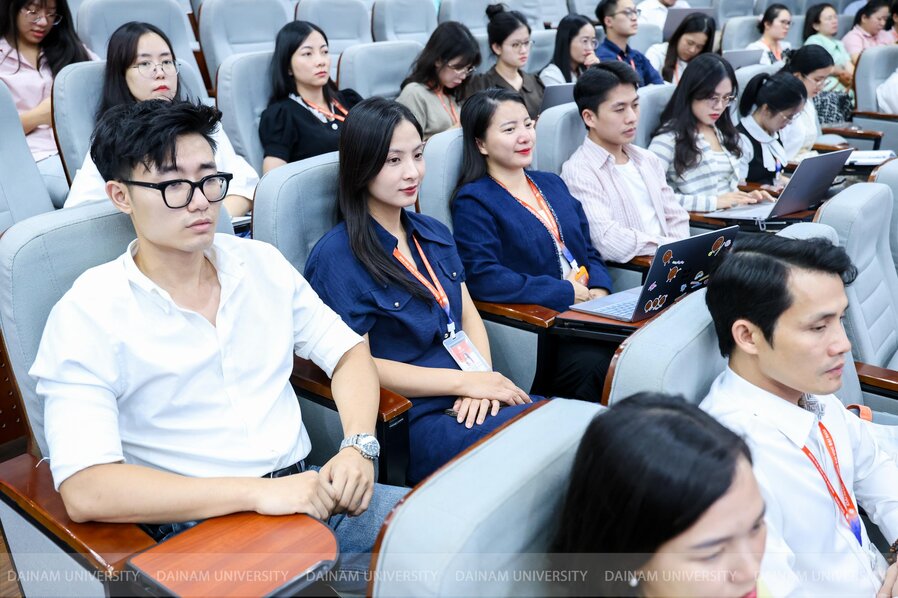
The culture of Dai Nam University is nurtured by sharing, listening, and continuous learning.
Perhaps in a few years, we won't remember all the content of today's lectures. But perhaps we will still remember the teachers who quietly learned from their colleagues.
Because it wasn't just a beautiful moment, but also how Dai Nam University cultivates its culture: everyone is ready to share, ready to listen, and grow together.
Thank you to the young lecturers who bravely stepped forward to share. Thank you to the experienced teachers who humbly sat and listened.
And I believe that in the following sessions, each of us will come with an open mind and fully embrace the presence of the person sharing the experience; because by learning from each other, we not only enrich our knowledge but also together cultivate the learning culture of Dai Nam University.
HTC