English
 Tiếng Việt
Health and Life Newspaper - Nearly 300 international students come to Vietnam to study medicine.



Students will receive six years of training, including two years of theory and four years of combined clinical practice at major hospitals in Hanoi.
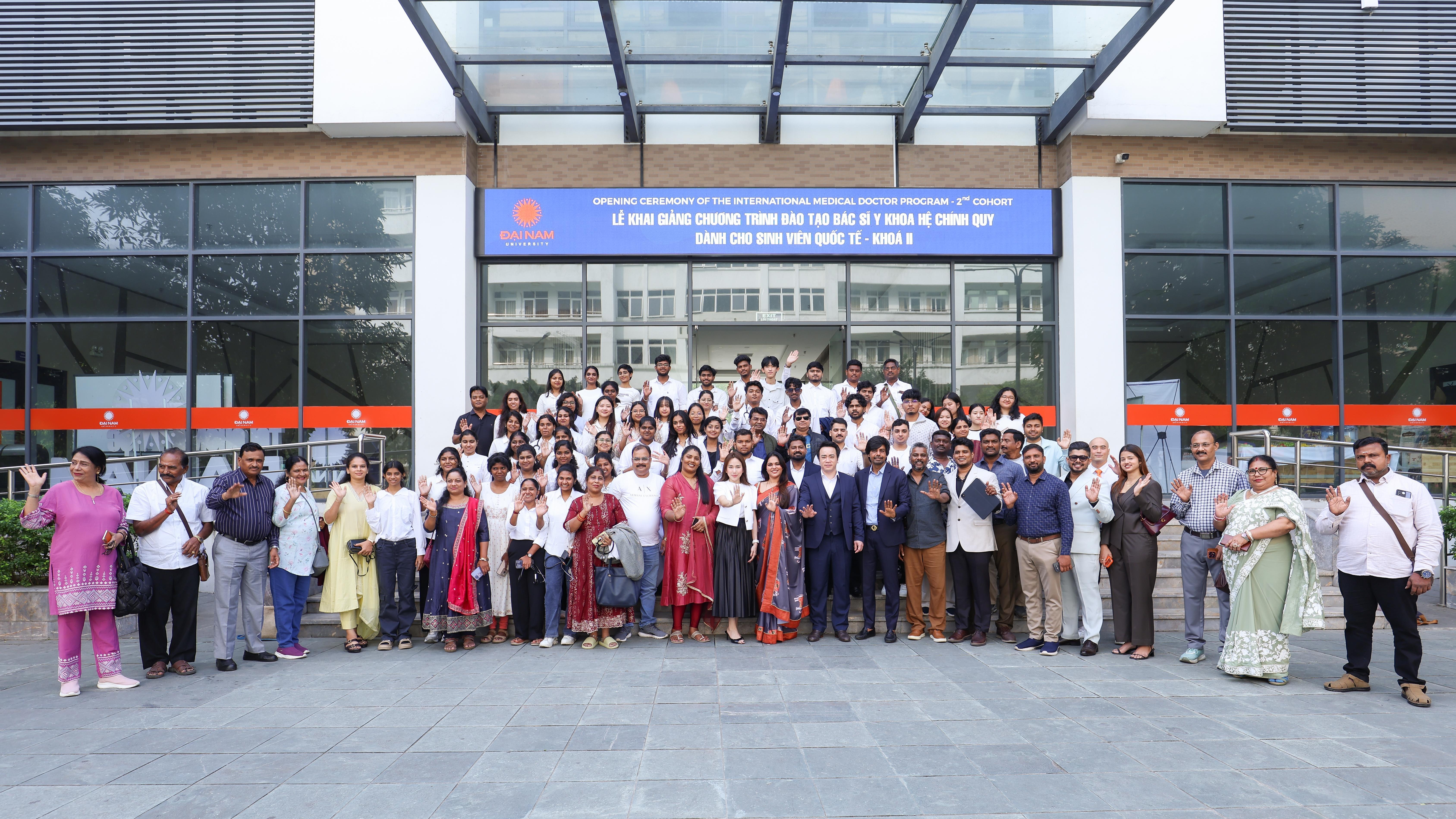
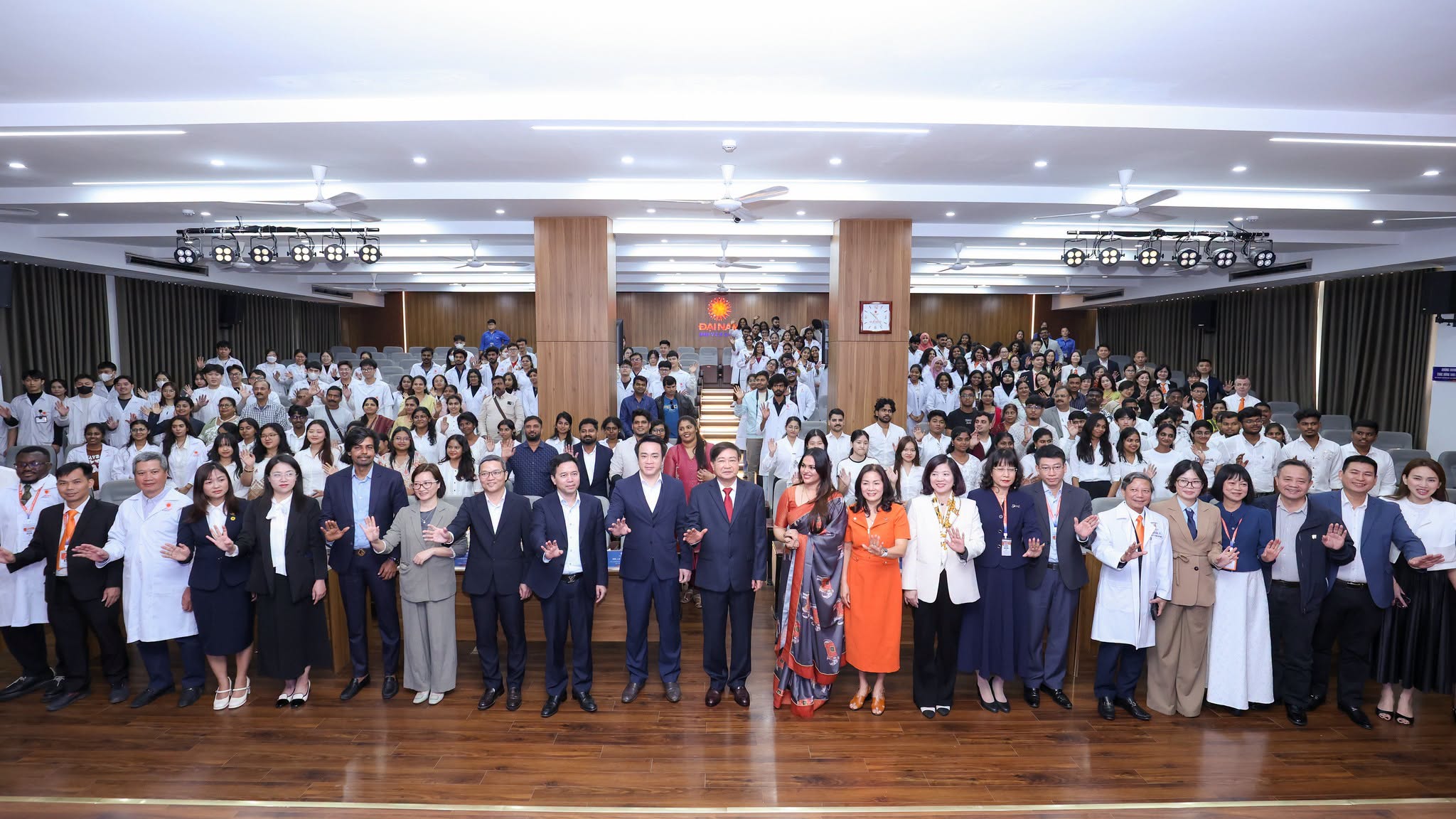
On November 23rd, approximately 100 students from India and Bhutan attended the opening ceremony of the second cohort of the full-time Medical Doctor training program for international students at Dai Nam University. Including both cohorts, the program currently has nearly 300 international students enrolled.
Speaking at the opening ceremony, Dr. Le Dac Son, Chairman of the School Council, emphasized three requirements for medical students: prioritizing medical ethics, focusing on genuine professional competence, and proactively applying artificial intelligence (AI) in their work.
He argued that, in addition to professional knowledge and skills, doctors need empathy for their patients. AI can assist doctors in many professional activities, but it cannot replace the care, sharing, and responsibility that doctors have for their patients.
"Every student should know how to use AI for their work. But AI can't hold the hand of a frightened patient. Only a doctor can do that…," said Dr. Son.
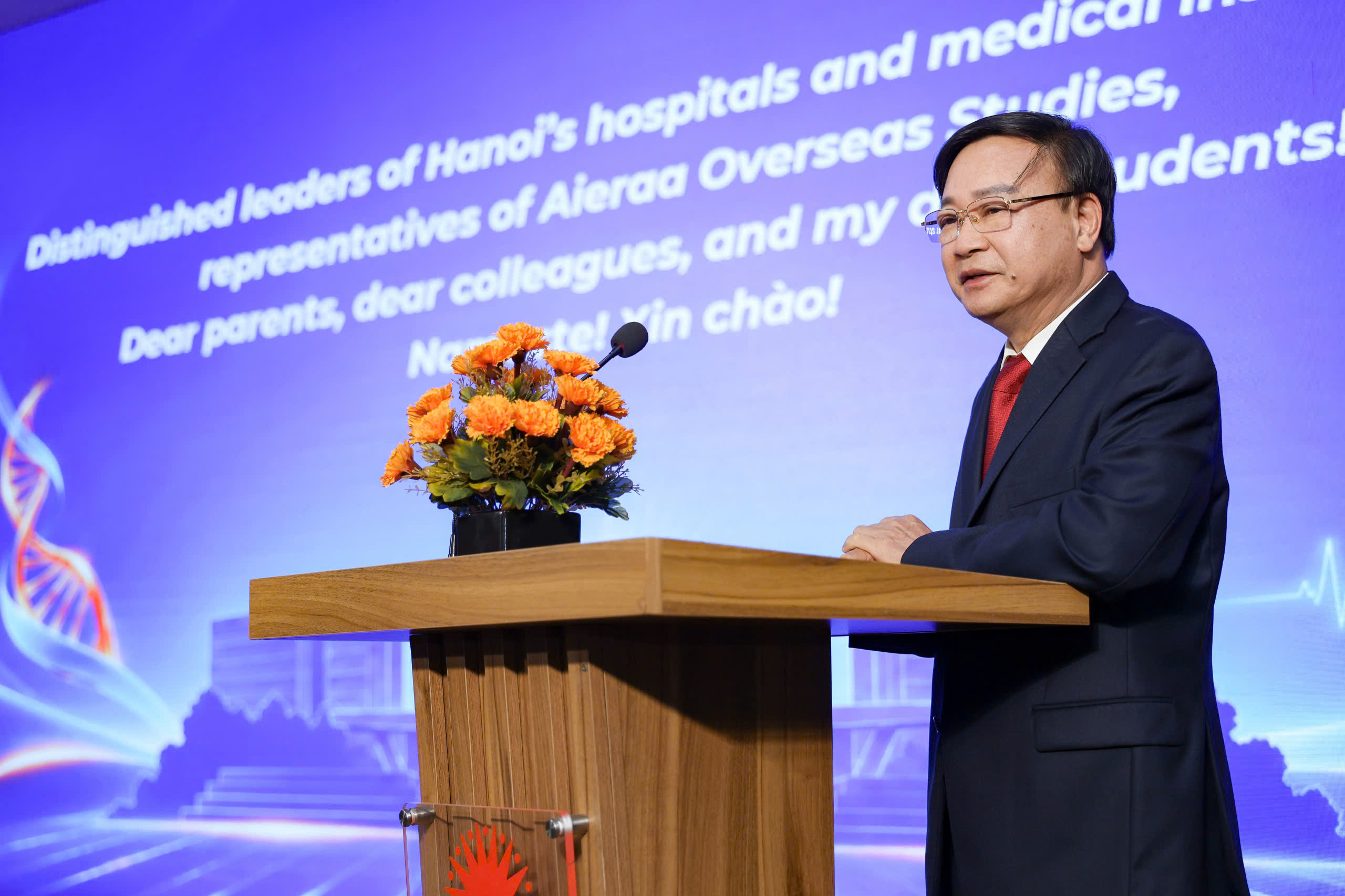
Dr. Le Dac Son, Chairman of the School Board, giving a speech. Photo: Q. Minh
According to Associate Professor Dr. Dao Thi Thu Giang, the school's principal, gradually improving the curriculum, teaching staff, and practical training conditions are important tasks in the training implementation process.
"Each course is a step towards accumulating experience, improving training conditions, and enhancing the quality of support for learners. We expect the program to increasingly attract international students, contributing to making Vietnam a reputable medical training destination in the region, while expanding opportunities for young people to realize their dream of becoming doctors," Associate Professor Giang stated.
The program is taught in English, with instructors including professors and doctors from Vietnam, the UK, the US, Israel, India, and Bhutan.
The training period is 6 years, with the first 2 years focusing on theoretical knowledge and basic medicine; the following 4 years combine study with clinical practice at hospitals in Hanoi.
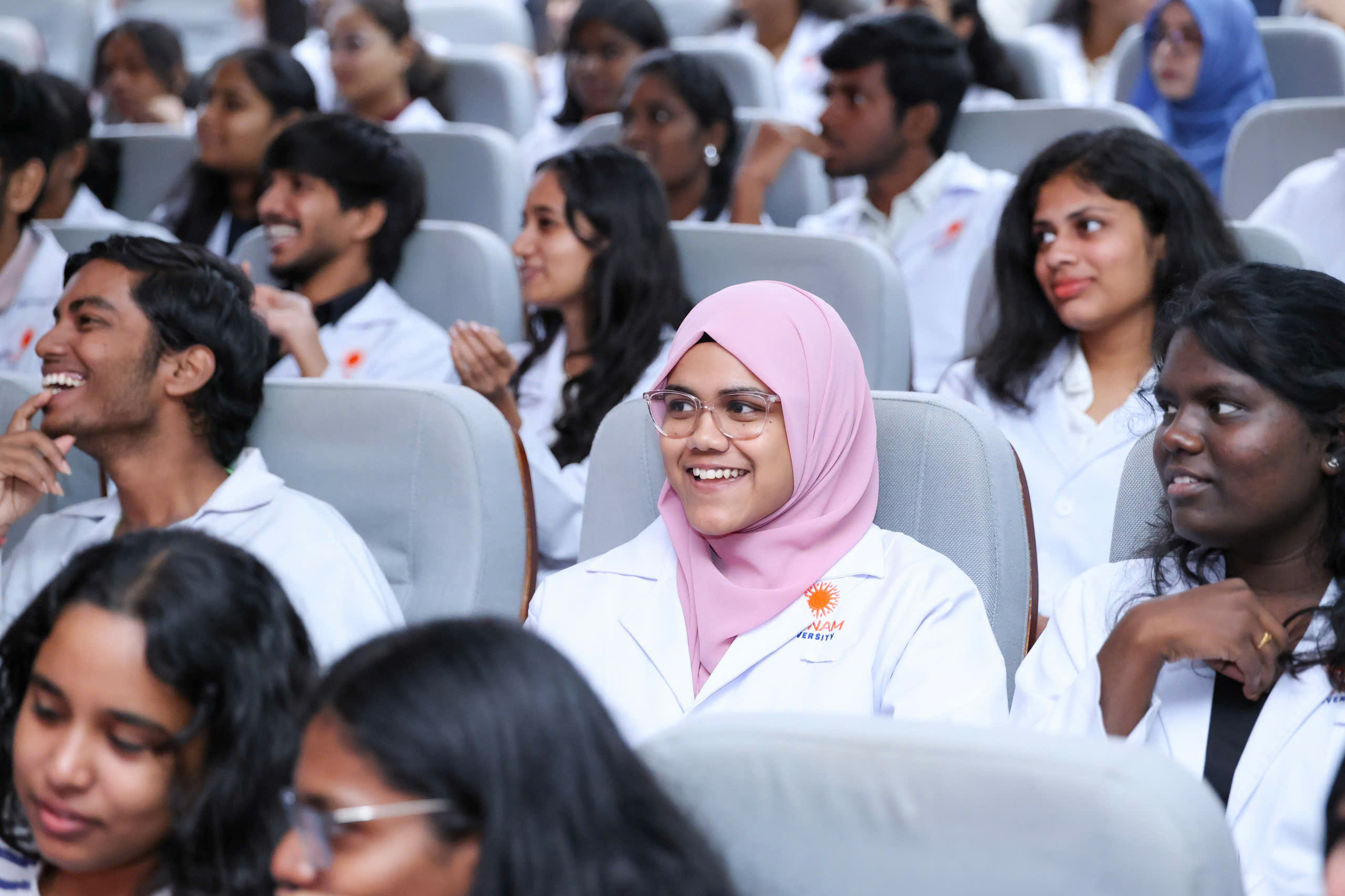
International students studying medicine in Vietnam. Photo: Q.Minh
With tuition fees of US$5,000 per year (approximately VND 125 million), the program is implemented to expand opportunities for international students to study medicine in Vietnam. The school also plans to build its own clinic and hospital, supplementing practical training facilities to support its development in the health sector.
Medical training is linked to clinical practice.
According to experts, clinical practice is a crucial step in medical training, helping students apply their learned knowledge to real-world medical examinations and treatments, hone their professional skills, and develop a professional work ethic.
Students here study in a preclinical center system with practice rooms and laboratories serving basic science, fundamental medicine, and preclinical courses. The school has also established a network of practice facilities at several hospitals in Hanoi and other localities, including Hanoi Children's Hospital, National Ear, Nose and Throat Hospital, Vietnam-Cuba Friendship Hospital, and Vinh Phuc General Hospital.
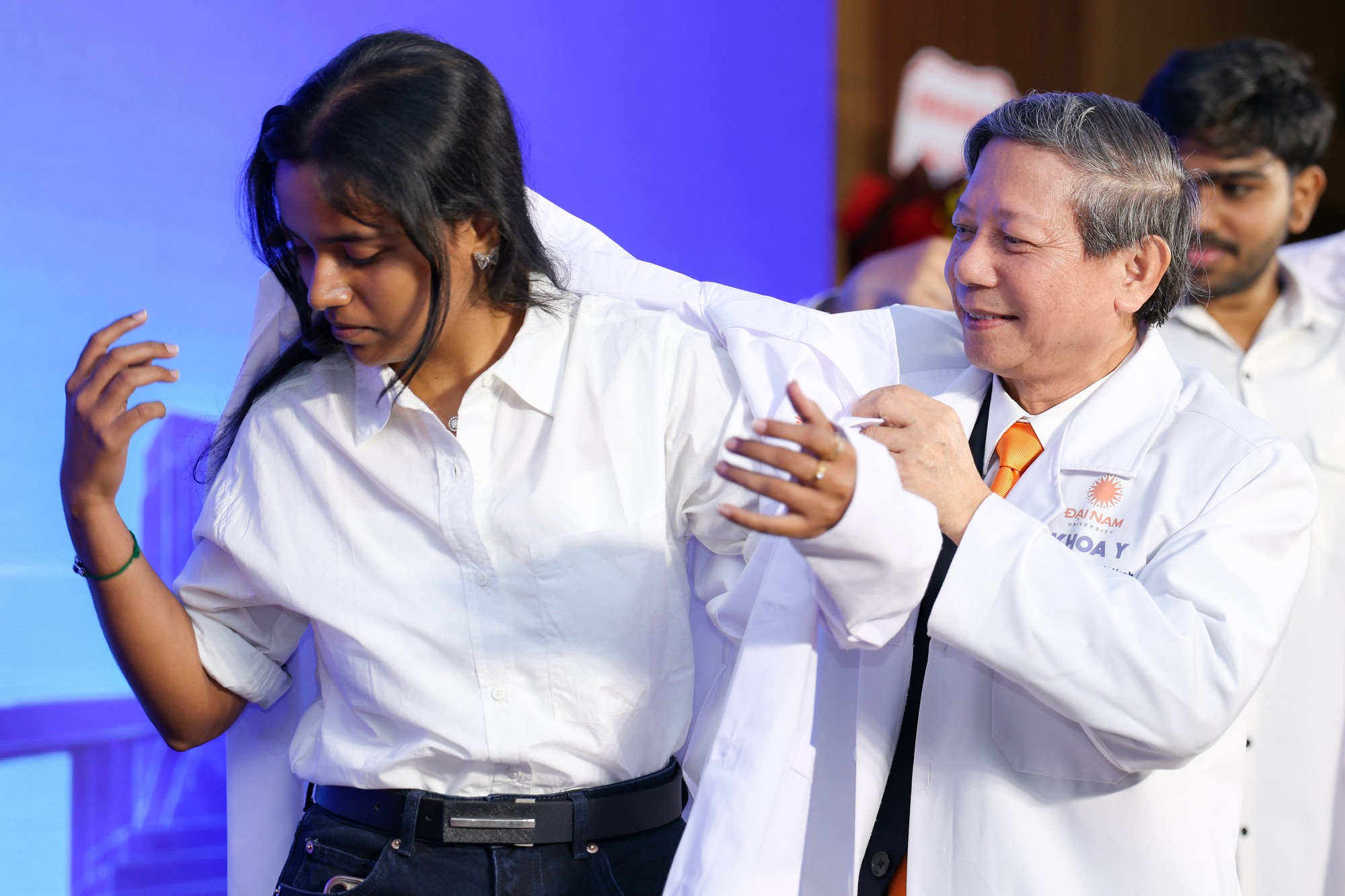
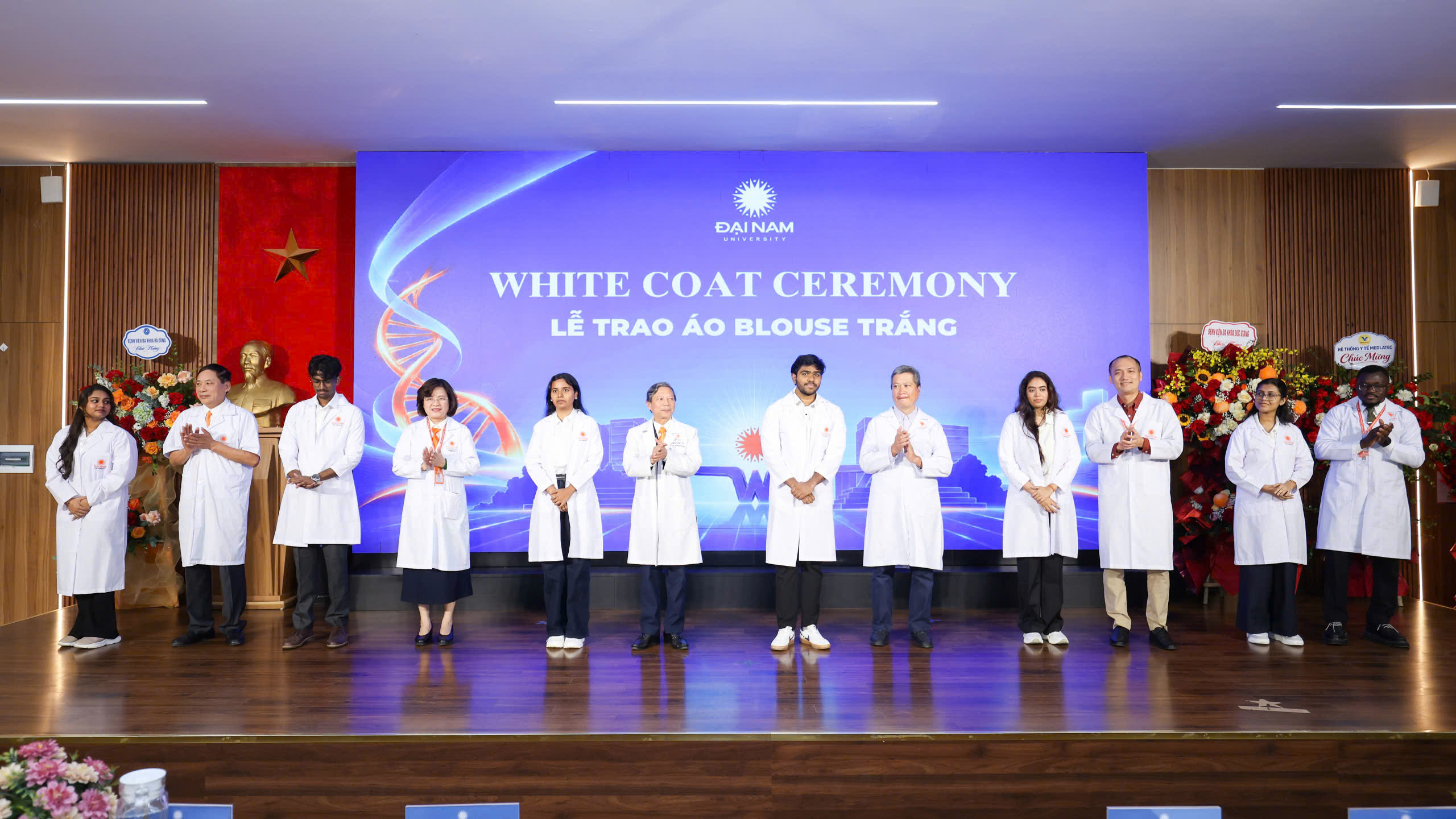
The ceremony involved presenting white lab coats – a symbol of the noble medical profession – to new international medical students. Photo: Q.Minh
Dr. Nguyen Vu Trung, Deputy Director of Ha Dong General Hospital, shared that the hospital is ready to welcome students from the program for clinical internship. During the internship, students will have access to medical examination and treatment activities and learn under the guidance of doctors in specialized departments and wards. In addition, students can also participate in scientific research activities and update their knowledge of evidence-based medicine at the hospital.
It is known that in 2026, 16 students from the first graduating class of the Medical program will be admitted to the residency program at several medical training institutions, including: Hanoi Medical University, Hanoi University of Medicine and Pharmacy - Vietnam National University, Hai Phong Medical University, and Thai Nguyen University of Medicine and Pharmacy.
Theo Báo Sức khoẻ và đời sống